Tuesday, April 29, 2025

Unlocking New Possibilities: How Shopifys B2B Features Empower Small Businesses
text
Photo by visuals on Unsplash

The Impact of Shopify’s New B2B Features on Small and Medium-Sized Enterprises

In the age of e-commerce, small and medium-sized enterprises (SMEs) are often caught in a whirlwind of change. It’s like trying to dance at a wedding where the DJ keeps switching genres. Just as you think you’ve got the Macarena down, suddenly it’s a slow jam, and you’re left awkwardly swaying. Enter Shopify’s new B2B features, a game-changer for SMEs looking to ride the e-commerce wave without wiping out.

What Are B2B Features, Anyway?

B2B, or business-to-business, refers to transactions conducted between one business and another. Think of it as the “big kids’ table” of commerce. Shopify’s new features are designed to help businesses manage their wholesale operations more efficiently. This means that SMEs can now sell to other businesses directly through their Shopify store, making the transition from B2C (business-to-consumer) to B2B smoother than a fresh jar of Nutella.

Boosting Revenue Streams

Imagine this: you’re a small artisanal soap maker. You’ve got customers flocking to your online store, but what if a local boutique wants to stock your soaps? With Shopify’s B2B features, selling in bulk to that boutique becomes as easy as pie (or soap, in this case). By enabling SMEs to tap into wholesale markets, Shopify is essentially opening up another revenue stream. And who doesn’t love a little extra cash in their pocket?

Key Features of Shopify’s B2B Functionality

  • Wholesale Channel: Create a separate storefront just for your wholesale customers. This way, you can offer them special pricing without confusing your retail customers.
  • Customer Segmentation: Easily manage different pricing tiers for various customer groups. This means you can offer a discount to your best customers without having to break the bank.
  • Order Management: Streamlined order processing means less time spent on paperwork and more time for you to perfect your soap-making skills (or whatever it is you do).
  • Payment Options: Flexible payment terms for B2B transactions make it easier for your clients to do business with you. No one likes being hit with a bill right after a purchase — let’s keep the love alive!

Why SMEs Should Embrace B2B Features

Adopting B2B features isn’t just about increasing sales; it’s about evolution. The market is changing, and businesses must change with it. Here are a few reasons why SMEs should jump on the B2B bandwagon:

  1. Stay Competitive: As larger companies adopt these features, it’s crucial for SMEs to keep up. Otherwise, they risk being left in the dust, like that one guy who insists on wearing cargo shorts to a fancy restaurant.
  2. Build Relationships: B2B transactions often lead to long-term partnerships. Building solid relationships with other businesses can lead to repeat orders, referrals, and a whole lot of warm fuzzies.
  3. Access to Bulk Buyers: Many businesses prefer to buy in bulk. By offering wholesale options, SMEs can tap into this lucrative market, giving them an edge over those who only sell retail.

Challenges SMEs Might Face

Of course, every rose has its thorn. While the benefits of Shopify’s B2B features are undeniable, there are some challenges that SMEs must navigate:

  • Initial Setup Time: Transitioning to a B2B model can take time and effort. Think of it like assembling IKEA furniture — frustrating at times, but totally worth it in the end.
  • Managing Relationships: Building and maintaining relationships with B2B clients requires a different approach than retail customers. You might find yourself in more meetings and less “just checking in” emails.
  • Price Sensitivity: B2B customers often expect lower prices. SMEs must find the right balance between profitability and competitiveness.

How to Make the Most of Shopify’s B2B Features

Now that we’ve established the pros and cons, let’s talk about how to maximize these new features:

  1. Market Research: Understand your target B2B customers. What do they want? What are their pain points? This is your chance to differentiate yourself.
  2. Leverage Social Proof: Use testimonials and case studies to attract new B2B clients. If other businesses love your products, potential clients will feel more confident in choosing you.
  3. Use Automation Tools: Managing multiple channels can be overwhelming. Tools like autoBlogger can help automate content creation, making it easier to keep your wholesale customers informed and engaged.

Success Stories

Let’s sprinkle in some inspiration! There are plenty of SMEs that have successfully navigated the B2B waters using Shopify’s features:

Take “Local Brew Co,” for instance. They started as a small craft brewery selling directly to consumers. Once they transitioned to a B2B model, they began selling kegs to local bars and restaurants. Their revenue doubled in just a year! They also found that building relationships with local businesses led to unique collaborations, like custom brews for special events.

Then there’s “Artisan Candles,” who took the plunge and created a wholesale section on their Shopify store. They quickly secured contracts with local gift shops, increasing their visibility and sales. Plus, they got to enjoy the smell of their own product wafting through the air while they counted their profits.

Final Thoughts

In conclusion, Shopify’s new B2B features present a golden opportunity for small and medium-sized enterprises to diversify their revenue streams, build lasting relationships, and stay competitive in an ever-evolving market. Sure, there might be some bumps along the way, but with the right strategy and a little humor, SMEs can dance their way to success in the B2B arena.

So, if you’re ready to take the plunge and explore the world of B2B, don’t forget to check out tools like autoBlogger to help streamline your content creation and keep your clients engaged. Happy selling!

Note, this article was written with AI assistance to improve readability and give you, the reader, a better experience! :)


Labels:

Sunday, April 27, 2025

How autoBlogger is Revolutionizing the Shopify Market: A Set-and-Forget Blogging Solution

autoBlogger

Ah, the world of eCommerce! It’s a jungle out there, with countless Shopify stores vying for attention. As a store owner, you know that content is king. But let’s be honest: who has the time to write blog posts when you’re busy managing inventory, handling customer queries, and trying to figure out how to pronounce ‘entrepreneur’? Enter autoBlogger, the set-and-forget AI-powered app that’s here to save the day (and your sanity). In this blog post, I’ll discuss the market impact of autoBlogger, and how it can boost your store’s SEO and customer engagement. Spoiler alert: it’s going to be a game-changer!

The Set-and-Forget Philosophy

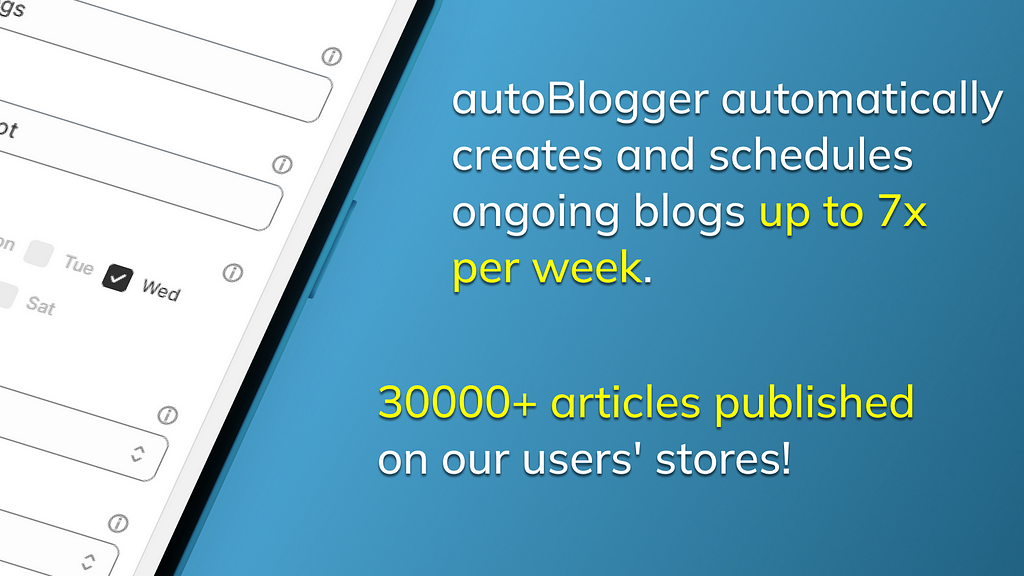
In the eCommerce landscape, “set-and-forget” sounds like a dream come true. Imagine this: you select a topic, let autoBlogger generate a plethora of related blog titles that even your mom would find interesting, and then voilà! You have a week’s worth of content ready to go without lifting a finger.

  • Select a Topic: You choose a topic related to your niche.
  • Auto-Generated Titles: Sit back as autoBlogger generates multiple blog titles.
  • Customization: Sort, delete, or add your own titles. Control freaks, rejoice!
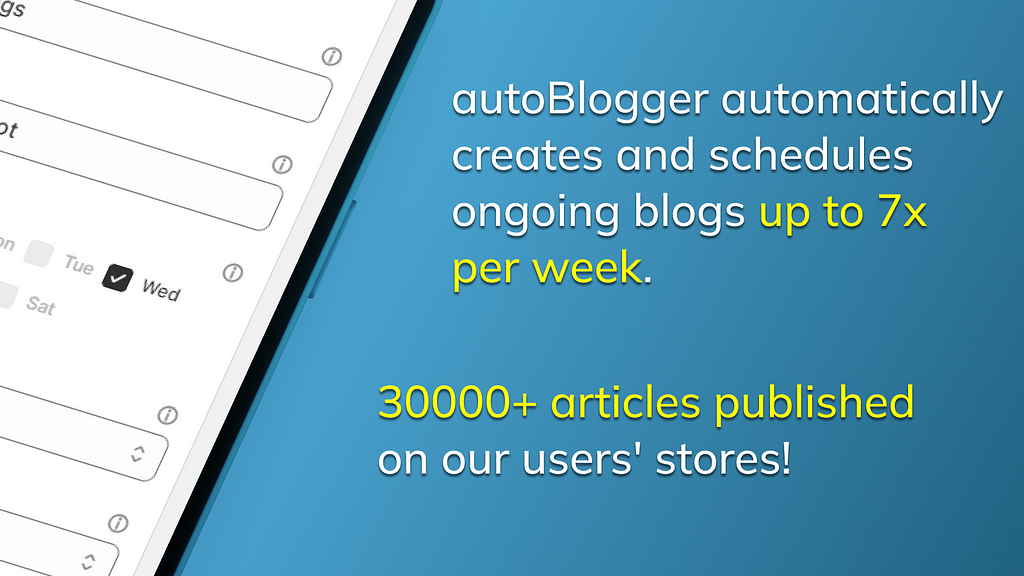
  • Content Creation: Articles are automatically created and published up to seven times a week.

With this level of automation, you can focus on what you do best — running your business and maybe, just maybe, watching cat videos.

SEO Superpowers

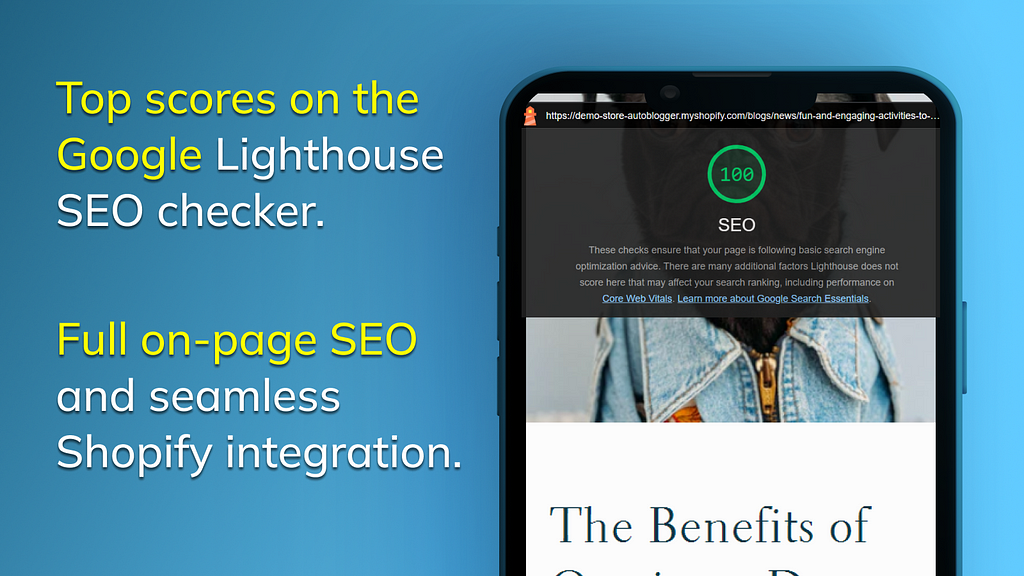
Let’s talk about the nerdy stuff: SEO. With autoBlogger, you can fine-tune your Search Engine Optimization right from the app. You can add a list of keywords that will be strategically woven throughout the articles, making Google love you a little bit more. Think of it as giving your Shopify store a much-needed SEO glow-up.

Why SEO Matters

SEO isn’t just a buzzword; it’s the backbone of online visibility. With autoBlogger, you’re not just creating content — you’re creating content that gets noticed. Here are some reasons why SEO should be on your radar:

  1. Increased visibility: More people find your store.
  2. Higher traffic: More visitors equal more sales.
  3. Better engagement: Engaging content keeps customers coming back for more.

In short, good SEO is like the perfect pair of jeans — it makes everything fit better.

Engaging Your Customers

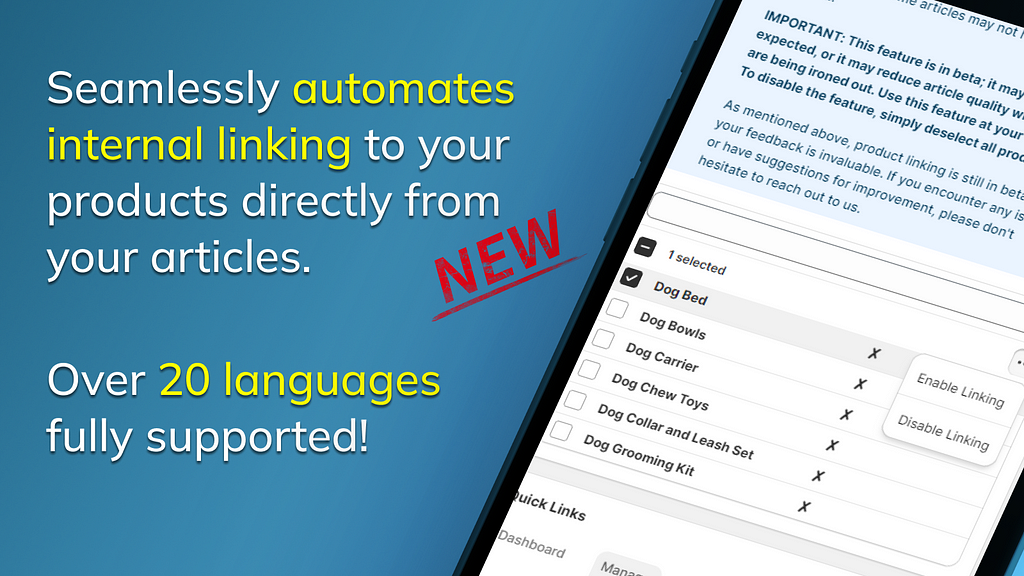
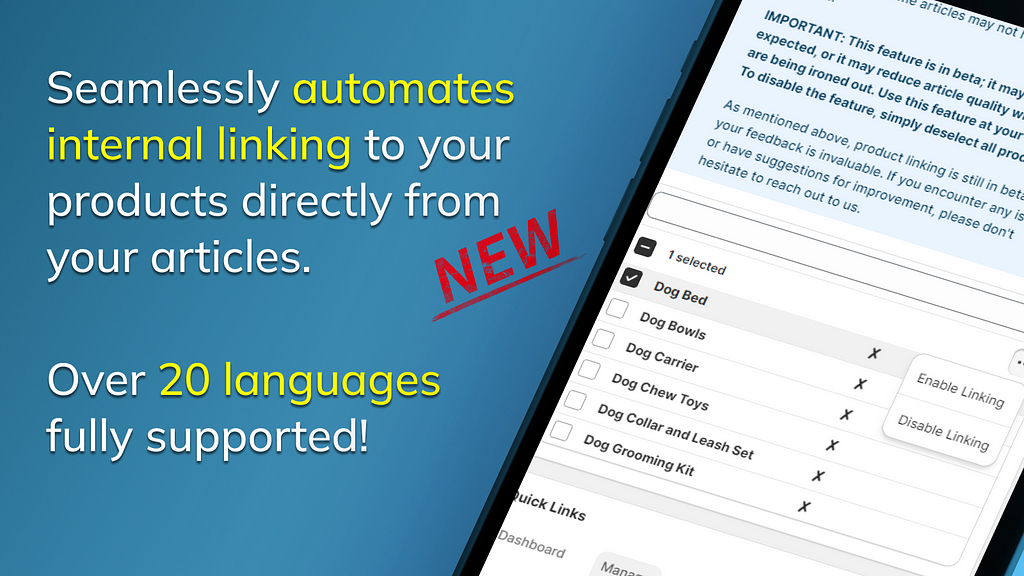
What’s the point of having a blog if no one reads it? With autoBlogger, not only do you create content efficiently, but you also create engaging content that resonates with your audience. By linking relevant products within your articles, you can guide readers seamlessly through your store, resulting in higher conversion rates.

How it Works

Here’s how it goes down:

  1. Choose the products you want to promote.
  2. Let autoBlogger automatically link them throughout your articles.
  3. Watch as readers click on those links, adding items to their carts faster than you can say “cha-ching!”

It’s like having a personal shopping assistant who works around the clock.

The Backlink Program

Now, let’s dive into something that makes autoBlogger even cooler: the backlink program. It’s like a buddy system for websites, where you can share your backlinks with other users and occasionally get theirs in return. This mutually beneficial arrangement amplifies your reach and builds credibility.

Benefits of Backlinking:

  • Improved SEO: Backlinks strengthen your site’s authority.
  • Networking: Connect with other eCommerce entrepreneurs.
  • Increased traffic: More visibility brings more visitors.

You scratch my back, and I’ll scratch yours — sounds like a pretty sweet deal, right?

Available in 20 Languages

Whether you’re selling artisanal candles in Arizona or handcrafted jewelry in Japan, autoBlogger has got you covered. With support for 20 languages, this app ensures that nothing gets lost in translation. Localizing your content means reaching a wider audience and connecting with customers from diverse backgrounds.

Why Language Matters

In the world of ecommerce, speaking your customers’ language literally pays off. Here’s why:

  • Better understanding: Customers appreciate the effort.
  • Increased trust: Familiarity breeds trust, and trust breeds sales.
  • Global reach: Expand your market beyond borders.

14-Day Free Trial: What Do You Have to Lose?

Still on the fence? Why not give autoBlogger a whirl? With a 14-day free trial, you can explore all its features without spending a dime. It’s like test-driving a fancy car before you buy it — without the awkward salesperson hovering nearby.

Sign up, and experience the magic for yourself. Who knows? You might just find the missing piece to your content marketing puzzle.

Conclusion: Let autoBlogger Work for You

In a competitive market, having the right tools can make all the difference. autoBlogger isn’t just an app; it’s a game-changer that streamlines your blogging process, boosts your SEO, and engages your customers — all while you kick back, relax, and perhaps enjoy a well-deserved cup of coffee.

So, what are you waiting for? Go ahead and try out autoBlogger today! Your Shopify store will thank you, and you might just become the blogging wizard you were always destined to be. For more information, check out autoblogger.bot. Happy blogging!

What are you waiting for, try autoBlogger now!

autoBlogger


Labels:

Friday, April 25, 2025

Picture Perfect: How Product Image Variations Can Supercharge Your E-Commerce Conversions

man in black crew neck shirt
Photo by Maskmedicare Shop on Unsplash

The Impact of Product Image Variations on Conversion Rates in E-Commerce Websites

In the fast-paced world of e-commerce, where attention spans are shorter than a TikTok video, every little detail counts. Among these details, the product image has emerged as the unsung hero (or villain, depending on how it’s presented) of online shopping. But how exactly do product image variations affect conversion rates? Buckle up, because we’re about to dive deep into the pixelated waters of product images!

The First Impression: Visual Appeal

Let’s face it: when you’re scrolling through an online store, the first thing that grabs your attention is the product image. It’s the virtual equivalent of a warm smile from a friendly shopkeeper. If your product images are as appealing as a soggy sandwich, you can bet shoppers will hit that back button faster than you can say “shopping cart abandonment.”

Research indicates that over 93% of consumers consider visual appearance to be the key deciding factor in their purchasing decisions. So, it’s essential to invest time and resources into creating high-quality, eye-catching images. After all, nobody wants to buy a product that looks like it was photographed by a blindfolded raccoon.

Image Variations: More Than Just Eye Candy

Now, let’s talk about product image variations. You may think one great photo is enough, but think again! Offering multiple images of a product from different angles, with different backgrounds, or in use can significantly boost your conversion rates. Here are some ways variations work their magic:

  • Showcasing Details: Close-up shots allow customers to see the intricate details of your product, whether it’s the stitching on a handbag or the sheen on a pair of shoes. It’s like giving shoppers a backstage pass to the product’s features.
  • Contextual Imagery: Images of products in real-life situations help customers visualize how the product fits into their lives. Think of it as a lifestyle magazine spread, but with fewer celebrity endorsements and more functional appeal.
  • Color and Style Variations: Displaying different colors, patterns, or styles can help customers make a more informed decision. Who wouldn’t want to see how that dress looks in both red and blue before making a choice?

In essence, variations create a richer shopping experience. They provide customers with the confidence they need to pull the trigger on a purchase. And let’s be honest, we all like to feel like we’re making informed choices, especially when it comes to spending our hard-earned cash.

Data-Driven Decisions: The Numbers Don’t Lie

In the realm of e-commerce, data is king. Numerous studies have shown a direct correlation between the number of product images and increased conversion rates. For instance, a study from

Shopify found that conversion rates increased by 40% when products had multiple images. That’s right — 40%! Imagine what you could do with an extra 40% in sales. You could finally afford that fancy coffee maker you’ve been eyeing!

Furthermore, data from BigCommerce suggests that using high-quality images can cut down on return rates as well. Customers who see realistic images are less likely to be disappointed when their product arrives, which means fewer returns and more happy customers. And we all know that happy customers are the best kind of advertising!

The Role of Mobile Optimization

With mobile shopping on the rise, optimizing your product images for mobile devices has never been more critical. If your images are slow to load or look like they were taken with a flip phone, customers will likely swipe left — on your website, that is. According to a report by Google, 53% of mobile site visitors will abandon a page if it takes longer than three seconds to load. Yikes!

To ensure mobile optimization, consider the following:

  • Compress images without sacrificing quality.
  • Use responsive design to ensure images fit different screen sizes.
  • A/B test different image variations to see what works best on mobile.

Remember, your goal is to create a seamless shopping experience, whether customers are browsing from their couch or on the go. If your images are optimized for mobile, you’ll keep those pesky abandonment rates at bay!

Utilizing User-Generated Content

Let’s switch gears for a second and talk about user-generated content (UGC). This is where your customers come into play. Encouraging customers to share their own photos of your products can add authenticity and create a sense of community around your brand. Plus, it’s free advertising! Who doesn’t love that?

UGC can also serve as an additional layer of image variation. Shoppers are more likely to trust a product image shared by a fellow consumer than a carefully staged studio shot. After all, we’ve all seen the “perfect” influencer photos that turned out to be a total flop when we tried them ourselves. UGC helps bridge that gap between expectation and reality.

Tools and Apps to Help You Shine

In order to keep up with the demands of e-commerce, it’s essential to have the right tools at your disposal. Enter the autoBlogger app! This nifty Shopify app allows you to automate your content creation, making it easier to manage product descriptions, blogs, and even social media. With autoBlogger, you can focus more on creating stunning product images and less on the nitty-gritty details of content management.

By leveraging tools like autoBlogger, you’ll have more time to experiment with image variations and enhance your product presentation. After all, if you’re not having fun while running your e-commerce store, what’s the point?

Conclusion: The Power of Product Images

In conclusion, the impact of product image variations on conversion rates is undeniable. In a world where consumers are constantly bombarded with options, high-quality and diverse images can make all the difference. By showcasing your products in a variety of angles, settings, and contexts, you’ll not only increase conversions but also build trust with your customers.

So, get out there, experiment with your images, and keep those conversion rates climbing! And remember, if you need a little help managing your content, don’t forget to check out autoBlogger to make your life just a tad easier.

Note, this article was written with AI assistance to improve readability and give you, the reader, a better experience! :)


Labels:

Tuesday, April 22, 2025

Unlocking Local Success: How Voice Search is Revolutionizing Small Business Marketing

Google logo screengrab
Photo by Christian Wiediger on Unsplash

The Impact of Local Voice Search on Small Businesses and Their Marketing Strategies

As technology continues to evolve at breakneck speed, small businesses are finding themselves in a constant race to keep up. One of the game-changers in recent years has been the rise of local voice search. You know, that moment when you ask your phone where the nearest taco truck is, and it responds faster than your best friend could? Yeah, that’s local voice search in action.

What Is Local Voice Search?

Local voice search is when users utilize voice-activated tools and devices — like Siri, Google Assistant, or Alexa — to find information that’s relevant to their immediate geographic location. Think of it as the friendly neighborhood search engine that knows you better than your own mother. It helps users find local businesses, directions, hours of operation, and even menu items — all without lifting a finger (or, in some cases, even a voice!).

Why Should Small Businesses Care?

In a world where 58% of consumers have used voice search to find local business information, ignoring this trend is like ignoring a fire alarm — sure, you might be comfortable, but you’re likely to regret it. Here are a few reasons why local voice search is crucial for small businesses:

  • Increased Visibility: When potential customers search for “coffee shops near me” and your business pops up, it’s a win-win. It puts you on the map — literally.
  • Time-Saving: Voice search is quicker than typing out a full query. Customers appreciate speed, and businesses that optimize for local voice search enhance their chances of being found.
  • Enhanced Customer Experience: Customers love convenience. By being part of the voice search ecosystem, you cater to their need for instant information.

How to Optimize for Local Voice Search

Now that you’re convinced of the importance of local voice search, let’s dive into some strategies to optimize your small business for it. Put on your thinking cap (or your favorite beanie) because we’re about to get tactical!

1. Claim Your Google My Business Listing

First things first, if you haven’t claimed your Google My Business (GMB) listing yet, what are you waiting for? This is the digital equivalent of putting a neon sign over your shop. Make sure your business name, address, and phone number (NAP) are accurate and up to date. Google loves consistency, so ensure this info is the same across all platforms.

2. Use Natural Language Keywords

When people use voice search, they tend to speak in complete sentences or phrases. Instead of focusing solely on keywords like “pizza,” think about phrases like “Where can I find the best pizza near me?” Incorporating these natural language phrases into your content can help you capture those voice search queries.

3. Optimize for Mobile

Most voice searches occur on mobile devices, so it’s crucial that your website is mobile-friendly. A responsive design not only helps with your Google rankings but also ensures that users have a seamless experience when they click through from their search results.

4. Focus on Local Content

Creating content that focuses on local events, news, and activities can help your business stand out in local searches. Write blog posts about local happenings or showcase partnerships with other local businesses. It’s a great way to build community ties and enhance your local SEO.

Voice Search and Marketing Strategies

Now that you know how to optimize your business for local voice search, let’s discuss how it impacts your overall marketing strategy. Spoiler alert: it’s not just about SEO!

1. Content Marketing

With the rise of local voice search, it’s time to adopt a more conversational tone in your content marketing. This means writing blog posts, social media updates, and website copy in a way that sounds like you’re having a chat with your best friend. Think about answering common questions your customers might have and providing valuable information that could lead them to your door.

2. Leveraging User-Generated Content

Encourage your customers to leave reviews and feedback. User-generated content not only boosts your credibility but also helps with voice search ranking. When potential customers hear glowing reviews from others, they’re more likely to choose your business over the competition. Don’t be shy — ask your happy customers to share their experiences!

3. Invest in Local SEO

Local SEO should be at the forefront of your marketing strategy. Use local keywords, create location-based landing pages, and keep your NAP consistent across all platforms. If you’re feeling overwhelmed, consider using tools like the Shopify app autoBlogger to help automate some of your content creation, allowing you to focus on your marketing strategy.

4. Embrace Social Media

Social media isn’t just for sharing photos of your cat (although that’s a valid use). It’s a powerful tool for local marketing. Engage with your community on platforms like Facebook and Instagram. Share local news, participate in community events, and let your followers know about any promotions. When people think of your business, you want to be at the top of their minds — kind of like that catchy jingle you can’t shake off!

The Future of Local Voice Search

As we look ahead, it’s clear that local voice search will continue to evolve and shape the way small businesses operate. With the advent of smart speakers and voice-activated technology, consumers are finding new ways to interact with their favorite brands. This means that small businesses not only need to be present but also need to be personable and engaging.

So, what does the future hold? Voice search will likely become even more integrated into our daily lives, making it essential for small businesses to stay on top of trends. Embracing new technologies, refining marketing strategies, and continuously optimizing for voice search will be the keys to survival and growth.

Conclusion

In summary, local voice search is transforming the landscape for small businesses and their marketing strategies. By optimizing for voice search, focusing on local content, embracing social media, and investing in local SEO, small businesses can thrive in this new digital age. Remember, it’s not just about being heard — it’s about being understood and found. So go ahead, give your marketing strategy a voice, and let it be heard!

If you’re looking for a way to simplify your content creation and keep your marketing fresh, check out the Shopify app autoBlogger to help you stay ahead of the curve!

Note, this article was written with AI assistance to improve readability and give you, the reader, a better experience! :)


Labels:

Sunday, April 20, 2025

Exploring the Development Process of My Shopify App, autoBlogger

autoBlogger

Ah, the world of ecommerce. It’s as vibrant as a box of assorted donuts — so many options, flavors, and a sticky mess of competition. Thankfully, with the rise of AI and tools like autoBlogger, creating engaging content for your Shopify store has never been easier. Join me as I take you through the development process of this magical, set-and-forget app that can revolutionize the way you blog!

Why This App?

Let’s start with the burning question: why did I create autoBlogger? Well, the truth is, I love blogs, but writing them repeatedly can feel like running a marathon every day. Who has time for that? Not me, not you, and certainly not your customers who are waiting for fresh content!

autoBlogger was designed with a simple premise: set it and forget it. You select a topic, and voilà! The app generates a list of related blog titles faster than you can say “I need a coffee!” What’s even better? You can sort, delete, and add your own titles before the app crafts an article for you — complete with images and optimized for SEO.

Building the Brain

Now that you’re intrigued, let’s dive into the nitty-gritty of the development process. Building an app is a bit like assembling IKEA furniture: it looks easy until you realize you have no idea what that extra screw is for.

1. Researching and Planning

First up, research! I studied other apps and their features, while simultaneously Googling “How to build a Shopify app” (seriously, there’s a lot of information out there!). I wanted to ensure that autoBlogger would not only simplify the blogging process but also add tangible SEO benefits.

  • Keyword Optimization: Users can input a list of keywords for the app to prioritize in articles.
  • Product Linking: Automatically link products throughout the articles to drive sales.
  • Backlink Program: Users can share backlinks to gain visibility across other blogs.

After countless coffee-fueled nights of planning, I finally had a blueprint that was both intuitive and functional — and no, it didn’t involve confusing diagrams or missing pieces!

2. Selecting the Right Technology

Next was the fun part: choosing the technology stack. The objective was to create a seamless user experience. So, naturally, I had to work with Shopify’s ecosystem while integrating some of the latest AI technology. Think of it as fitting a Ferrari engine into a compact car — powerful yet efficient!

Here are the tools I decided on:

  • Node.js: For server-side logic.
  • React: To create a snappy user interface.
  • OpenAI: For generating blog content. Yes, I’m basically a wizard!

3. Development and Testing

With everything planned out, I jumped into coding. This was a rollercoaster of excitement and occasional panic. There’s something exhilarating about seeing your code transform into a functional application.

Testing was like a game of whack-a-mole. Every time I fixed one bug, another one popped up. But after a few late-night debugging sessions (and perhaps a few tears), I finally had a stable version of autoBlogger ready for action.

Features That Make autoBlogger Stand Out

Alright, let’s talk about the features. Grab a snack, because this is where it gets tasty!

Set and Forget

As mentioned, the app automatically generates blog titles based on the topic you select. Once you approve the titles, autoBlogger takes care of the rest. It creates articles up to seven times per week — because who doesn’t want a steady stream of content?

SEO Made Easy

With the built-in keyword feature, you can optimize your articles without breaking a sweat. Just add your chosen keywords, and let the app do the heavy lifting. It’s like having a personal SEO assistant, minus the awkward small talk!

Image Generation

No blog is complete without visual appeal! autoBlogger includes images in your articles, ensuring your content is not just informative but also visually engaging.

Multilingual Support

The app is available in 20 languages, opening the door to global markets. Because why limit yourself to one language when you can reach a billion potential customers?

Backlink Program

Last but definitely not least, the backlink program! Users can opt in to share their links with others, building a network of visibility that’s mutually beneficial. It’s like a community potluck for backlinks — everyone shares a little, and everyone benefits!

Launch and Beyond

After months of sweat, tears, and too many late-night coding sessions, autoBlogger launched. The reception was overwhelming; users loved the simplicity and effectiveness of the app.

But like any good app, the work doesn’t stop at launch. We regularly gather feedback, make updates, and improve features. After all, the world of ecommerce is always evolving, and we want to keep autoBlogger at the cutting edge.

Join the autoBlogger Family!

If you’re looking to boost your Shopify store’s SEO, engage customers, and save time on content creation, then autoBlogger is the app for you. With a 14-day free trial, there’s nothing to lose! You can find it on the Shopify App Store here.

So what are you waiting for? Embrace the future of blogging with autoBlogger and watch your store soar!

Remember, the only thing you have to worry about is what to do with all the time you’ll save. Suggestions? Maybe learn to juggle!

What are you waiting for, try autoBlogger now!

autoBlogger


Labels:

Tuesday, April 15, 2025

Unlocking Mobile Magic: Transform Your Shopify Store for Maximum Conversions

person using macbook pro on white table
Photo by Roberto Cortese on Unsplash

Optimizing Your Shopify Store’s Mobile Experience for Increased Conversions

In today’s digital age, if your Shopify store isn’t optimized for mobile, you might as well be selling ice to penguins. With over 50% of e-commerce traffic coming from mobile devices, ensuring a seamless mobile experience is no longer optional; it’s essential. So, let’s dive into how you can turn your mobile visitors into happy customers with just a few tweaks!

Why Mobile Optimization Matters

First things first, let’s talk about why mobile optimization matters. Think of your Shopify store as a cozy little café. If the café is cramped, messy, and hard to navigate, would you want to stay? Probably not! The same goes for your online store. If it’s not mobile-friendly, customers will bounce quicker than a kangaroo on a trampoline.

The Statistics Don’t Lie

Still not convinced? Here are some stats that might change your mind:

  • According to Statista, mobile devices accounted for 54.8% of global website traffic as of 2021.
  • Shopify reports that mobile sales are growing, with more than 70% of purchases made on mobile devices.
  • Websites that are optimized for mobile experience a 20% increase in conversion rates. (Hello, profits!)

If those numbers don’t motivate you to spruce up your mobile experience, I don’t know what will. Now, let’s explore some actionable tips to optimize your Shopify store’s mobile experience!

1. Choose a Responsive Theme

The first step to ensuring your Shopify store is mobile-friendly is to choose a responsive theme. A responsive theme automatically adjusts to fit the screen size of the device being used, making it easier for users to navigate your site.

When browsing the Shopify theme store, look for themes labeled as “responsive.” You don’t want a theme that’s as stubborn as a mule when it comes to adapting to various screen sizes. Remember, adaptability is key!

2. Simplify Your Navigation

When it comes to mobile navigation, less is more. Your customers are likely in a rush (probably scrolling through their phones while standing in line for coffee), so you want to make it easy for them to find what they need.

Consider using a hamburger menu (the three-line icon) for your main navigation. This keeps things neat and tidy. Also, prioritize your most important links at the top. Your customers shouldn’t have to play hide-and-seek to find your best-selling products.

Navigation Tips

  • Limit the number of menu items — three to five is a sweet spot.
  • Use clear and concise labels for your links. No one wants to decipher what “Products” means!
  • Include a search bar for those who know exactly what they’re looking for.

3. Optimize Your Images

Images are crucial for e-commerce, but large files can slow down your site, especially on mobile devices. It’s like trying to load a high-definition movie on a dial-up connection — frustrating!

Here’s what you can do:

  • Compress your images to reduce file size without losing quality. Tools like TinyPNG can help.
  • Use the correct file format. JPEG is great for photos, while PNG is better for graphics.
  • Implement lazy loading so images only load when they are visible on the screen.

4. Streamline the Checkout Process

Imagine you’re on your phone, trying to buy a pair of shoes, and the checkout process feels like running a marathon. You’d likely abandon the cart and run away, right? A complicated checkout process leads to cart abandonment, which is bad for business!

To streamline your checkout process, consider the following:

  • Enable guest checkout. Not everyone wants to create an account just to buy a pair of socks!
  • Minimize the number of steps required to complete a purchase. The fewer clicks, the better!
  • Offer multiple payment options. Some customers prefer PayPal, while others might want to use Apple Pay.

5. Test Your Site on Multiple Devices

Just because your site looks good on your iPhone doesn’t mean it will look good on someone else’s Android. Testing your site on multiple devices is crucial to ensure that everything functions smoothly.

Utilize tools like Google’s Mobile-Friendly Test to see how your site performs. Get feedback from friends and family (and maybe even a few strangers) to gather insights on what works and what doesn’t.

6. Improve Loading Speed

If your site takes longer to load than a snail on vacation, you’re going to lose customers faster than you can say “Shopify.” Mobile users expect quick access to information, so optimizing loading speed is critical.

Here are some tips to speed things up:

  • Minimize HTTP requests by reducing the number of elements on your page.
  • Use a content delivery network (CDN) to distribute your content efficiently.
  • Enable browser caching to speed up repeat visits.

7. Utilize AutoBlogger for Content Marketing

Content is king, and it can help drive traffic to your mobile site. But who has the time to write blog posts regularly? Enter autoBlogger. This handy Shopify app automates blog post creation, ensuring your store is constantly updated with fresh content without you pulling your hair out.

By regularly publishing relevant blog posts, you can keep your customers engaged and improve your store’s SEO, ultimately driving more traffic to your mobile site. Plus, who doesn’t love a little extra help when it comes to content creation?

8. Keep It Clean and Organized

When it comes to mobile design, simplicity is key. A cluttered mobile site can be overwhelming and lead to confusion. Aim for a clean layout with plenty of white space. Your customers should be able to focus on your products rather than getting lost in endless text and images.

Here are a few ways to keep things organized:

  • Use larger fonts and buttons for easy tapping.
  • Group related products together for easier browsing.
  • Highlight any promotions or sales clearly — everyone loves a good deal!

9. Monitor Analytics and Adjust

Once you’ve implemented these changes, don’t just sit back and relax. It’s important to monitor your analytics to see how your mobile store is performing. Use tools like Google Analytics to track user behavior, bounce rates, and conversion rates. This data can help you identify areas for improvement.

If you notice that users are dropping off at a specific point in the checkout process, it’s time to dig deeper and make adjustments. Continuous improvement is the name of the game!

Conclusion

Optimizing your Shopify store’s mobile experience is no small feat, but the benefits are well worth the effort. By selecting a responsive theme, simplifying navigation, optimizing images, streamlining the checkout process, and utilizing tools like autoBlogger, you can create a user-friendly mobile shopping experience that keeps customers coming back for more.

So go ahead, roll up your sleeves, and start optimizing. Your future customers (and your bank account) will thank you!

Note, this article was written with AI assistance to improve readability and give you, the reader, a better experience! :)


Labels:

Monday, April 14, 2025

Will Instagram and TikTok Disappear or Be Sold?

Today, the Meta trial begins. If the owner, Mark Zuckerberg, loses, he must sell Instagram and WhatsApp. This puts both Instagram and…


Labels:

Friday, April 11, 2025

Discover Unique Jewellery Components at Hilmas Pyssel

autoBlogger

If you are passionate about creating beautiful jewellery or looking to start crafting your own pieces, Hilmas Pyssel is the ultimate destination for all your jewellery-making needs. This Swedish store specializes in a comprehensive selection of jewellery components and accessories, offering everything from vibrant beads to essential tools that will elevate your crafting experience. Let’s explore what makes Hilmas Pyssel the go-to place for jewellery enthusiasts around the world.

High-Quality Components for Crafting

At Hilmas Pyssel, quality is paramount. All the jewellery components and accessories available on their platform are crafted from durable materials. This commitment to quality ensures that the pieces you create will last for years, allowing you to wear your creations with pride or sell them with confidence.

With a wide variety of styles to choose from, you will find everything from modern and trendy options to classic and timeless pieces. Whether you are looking for intricate pendants or simple ear wires, Hilmas Pyssel has you covered. Each item in their inventory is carefully selected to meet the highest standards, giving you peace of mind with every purchase.

A Comprehensive Range of Products

One of the standout features of Hilmas Pyssel is its extensive range of jewellery-making supplies. Here’s a closer look at what you can find:

  • Beads: A stunning array of beads in various colors, sizes, and materials. From glass to wooden beads, you will find options that fit any design.
  • Clasps: Essential for completing your jewellery pieces, their selection of clasps ensures that your designs are both functional and aesthetically pleasing.
  • Chains: Whether you need delicate chains for pendants or strong ones for bracelets, Hilmas Pyssel offers a variety of styles to choose from.
  • Pendants: Explore an array of beautifully designed pendants that can serve as the focal point of your jewellery.
  • Ear Wires: Perfect for creating earrings, the ear wires available are both stylish and secure.

With such a diverse selection, Hilmas Pyssel caters to both seasoned jewellery makers and beginners alike. You can easily find everything you need to bring your creative ideas to life!

Customer-Centric Approach

Shopping at Hilmas Pyssel is not just about the products; it’s about the experience. The passionate and knowledgeable team behind the store is dedicated to assisting customers with their projects. Whether you have questions about product compatibility or need recommendations, the team is always ready to help.

Moreover, Hilmas Pyssel prides itself on providing fast customer service. If you have a question or need assistance, you can reach out via message, and they will respond promptly, ensuring that your shopping experience is as smooth as possible.

Competitive Prices Without Compromise

Another reason to consider Hilmas Pyssel for your jewellery-making supplies is their competitive pricing. You don’t have to break the bank to create beautiful pieces. The combination of high-quality components and affordable pricing makes it easier for crafters to gather supplies without sacrificing quality.

Whether you’re purchasing for personal enjoyment or seeking inventory for your growing jewellery business, you will find that Hilmas Pyssel offers great value for money. This combination of quality and affordability allows you to explore your creativity without constraints.

Safety First: Nickel-Safe Products

When it comes to jewellery, safety is a crucial consideration. At Hilmas Pyssel, all products meet the EU’s content regulations, ensuring that they are nickel-safe. This means you can craft jewellery that is not only beautiful but also safe to wear for those with sensitive skin.

By sourcing products exclusively from trusted suppliers and manufacturers, Hilmas Pyssel guarantees that every item in their inventory has been thoroughly vetted for safety and quality. This commitment to customer safety sets them apart in the industry.

Convenient Shipping Options

Living in Sweden has its perks when shopping at Hilmas Pyssel. The company ships all products directly from their warehouse in Sweden, which means you won’t have to worry about customs fees or additional charges often associated with international shipping.

Furthermore, every order is shipped using trackable Postnord services, providing you with peace of mind as you await your eagerly anticipated package. You can easily track your order every step of the way, ensuring that it arrives safely and on time.

Why Hilmas Pyssel is the Right Choice for You

As you consider where to purchase your jewellery-making supplies, keep in mind the following reasons why Hilmas Pyssel is the right choice:

  • Exceptional Quality: High-quality components ensure that your jewellery lasts.
  • Variety: A comprehensive range of products means you’ll find exactly what you need.
  • Competitive Prices: Get great value without sacrificing quality.
  • Outstanding Customer Service: The team is always ready to assist with your crafting needs.
  • Safety: Nickel-safe products mean you can create worry-free.
  • Convenient Shipping: Fast and trackable shipping from Sweden.

By choosing Hilmas Pyssel, you are not just purchasing supplies; you are investing in your creativity and ensuring that you have all the tools necessary to succeed in your jewellery-making journey.

Join the Community of Creators

Lastly, Hilmas Pyssel is not just a store; it’s a community. As you explore the products and create your unique jewellery pieces, you become part of a larger network of crafters who share your passion. Connecting with others, sharing your creations, and finding inspiration in fellow jewellery makers can enhance your crafting experience.

So, if you’re ready to embark on your jewellery-making journey or looking to elevate your existing creations, look no further than Hilmas Pyssel. With their extensive selection, exceptional quality, and commitment to customer satisfaction, you’re guaranteed to find everything you need to make your jewellery dreams come true.

Visit Hilmas Pyssel today, and discover an exciting world of beads and components just waiting for your unique touch!

What are you waiting for, check them out now!

autoBlogger

Disclaimer: The information presented in this blog post is based on publicly available data about the Shopify store https://1cba5a-f6.myshopify.com/. I am in no way responsible for the accuracy, legality, or any outcomes related to the store or its content. Readers are encouraged to conduct their own research before making any purchases or decisions based on the information provided.


Labels:

Unlocking Sales: Mastering the Art of Product Descriptions on Shopify

person using macbook pro on white table
Photo by Roberto Cortese on Unsplash

How to Create Effective Product Descriptions that Boost Sales on Shopify

Ah, the product description. It’s the unsung hero of e-commerce. You might think that your stunning product images would do all the heavy lifting in getting customers to whip out their wallets, but let me tell you, without a compelling product description, you might as well be trying to sell ice to penguins. In this article, we’ll dive into the art and science of crafting product descriptions that not only inform but also compel customers to hit that “Add to Cart” button.

Why Product Descriptions Matter

First, let’s talk about why product descriptions are so crucial. Think of them as the virtual salesperson who never takes a break. A well-written description answers questions, addresses concerns, and highlights features — all while weaving a narrative that connects with your audience. In short, it’s your chance to shine!

Know Your Audience

Before you put pen to paper (or fingers to keyboard), you need to understand who you’re talking to. Are your customers tech-savvy millennials, health-conscious moms, or perhaps eco-friendly warriors? Knowing your audience allows you to tailor your language, tone, and even the benefits you highlight.

  • Research Customer Pain Points: What problems do your potential customers have that your product can solve? Address these directly.
  • Use Appropriate Language: A casual tone may work wonders for a skateboard shop, while a more formal vibe might be better suited for a luxury goods store.
  • Segment Your Audience: If you sell multiple product lines, consider creating different descriptions for different customer segments.

Focus on Benefits, Not Just Features

Let’s face it: nobody gets excited about a product’s technical specifications. What customers really want to know is how a product will enhance their lives. Take the time to highlight the benefits rather than just listing features. For example, instead of saying, “This blender has a 1200-watt motor,” you could say, “Whip up smoothies in seconds with our powerful 1200-watt blender that makes healthy living a breeze!”

Tell a Story

People love stories. Whether it’s your morning coffee or that time you almost set your kitchen on fire while trying to bake a cake, storytelling is powerful. When writing product descriptions, try to weave in a narrative that connects emotionally with your customers.

Consider this: instead of just listing the materials used to make a hand-knitted scarf, tell the story of the artisan who crafted it. Describe the cozy evenings spent knitting by the fireplace, and how wrapped in this scarf, customers can feel a piece of that warmth and comfort. It’s all about creating an experience!

Use Persuasive Language

The right words can make all the difference. Use persuasive language to compel customers to take action. Here are some tips:

  • Use Power Words: Words like “exclusive,” “limited-time,” “guaranteed,” and “free” can evoke emotions and prompt action.
  • Create Urgency: Phrases like “only a few left in stock” or “sale ends soon” can make customers feel an urgency to buy.
  • Encourage Action: Use clear calls to action like “Get yours today” or “Join the thousands of happy customers.”

Keep it Scannable

Let’s be real: nobody reads every word on a product page. So, you need to make it easy for customers to scan your descriptions quickly. Here are some tips to achieve that:

  • Use Bullet Points: Highlight key features and benefits using bullet points for easy reading.
  • Break Up Text: Use short paragraphs and subheadings to make the description visually appealing.
  • Emphasize Important Information: Use bold or italics to draw attention to key points.

Optimize for SEO

Let’s not forget about the importance of SEO (Search Engine Optimization). Your beautifully crafted product description won’t do much good if it’s buried on page 10 of Google search results. Here’s how to ensure your product descriptions are search engine friendly:

  • Use Relevant Keywords: Identify keywords that potential customers might search for and incorporate them naturally into your description.
  • Write Unique Descriptions: Avoid copying manufacturer descriptions; make your content original to improve your ranking.
  • Utilize Alt Text: Don’t forget to add alt text to your product images for additional SEO power.

Include Social Proof

Nothing builds trust like a little social proof. Including reviews, testimonials, or even user-generated content can help potential customers feel more confident about their purchase. If you have a product that has received rave reviews, don’t be shy — show it off!

Example: “Join the 500+ happy customers who can’t stop raving about this blender! ‘I’ve tried other blenders, but this one takes the cake!’ — Emily, Verified Buyer.”

Utilize AutoBlogger for Efficiency

Now that you’re armed with all these tips to create stellar product descriptions, you might be wondering how to keep up with the demand, especially if you have a large catalog. Enter autoBlogger. This handy Shopify app automates the content creation process, generating unique and engaging product descriptions in a snap. Imagine the time you’ll save! You can focus on marketing and growing your store instead of getting lost in the writing trenches.

Test and Revise

Once you’ve written your product descriptions, don’t just set them and forget them. Test different versions to see what resonates best with your audience. A/B testing can help you determine which descriptions lead to higher conversion rates. It’s like being a mad scientist, except instead of potions, you’re mixing words!

Conclusion

Creating effective product descriptions is an art form that can significantly impact your sales on Shopify. By understanding your audience, focusing on benefits, telling compelling stories, and employing persuasive language, you can write product descriptions that not only attract but also convert. Remember to keep your descriptions scannable, optimize for SEO, and utilize social proof to build trust.

And if you ever find yourself drowning in a sea of product descriptions, don’t forget to check out autoBlogger to help lighten the load. Happy selling!

Note, this article was written with AI assistance to improve readability and give you, the reader, a better experience! :)


Labels:

Tuesday, April 8, 2025

Unlocking SEO Success: How Social Media Drives Backlink Growth

Antelope Canyon view
Photo by Josh jfisher on Unsplash

The Impact of Social Media Engagement on Backlink Acquisition

In today’s digital landscape, social media isn’t just a place for sharing cat memes and vacation selfies; it’s a potent tool that can significantly influence your website’s SEO strategy. One of the lesser-known benefits of social media engagement is its ability to drive backlink acquisition. In this post, we’ll dive into how social media can be leveraged to improve your backlink profile, the science behind it, and some tips to maximize your efforts. So, grab a coffee (or a stronger beverage if your website’s analytics are stressing you out) and let’s get started!

Understanding Backlinks

First, let’s clarify what backlinks are. Backlinks are links from one website to another, and they are critical for SEO. Think of backlinks as the digital equivalent of a thumbs-up from another website. The more thumbs-up you get, the more credibility you gain in the eyes of search engines. However, acquiring backlinks is not as simple as asking for them; it requires a strategic approach.

Social Media: The Unsung Hero of Backlink Acquisition

Now, here’s where social media comes into play. While many people see social media as a platform for brand awareness and customer engagement, it also serves as a powerful channel for backlink acquisition. A well-structured social media strategy can help your content reach a broader audience, which can lead to more backlinks. Here’s how it works:

1. Amplification of Content

When you share your content on social media, you increase its visibility. The more eyes on your content, the higher the chances someone will find it valuable enough to link back to it. It’s like throwing a party and inviting all your friends; the more people who attend, the more likely someone will bring a new friend along who’s interested in your content!

2. Building Relationships

Social media platforms are great for networking. Engaging with influencers, industry leaders, and other content creators can lead to valuable relationships. When you build these connections, you increase the likelihood of them linking to your content. It’s all about those digital handshakes and “I owe you” moments!

3. Sharing User-Generated Content

Encouraging your audience to create content related to your brand can also lead to backlinks. When customers share their experiences or reviews on social media, they often link back to your website. It’s one big, happy, link-generating family! Ask your customers for testimonials, photos, or reviews, and don’t forget to share them on your social channels.

The Science Behind the Connection

According to various studies, social signals (likes, shares, and comments) can influence search engine rankings. While Google has maintained that social media signals are not direct ranking factors, there’s a correlation between high social engagement and improved SEO performance. This is because social media can increase the chances of content being discovered and linked to. So, while it might not be a direct route to the top, it’s definitely a road worth traveling!

Strategies to Enhance Social Media Engagement for Backlink Acquisition

Now that we’ve established the connection between social media and backlinks, let’s explore some practical strategies you can implement:

1. Create Shareable Content

Content is king, but not just any content will do. You need to create content that’s shareable. Think infographics, how-to guides, and engaging videos. The more entertaining or informative your content is, the more likely it is to be shared and linked to. Remember, nobody shares a boring article about the history of paperclips (unless your audience is super niche).

2. Be Active and Engaging

Don’t just post and ghost! Engage with your audience by responding to comments, asking questions, and sharing relevant content from others. The more active you are, the more likely your followers will be to share your content and link back to it. Plus, it makes you look approachable and human, which is always a plus!

3. Leverage Hashtags

Hashtags can be your best friend on social media. They help categorize your content and make it easier for people to find. Use relevant hashtags to increase your reach and visibility. Just remember, don’t go overboard; using 37 hashtags in one post may come off as desperate.

4. Collaborate with Influencers

Influencer marketing is not just a buzzword; it’s a powerful way to amplify your reach. Partnering with influencers in your niche can expose your content to a broader audience. When they share your content, it not only helps with visibility but also enhances your credibility. Just make sure you choose influencers whose audience aligns with your target market!

5. Monitor Your Social Media Metrics

If you’re not tracking your social media engagement metrics, it’s like driving with your eyes closed. Use tools like Google Analytics, Hootsuite, or Buffer to monitor how your social media efforts are translating into website traffic and backlinks. This way, you can identify which strategies are working and which ones need a little TLC.

Common Mistakes to Avoid

As with any strategy, there are pitfalls to watch out for:

  • Ignoring Analytics: If you’re not paying attention to what’s working and what’s not, you’re flying blind. Regularly check your analytics to adjust your strategy as needed.
  • Over-promoting: No one likes a constant sales pitch. Balance your promotional content with valuable, engaging posts to keep your audience interested.
  • Neglecting Engagement: Social media is a two-way street. If you’re not engaging with your audience, they may lose interest in your content over time.

Conclusion

In conclusion, social media engagement plays a significant role in backlink acquisition. By creating compelling content, building relationships, and engaging with your audience, you can enhance your chances of securing those valuable backlinks. Remember, it’s not just about quantity; quality matters too. So, take the time to cultivate authentic connections and provide value to your followers.

And if you’re looking for a great way to automate your blogging process and enhance your content marketing strategy, check out the autoBlogger app on Shopify. It’s like having a personal assistant for your content creation!

Note, this article was written with AI assistance to improve readability and give you, the reader, a better experience! :)


Labels:

Sunday, April 6, 2025

Navigating Through the Key Aspects of My Shopify App: autoBlogger

autoBlogger

Picture this: you’re a Shopify store owner, juggling inventory, orders, and the occasional existential crisis, all while trying to keep your customers engaged. Sounds familiar? Well, let me introduce you to the magic of autoBlogger. It’s like having a personal assistant who never takes a coffee break and can whip up blog posts faster than you can say “SEO optimization”! So, buckle up as we navigate through the essential aspects of this game-changing app.

What is autoBlogger?

autoBlogger is a cutting-edge Shopify app designed to help you create and publish quality blog content with minimal effort. Think of it as your trusty sidekick, always ready to generate engaging blog topics and articles that can boost your store’s SEO and keep your customers coming back for more. And guess what? This app is built specifically for Shopify, meaning it integrates seamlessly into your existing store.

Set and Forget: The Ultimate Time-Saver

With the set-and-forget style of autoBlogger, you can wave goodbye to the daily struggle of content creation. Here’s how it works:

  • Select a topic relevant to your store.
  • Watch as the app auto-generates a myriad of related blog titles.
  • Sort, delete, or even add your own titles — your blog, your rules!

This process takes just a few clicks, and voilà! You’re ready to keep your blog section fresh and engaging without losing your sanity.

Automatic Articles: The AI Magic

Now that you’ve selected your blog topics, autoBlogger takes over the heavy lifting. The app automatically crafts full blog articles on your selected topics, complete with eye-catching images. You can publish up to seven articles a week — yes, you read that right! Seven! Your blog will be more active than a toddler on a sugar high.

SEO Made Simple

One of the best features of autoBlogger is its SEO capabilities. As a store owner, you know how crucial SEO is for driving organic traffic to your site. You can fine-tune your articles by adding specific keywords that you want to prioritize. The app intelligently incorporates these keywords into your articles where appropriate, enhancing your chances of ranking higher in search engine results.

Keyword List Feature

Here’s a quick rundown on how the keyword list feature works:

  1. Compile a list of keywords that are relevant to your products.
  2. Input them into the app.
  3. Watch as autoBlogger works its magic, embedding those keywords throughout your articles.

It’s like having a mini SEO guru by your side, ensuring that you’re not just a ghost on the internet.

Linking Products Automatically

Oh, but we’re not done yet! The app also allows you to link your products automatically throughout the articles. This means that while readers are engrossed in your captivating blog post, they can also easily navigate to your products. Talk about a win-win!

Backlink Program: Connecting the Dots

And if that weren’t enough, autoBlogger features a backlink program. By opting into this program, your backlinks will get shared on other blogs, and in return, you’ll occasionally receive backlinks from other users’ blogs. It’s like a networking party for your website — without the awkward small talk!

A Global Reach: Available in 20 Languages

Worried about language barriers? Fear not! autoBlogger is available in 20 languages, allowing you to reach customers around the globe. Whether your audience speaks English, Spanish, or Mandarin, you can produce relevant content that resonates with them.

14-Day Free Trial: The Best Way to Test the Waters

If you’re still on the fence, let me remind you of one of the best features: a 14-day free trial! That’s right; you can take autoBlogger for a spin without spending a dime. It’s like taking a test drive before committing to the purchase. Go ahead, kick the tires, and see how it can transform your content strategy!

Final Thoughts: Why You Should Try autoBlogger

In a world where content is king, autoBlogger offers you a royal throne to sit upon. With its ability to automate blog creation, enhance SEO, and link products seamlessly, it’s a tool every Shopify store owner needs in their arsenal. You’ll save time, engage customers, and potentially increase sales — what’s not to love?

So, what are you waiting for? Dive into the world of automated blogging and give your Shopify store the boost it deserves. Trust me; your future self will thank you!

For more information or to get started, visit autoBlogger today!

Join the Content Revolution!

Don’t let content creation stress you out any longer. Embrace the magic of autoBlogger and watch your blog transform from a neglected corner of your website into a bustling hub of activity. Happy blogging!

What are you waiting for, try autoBlogger now!

autoBlogger


Labels:

Friday, April 4, 2025

Reclaiming Lost Sales: How Personalization Can Rescue Your Abandoned Carts

white padded armchair near glass window
Photo by Yener Ozturk on Unsplash

The Impact of Personalization on Abandoned Cart Recovery Rates

Ah, abandoned carts. The shopping equivalent of leaving your pizza on the counter while you run out to grab a soda. You know, it’s just sitting there, probably going cold, and you’re left wondering if that extra cheese was really worth the heartburn. In the world of eCommerce, abandoned carts represent a significant challenge for online retailers. But fear not, my fellow merchants! In this blog post, we will explore how personalization can dramatically increase your abandoned cart recovery rates and save those delicious pizzas from going stale.

What Is Cart Abandonment?

As a quick refresher, cart abandonment occurs when a customer adds items to their online shopping cart but leaves the site without completing the purchase. According to recent statistics, the average cart abandonment rate hovers around a staggering 70%. Yes, you read that right! For every 10 customers who put items in their cart, 7 of them ghost you like a bad date. So, what can you do to win them back? Let’s dive in!

The Power of Personalization

Imagine walking into your favorite local coffee shop, and the barista greets you by name and already knows your go-to order. You feel special, right? Well, that’s the magic of personalization. It’s all about creating a tailored experience for your customers, and it can significantly impact their shopping behavior. In fact, personalized experiences can lead to a whopping 20% increase in sales. So, how can you leverage this in your abandoned cart recovery strategy?

1. Send Personalized Emails

Email marketing remains one of the most effective ways to recover abandoned carts. But here’s the kicker: generic emails don’t cut it anymore! Instead, you need to create personalized emails that resonate with your customers. Here’s how:

  • Use the Customer’s Name: An email that starts with “Hey John!” is way more engaging than “Dear Valued Customer.”
  • Highlight Abandoned Items: Include images and descriptions of the specific products they left behind. Remind them why they were excited about those items in the first place!
  • Offer Incentives: Sometimes, a little nudge in the form of a discount can be the secret sauce. “Hey, we noticed you left your blue sneakers. Here’s 10% off to bring them home!”

By crafting these personalized emails, you create a sense of urgency and relevance that can entice customers back to your site.

2. Remarketing Retargeting Ads

If you think you can just vanish into thin air after a customer leaves your site, think again! Remarketing ads are like those annoying exes that just won’t let go. But in a good way! By using retargeting ads that feature the products they abandoned, you can keep your brand in their mind as they scroll through their social media feeds. Here’s how to make your ads more personalized:

  • Dynamic Product Ads: Use ads that automatically feature the exact products that were left in the cart, showcasing them in a visually appealing way.
  • Tailor Your Messaging: Use language that speaks directly to their interests and shopping behavior. “Still thinking about those stylish sunglasses?”

With a little creativity and some data analytics, you can significantly increase the chances of recovering those abandoned carts.

Using Data to Drive Personalization

You might be thinking, “That sounds great, but how do I know what to personalize?” This is where data comes into play. By analyzing customer behavior data, you can identify trends and preferences that can help inform your personalization strategy. Here are some key data points to consider:

  • Browsing History: Keep track of what products customers are browsing. If they looked at winter jackets last week, they might appreciate a reminder as the weather starts to cool off.
  • Purchase History: Understanding what customers have bought in the past can help you recommend complementary products. “You loved those hiking boots! How about a matching backpack?”
  • Abandonment Patterns: Analyze the timing and frequency of cart abandonment to optimize your follow-up strategies. If customers are abandoning carts late at night, perhaps a midnight email campaign is in order!

By leveraging this data, you can create a more personalized experience that speaks to your customers’ individual needs and preferences.

Creating a Seamless Checkout Process

Sometimes, the reason customers abandon carts isn’t because they’ve lost interest; it’s simply because the checkout process is more complicated than a Rubik’s Cube. A seamless checkout experience is crucial for reducing cart abandonment. Here are a few tips to make it as smooth as butter:

  • Simplify the Process: Minimize the number of steps required to complete a purchase. The fewer hoops customers have to jump through, the better!
  • Guest Checkout Options: Allow customers to check out as guests without creating an account. This can significantly reduce friction for first-time buyers.
  • Mobile Optimization: Ensure your checkout process is mobile-friendly, as a growing number of shoppers are buying from their phones. Nobody wants to navigate a complex checkout process on a tiny screen!

By focusing on creating a seamless experience from cart to checkout, you can reduce the chances of abandonment happening in the first place.

Utilizing AutoBlogger for Enhanced Personalization

Now, let’s talk about how you can streamline your content creation and enhance your personalization strategy with tools like autoBlogger. This Shopify app can help you generate engaging blog content that resonates with your audience and drives traffic to your store.

By using autoBlogger, you can create personalized content that speaks to your customers’ interests, helping to keep your brand top-of-mind and increasing the chances of recovering those abandoned carts. Whether it’s product guides, style tips, or customer stories, autoBlogger can take your content marketing to the next level.

Conclusion

In conclusion, personalization is a powerful tool in combating cart abandonment. By sending targeted emails, leveraging retargeting ads, utilizing data analytics, and creating a seamless checkout experience, you can significantly enhance your abandoned cart recovery rates. And don’t forget to sprinkle in some engaging content with tools like autoBlogger to keep your customers coming back for more. After all, you want them to complete their purchases, not leave their carts behind like yesterday’s pizza!

So go forth, personalize, and reclaim those abandoned carts like the eCommerce superhero you are!

Note, this article was written with AI assistance to improve readability and give you, the reader, a better experience! :)


Labels:

Tuesday, April 1, 2025

Unboxing Loyalty: How Eco-Friendly Packaging Transforms Shoppers into Brand Champions

a couple of boats that are sitting in the water
Photo by Lennie Schmutz on Unsplash

The Impact of Eco-Friendly Packaging on Brand Loyalty in E-Commerce

In a world where the average consumer is bombarded with choices, standing out from the crowd can feel like trying to find a needle in a haystack. With e-commerce booming, businesses are constantly on the lookout for that magical ingredient that will turn one-time buyers into loyal customers. Spoiler alert: it’s not just about the product anymore. Enter eco-friendly packaging, the unsung hero of brand loyalty. Who knew that a cardboard box could make such a difference?

Why Eco-Friendly Packaging Matters

Let’s face it, the planet is in a bit of a pickle. With plastic pollution and deforestation making headlines, consumers are becoming increasingly aware of their purchasing power. Enter eco-friendly packaging: biodegradable, recyclable, and made from sustainable materials. It’s the superhero the environment didn’t know it needed, and consumers are here for it.

Imagine this: you order a stylish new t-shirt online. It arrives in a sleek, eco-friendly package that you can compost in your backyard or toss into the recycling bin without a second thought. You unwrap it, and instead of the overwhelming scent of plastic, you’re greeted with the fresh, earthy aroma of cardboard. You can almost hear Mother Nature whispering, “Thank you.” Suddenly, that brand feels more like a friend than just another faceless corporation.

Creating Emotional Connections

Brands that invest in eco-friendly packaging are not just making a statement about their commitment to sustainability; they’re creating emotional connections with their customers. As the old adage goes, people don’t just buy products; they buy stories. And what’s a better story than one about saving the planet?

When consumers receive a package that aligns with their values, they feel a sense of pride. It’s like they’re part of an exclusive club that cares about the environment. This emotional connection leads to increased brand loyalty. After all, who wouldn’t want to support a brand that’s making an effort to reduce their ecological footprint?

Building Trust Through Transparency

In today’s digital age, consumers are more informed than ever. They want to know where their products come from, how they’re made, and, yes, how they’re packaged. Brands that are transparent about their eco-friendly packaging practices build trust with their customers. It’s like being that friend who always tells the truth, even when it’s uncomfortable. People appreciate honesty, and they’re much more likely to stick around when they feel like they can trust you.

Additionally, brands that share their sustainability journey with customers enhance their credibility. Whether it’s through social media, blog posts, or email newsletters, communicating your eco-friendly packaging initiatives is crucial. Sharing stories about your sourcing methods, the materials you use, or your partnership with environmentally conscious suppliers creates a narrative that customers can engage with.

Eco-Friendly Packaging: A Marketing Strategy

Let’s talk about marketing. In the vast e-commerce universe, standing out is essential. Eco-friendly packaging isn’t just a feel-good factor; it’s a marketing strategy that can set you apart from the competition. According to a survey by Packaging Strategies, 72% of consumers are willing to pay more for products with sustainable packaging. That’s a significant number! By highlighting your eco-friendly packaging in your marketing campaigns, you can attract a loyal customer base that values sustainability.

Consider incorporating creative packaging designs that tell your brand’s story. Maybe you can use vibrant colors or unique shapes that resonate with your target audience. The unboxing experience has become an integral part of the e-commerce shopping journey. So why not make it memorable? After all, who doesn’t love a good Instagram moment?

The Ripple Effect on Customer Retention

Once you’ve captured a customer’s attention with your eco-friendly packaging, the next step is retention. Studies show that customers who feel a connection with a brand are more likely to make repeat purchases. This connection can be fostered through personalized experiences, loyalty programs, and, of course, continued commitment to sustainability.

Imagine a scenario where a customer receives a beautifully packaged product that’s both eco-friendly and tailored to their preferences. They feel appreciated, and that positive experience encourages them to return for more. It’s like dating: the better the first date, the more likely you are to get a second!

Challenges of Eco-Friendly Packaging

Of course, nothing in life is perfect, and eco-friendly packaging comes with its own set of challenges. For one, it can be more expensive than traditional packaging options. As a result, some brands may hesitate to make the switch, worried about the impact on their bottom line. However, it’s important to view eco-friendly packaging as an investment rather than a cost.

Additionally, some consumers may still prioritize price over eco-friendliness. It’s a delicate balance, but educating your customers about the long-term benefits of sustainable practices can help. Remember, it’s not about being the cheapest option; it’s about being the best option for the planet.

Success Stories in Eco-Friendly Packaging

Let’s take a look at some brands that have nailed the eco-friendly packaging game and reaped the rewards:

  • Allbirds: Known for their sustainable shoes made from natural materials, Allbirds uses 90% recycled cardboard for its packaging. They’ve built a loyal following by prioritizing sustainability from the ground up.
  • Uncommon Goods: This online marketplace focuses on handmade and unique items, and they use recycled materials for their packaging. They’ve developed a community of customers who appreciate their commitment to the environment.
  • Patagonia: Not only is Patagonia known for its eco-friendly clothing, but they also prioritize sustainable packaging. Their dedication to environmental activism has garnered them a devoted customer base.

These brands show that eco-friendly packaging isn’t just a trend; it’s a movement. By aligning your packaging with your brand values, you can foster a loyal customer base that shares your commitment to sustainability.

Conclusion

The impact of eco-friendly packaging on brand loyalty in e-commerce cannot be overstated. As consumers become more environmentally conscious, businesses that prioritize sustainable practices will thrive. By creating emotional connections, building trust through transparency, and implementing effective marketing strategies, brands can cultivate loyalty that lasts.

So, if you’re an e-commerce business owner and you haven’t yet explored eco-friendly packaging, now is the time. Not only will you be doing your part for the planet, but you’ll also be setting yourself up for success in an increasingly competitive market.

And speaking of success, if you’re looking for a way to streamline your content creation and boost your brand visibility, check out the autoBlogger Shopify app. It’s like having a personal assistant for your e-commerce blog, helping you maintain that all-important connection with your audience while you focus on what you do best!

Note, this article was written with AI assistance to improve readability and give you, the reader, a better experience! :)


Labels: