Friday, February 27, 2026

Unlocking Sales Magic: How Analytics Can Transform Your Shopify Stores Conversion Rate

Optimizing Your Shopify Store’s Conversion Rate Using Analytics Insights

Running an online store can feel a bit like being a magician. You wave your wand (or, in this case, your mouse) and hope that your audience is enchanted enough to whip out their credit cards and make a purchase. But what happens when the magic just isn’t happening? If you’re finding that visitors are leaving your Shopify store faster than you can say “abandoned cart,” it might be time to turn to your analytics insights for help. Grab your wizard hat, because we’re about to dive into optimizing your conversion rate!

What is Conversion Rate and Why Should You Care?

Before we get into the nitty-gritty, let’s clarify what we mean by conversion rate. In the simplest terms, your conversion rate is the percentage of visitors to your store who complete a desired action — like making a purchase. If you have 100 visitors and 3 purchases, your conversion rate is 3%. Easy peasy, right?

Now, why should you care about this mystical number? Well, increasing your conversion rate means more sales without needing to spend additional money on ads. Wouldn’t that be a delightful scenario? Think of it as finding a hidden treasure chest in your store — one that doesn’t require a treasure map, just a bit of analysis!

Understanding Your Analytics Dashboard

Your Shopify store comes equipped with an analytics dashboard that’s like your personal crystal ball. It provides insights into your store’s performance, customer behavior, and other magical metrics. Here are some key areas to focus on:

  • Traffic Sources: Understand where your visitors are coming from. Is it social media, search engines, or email marketing? Knowing this helps you allocate resources effectively.
  • Visitor Behavior: Are visitors bouncing right off your homepage? Or are they adding items to their carts but failing to check out? This kind of insight can help you identify pain points in your customer journey.
  • Sales Funnel: Examine each stage of your sales funnel — from product views to checkout. Are there specific stages where customers drop off? If so, it’s time to investigate further.

Key Metrics to Analyze

Not all metrics are created equal, my friends. Here are some key metrics to keep an eye on:

  • Bounce Rate: This is the percentage of visitors who leave your site after viewing only one page. A high bounce rate can be a sign that your site isn’t engaging enough.
  • Average Session Duration: If people are spending more time on your site, it’s a good sign that they’re interested. Aim for longer sessions!
  • Cart Abandonment Rate: This metric tells you how many people added items to their cart but didn’t complete the purchase. If this number is high, there may be barriers in the checkout process.

Identifying and Fixing Conversion Killers

Now that you’ve been introduced to your analytics dashboard and its metrics, it’s time to play detective. Here are some common conversion killers and how to fix them:

1. Slow Loading Times

Imagine walking into a bakery and waiting in line for hours, only to find out they’re out of croissants. Frustrating, right? Your customers feel the same way when they encounter a slow-loading website. Use tools like Google PageSpeed Insights to test your site speed and optimize as needed. Aim for a loading time of under three seconds — unless you want your customers to go on a coffee break while waiting!

2. Confusing Navigation

Your site’s navigation should be as easy to follow as a well-marked hiking trail. If visitors can’t find what they’re looking for within a few clicks, they’ll likely bounce. Keep your menu organized and consider adding a search feature to guide weary travelers in your e-commerce forest.

3. Poor Mobile Experience

With a growing number of shoppers browsing on mobile devices, it’s crucial that your site looks and works great on smaller screens. Use responsive design and test your site on various devices to ensure everyone has a seamless shopping experience. After all, who wants to zoom in and squint while trying to make a purchase? Not your customers!

4. Lack of Trust Signals

Your customers need assurance that they’re not about to hand over their hard-earned cash to a shady operation. Include trust signals such as customer reviews, secure payment options, and clear return policies on your site. Consider adding a “Trust Badges” section on your checkout page — it’s like putting a “Beware of Dog” sign when you actually have a cute little puppy!

Using A/B Testing to Make Data-Driven Decisions

Ever heard the saying, “If it ain’t broke, don’t fix it”? Well, when it comes to optimizing your conversion rate, you can’t be afraid to break a few things! A/B testing is a powerful tool that lets you compare two versions of a web page to see which one performs better. Here’s how to get started:

  1. Choose What to Test: Pick one element to test at a time — like your call-to-action button color or the wording on your product descriptions.
  2. Split Your Traffic: Direct half your visitors to version A and half to version B. This way, you can gather accurate data.
  3. Analyze Results: After a predetermined period, analyze your results. Which version led to more conversions? Make the winning version your new standard!

Leveraging AutoBlogger for Content Marketing

Content marketing is another powerful way to improve your conversion rate. By providing valuable content, you can attract visitors and establish trust. Enter autoBlogger, a Shopify app that can help automate your content creation process. With autoBlogger, you can easily create and publish blog posts that resonate with your audience. This not only helps drive traffic but also positions your store as an authority in your niche. Talk about a win-win!

Monitoring Your Progress

Improving your conversion rate isn’t a one-time project; it’s an ongoing process. Keep a regular schedule for reviewing your analytics and testing new strategies. Consider setting monthly or quarterly goals for your conversion rate and celebrate when you hit those milestones — perhaps with a cake that says “Conversion Wizard” on it!

Final Thoughts

Optimizing your Shopify store’s conversion rate using analytics insights doesn’t have to be a daunting task. By understanding your metrics, identifying pain points, and leveraging tools like autoBlogger for content marketing, you’ll be well on your way to turning those curious visitors into loyal customers. So, get out there and start waving your wand — uh, I mean, clicking around your analytics dashboard!

Remember, a little humor and patience go a long way in the world of e-commerce. Happy selling!

Note, this article was written with AI assistance to improve readability and give you, the reader, a better experience! :)


Labels:

Thursday, February 26, 2026

Discover the Magic of Robotto: Your Go-To Hub for Unique Collectibles

store image

Looking for something special to add to your collection? Dive into the delightful world of Robotto, a charming online shop that brings together the thrill of anime, gaming, and pop culture. It’s not just a store; it’s a treasure trove for fans and hobbyists alike!

Charming Collectibles Await

At Robotto, you’ll find an incredible variety of items that cater to diverse interests. From beloved anime figures to iconic movie memorabilia, there’s something for everyone. Here are just a few standout pieces that you won’t want to miss:

For the Ultimate Fan

Robotto goes beyond just figurines. They offer an array of collectibles that celebrate iconic franchises from various genres. Check out:

Artwork That Speaks Volumes

Not just figurines, Robotto also showcases incredible art pieces that will brighten up any space. Illuminate your walls with:

A Home for All Hobbyists

Robotto is proudly Swedish and stocks more than 10,000 products, ensuring that local customers can find what they love without hassle. Whether you’re diving into model building or searching for the perfect gift for a fellow collector, this shop has you covered.

Sustainability is close to their heart too! Many products are crafted with care, promoting quality over quantity and ensuring a responsible choice for eco-conscious consumers.

Join the Robotto Community

Beyond shopping, Robotto invites fans to become part of an engaging community. Their blog features insights, tips, and stories that resonate with enthusiasts of all kinds. Whether you’re a seasoned collector or just beginning your journey, there’s a place for you here.

Ready to explore all the fantastic offerings? Visit Robotto today and find your next favorite collectible!

What are you waiting for? Check them out now!

store image 2

Disclaimer: The information presented in this blog post is based on publicly available data from https://robotto.se. Accuracy is not guaranteed — please verify before making decisions.


Labels:

Wednesday, February 25, 2026

How to increase average order value on Shopify: a practical guide (using autoShipBar)

autoShipBar

If you’re looking to increase average order value on your Shopify store, you’ve come to the right place. This guide is designed for Shopify merchants who want to boost their sales by encouraging customers to spend more per transaction. We’ll explore practical strategies, including how the autoShipBar can help you achieve this goal. By the end, you’ll have actionable insights to elevate your business.

  • Understand why increasing average order value is essential.
  • Discover what to look for in an effective solution.
  • Learn how to set up autoShipBar for maximum impact.
  • Get tips on copywriting and avoiding common mistakes.

Why increase average order value works (and where it doesn’t)

Increasing average order value (AOV) is a strategy that can significantly impact your bottom line. When customers add more items to their carts, you can boost revenue without needing to attract more traffic. This approach works particularly well when customers are already engaged with your brand and feel confident in their purchasing decision.

However, there are situations where this strategy may not be as effective. For instance, if your pricing is too high or if customers feel overwhelmed by choices, they may abandon their carts instead of adding more items. It’s important to find the right balance between encouraging larger purchases and maintaining a seamless shopping experience.

What to look for in an app for increase average order value

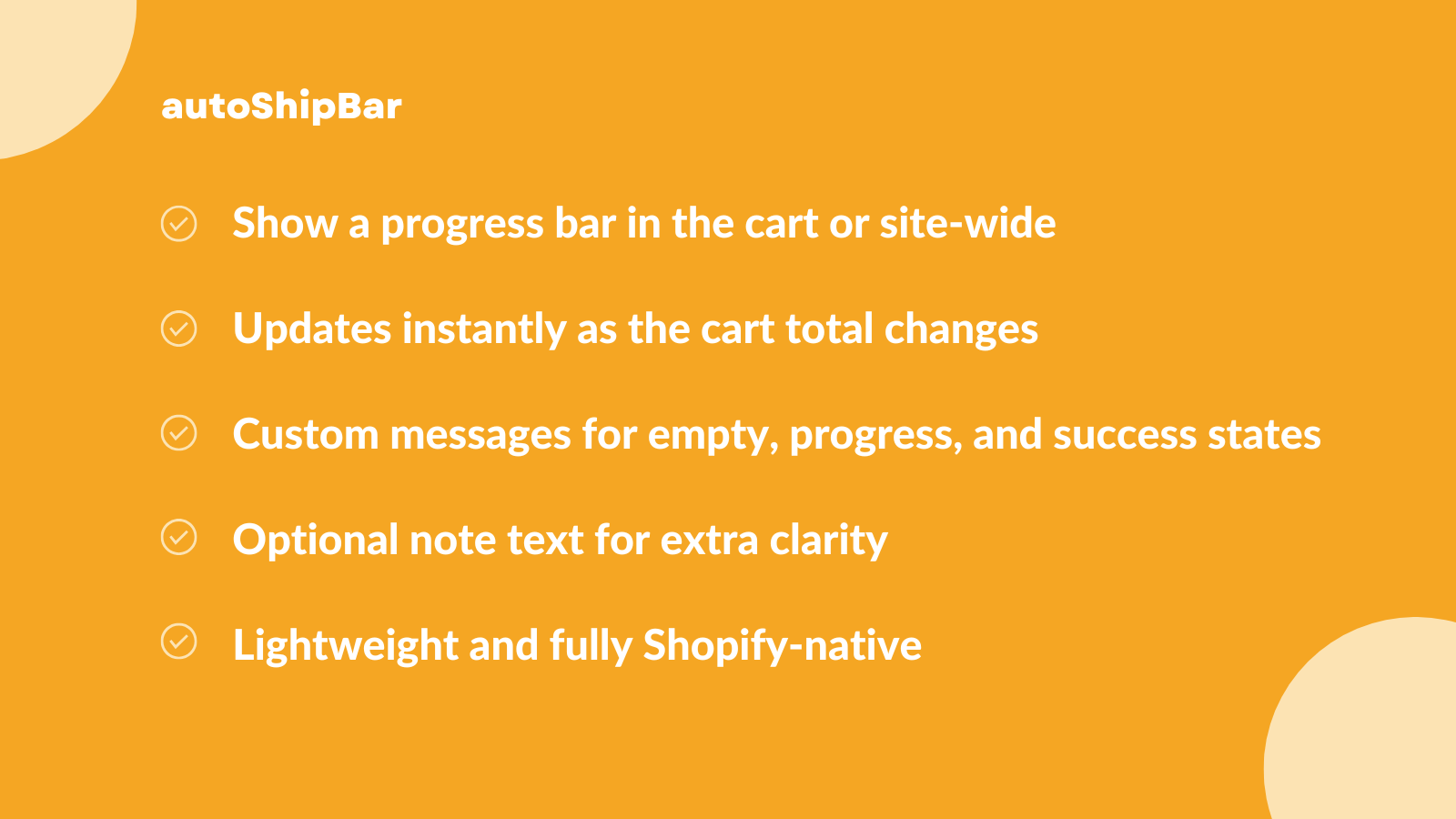
  • Free shipping progress bar functionality.
  • Real-time updates reflecting cart changes.
  • Customizable messages for various cart states.
  • Compatibility with your current Shopify theme.

A simple setup that matches your cart (drawer vs page)

When implementing an app like autoShipBar, consider how it will fit into your existing cart layout. Whether you use a drawer or a full page for your cart can affect visibility and usability.

With autoShipBar, you can easily integrate a free shipping progress bar that matches your store’s design. This bar updates in real-time as customers add items, showing them exactly how much more they need to spend to qualify for free shipping. This not only encourages larger purchases but also enhances the overall shopping experience.

Copywriting tips for the bar (empty, progress, success states)

The messaging on your free shipping progress bar can make a significant difference in how customers perceive their shopping experience. Here are some tips for effective copywriting:

  • Empty State: Use a friendly prompt like “Add $X more for free shipping!” This encourages customers to add more items without sounding pushy.
  • Progress State: Keep it positive and motivational, such as “You’re only $Y away from free shipping!” This creates a sense of urgency and achievement.
  • Success State: Celebrate the win with a message like “Congratulations! You’ve unlocked free shipping!” This reinforces positive feelings about their purchase.

Common mistakes (annoying placement, wrong thresholds, mobile clutter)

Even with the best intentions, it’s easy to make mistakes when trying to increase average order value. Here are common pitfalls to avoid:

  • Poor Placement: If the progress bar is too small or hidden, customers may not notice it. Ensure it’s prominently displayed in the cart or storefront.
  • Incorrect Thresholds: Setting the free shipping threshold too high can deter customers. Analyze your sales data to find a sweet spot that encourages larger carts without being unrealistic.
  • Mobile Clutter: On mobile devices, screen space is limited. Ensure the progress bar is mobile-friendly and doesn’t clutter the user experience.

Setup checklist

  • Install the autoShipBar app from the Shopify App Store.
  • Customize the appearance to match your store’s branding.
  • Set an appropriate free shipping threshold based on your average order value.
  • Write engaging copy for empty, progress, and success states.
  • Test the progress bar on both desktop and mobile devices.
  • Monitor customer feedback and adjust settings as needed.

FAQ

What is average order value?

Average order value (AOV) is the average amount spent by customers per transaction in your store. It is calculated by dividing total revenue by the number of orders.

How can I calculate my store’s average order value?

To calculate your AOV, take your total revenue for a specific period and divide it by the number of orders placed during that same period.

Why is increasing average order value important?

Increasing AOV can boost your overall revenue without the need to acquire more customers. It’s often more cost-effective to sell more to existing customers than to attract new ones.

How does autoShipBar help with average order value?

autoShipBar displays a free shipping progress bar that encourages customers to add more items to their carts by showing them how close they are to qualifying for free shipping.

Can I customize the messages on the progress bar?

Yes, autoShipBar allows you to customize the messages displayed for empty, progress, and success states to match your brand voice.

Is autoShipBar free to use?

Yes, autoShipBar is completely free, making it an excellent option for Shopify merchants looking to increase average order value.

What are some other strategies to increase average order value?

Other strategies include bundling products, offering discounts for larger purchases, and implementing upsell or cross-sell features on product pages.

In conclusion, increasing average order value on Shopify can be a game-changer for your business. By leveraging tools like autoShipBar, you can create a more engaging shopping experience that encourages larger purchases while providing clear, real-time updates to your customers. So why not give it a try? Your bottom line will thank you!

Want to try it? Take a look at autoShipBar on the Shopify App Store.

autoShipBar


Labels:

Tuesday, February 24, 2026

Unlocking B2B Potential: How Subscription Models Are Revolutionizing E-Commerce with Shopify

person holding space gray iphone 6
Photo by Roberto Cortese on Unsplash

The Rise of Subscription Models in B2B E-Commerce with Shopify

Ah, the subscription model: the gift that keeps on giving! For consumers, it’s like Christmas morning every month, but for businesses, it’s a strategic goldmine. In recent years, subscription models have taken the B2B e-commerce world by storm, and if you’re not on board yet, you might want to check your pulse. Let’s dive into why this trend is sweeping the digital marketplace and how Shopify is helping businesses capitalize on it.

What’s Driving the Subscription Model?

Before we get into the nitty-gritty, let’s talk about what’s actually fueling this subscription frenzy. Here are some key factors:

  • Predictable Revenue: Businesses love predictability, especially when it comes to revenue. With subscriptions, companies can forecast cash flow more accurately than your Aunt Karen can forecast the weather.
  • Customer Loyalty: Subscriptions create a sense of loyalty. When customers commit to a recurring payment, it’s like they’ve signed a digital blood oath to your brand (minus the actual blood, of course).
  • Convenience: In today’s fast-paced world, convenience is king. Businesses don’t want to waste time reordering supplies. A subscription service offers the ease of automation, ensuring that they never run out of that essential office coffee.
  • Scalability: Subscription models allow for growth. Whether you’re a startup or a well-established business, the ability to scale your offerings can be a game-changer.

The Shopify Advantage

Now, how does Shopify fit into this subscription model saga? Well, it’s like the trusty sidekick in your superhero movie — always there to save the day! Shopify provides a robust platform that makes setting up subscription services easier than teaching your cat to use a litter box (which, by the way, is not easy at all).

With Shopify’s extensive range of apps, businesses can seamlessly integrate subscription capabilities into their existing e-commerce strategies. One standout app is autoBlogger, which helps automate content creation, allowing you to regularly engage your audience without breaking a sweat. Imagine a world where your marketing efforts are less “sweat” and more “effortless charm.”

Types of Subscription Models

There’s a whole buffet of subscription models to choose from, and each has its own unique flavor. Let’s take a closer look at some popular options:

  • Product Subscriptions: This is the classic model where customers receive a product on a regular basis. Think of it as a “Netflix for office supplies.” You pay a monthly fee, and voila! Your favorite stapler arrives at your doorstep every month.
  • Service Subscriptions: These subscriptions provide ongoing access to services. This model is like the gym membership of the B2B world, minus the guilt of skipping leg day. You pay for services like cloud storage or software tools that you can use as long as your subscription is active.
  • Curated Boxes: These are like surprise parties for your office. You subscribe, and each month, you receive a curated box of goodies tailored to your business needs. Who doesn’t love a little surprise in the mail?
  • Freemium Subscriptions: This model gives customers a taste of your product or service for free, with the option to upgrade later. Think of it as the sample platter at a restaurant. You get to try before you buy, which is enticing — unless it’s a mystery meat!

Benefits of Subscription Models in B2B

Let’s talk about why businesses are flocking to subscription models like it’s the latest trend on TikTok. Here are some of the key benefits:

  • Steady Cash Flow: Consistent income means businesses can invest in growth and innovation. It’s like having a financial safety net, but a much more stylish one.
  • Data Insights: Subscriptions can provide invaluable data about customer behavior. With this data, businesses can fine-tune their offerings and marketing strategies like a chef perfecting a secret sauce.
  • Reduced Customer Acquisition Costs: Retaining existing customers is often cheaper than acquiring new ones. With subscriptions, businesses can focus on nurturing relationships rather than constantly chasing new leads.
  • Enhanced Customer Experience: A subscription model can allow businesses to personalize the customer experience based on preferences and purchasing behavior. It’s like having a personal shopper who knows your tastes better than your best friend does!

Challenges of Subscription Models

But wait! Before you jump on the subscription bandwagon, let’s not forget about the hurdles you might encounter. After all, every superhero has their kryptonite. Here are some common challenges:

  • Churn Rate: The dreaded churn rate — the percentage of customers who cancel their subscriptions. It’s like watching your favorite TV show get canceled after one season. Keeping customers engaged is key!
  • Pricing Strategy: Finding the right price point can be tricky. You want to be competitive but also make a profit. It’s a fine balance, like walking a tightrope while juggling flaming torches.
  • Customer Service: With subscriptions, you often face ongoing customer service demands. Keeping customers happy means having a reliable support system in place. Think of it as a lifeguard at a pool party — better safe than sorry!
  • Content Management: If you’re offering a service that includes content (like the aforementioned autoBlogger), keeping it fresh and engaging is crucial. No one wants stale content served on a silver platter!

How to Implement a Subscription Model on Shopify

So, how do you get started with subscription models on Shopify? Here’s a step-by-step guide to help you navigate this new terrain:

  1. Identify Your Niche: What products or services can you offer on a subscription basis? Do a little research and figure out what your customers really want.
  2. Choose the Right App: Use Shopify apps to manage your subscriptions. Look for an app that integrates well with your store and meets your specific needs. And don’t forget to check out autoBlogger for your content needs!
  3. Set Up Your Pricing Model: Determine how much you’ll charge for your subscription. Test different pricing strategies to see what resonates best with your audience.
  4. Market Your Offering: Spread the word! Use email marketing, social media, and your website to promote your subscription service. Don’t be shy — let your audience know what’s in it for them!
  5. Monitor and Adjust: Keep a close eye on your subscription metrics. Are customers sticking around? Is your churn rate manageable? Use the insights you gather to tweak your offerings as needed.

Conclusion

Subscription models in B2B e-commerce are more than just a trend; they’re here to stay! With the right strategy, tools like Shopify, and a sprinkle of creativity, businesses can thrive in this new landscape. So gear up, get creative, and don’t miss out on the opportunity to build lasting customer relationships.

And remember, if you want to automate your content creation and keep your audience engaged, check out autoBlogger. Happy subscribing!

Note, this article was written with AI assistance to improve readability and give you, the reader, a better experience! :)


Labels:

Monday, February 23, 2026

Discover the Magic of Crafty Shop

store image

Welcome to Crafty Shop, your go-to destination for handmade jewelry, spiritual kits, and unique treasures that resonate with your inner spirit. Here, every piece is infused with intention, crafted from natural stones, crystals, and artisanal materials. Whether you’re a seeker, creator, or healer, you’ll find something that speaks to you.

Standout Offerings to Enrich Your Life

Crafty Shop offers a plethora of beautiful items that combine aesthetics with spirituality. For instance, the Rock Energy Protection Set serves as a natural crystal shield, perfect for those wanting to guard against negative energies. Each piece is designed to connect you with the essence of the earth, helping you find balance and peace.

If you’re looking for something that embodies grace and harmony, consider the Antique Brass Angel Figurine. This figurine is not just decor; it’s a gentle reminder of protection and positivity, radiating light in your space.

Elegant Accessories to Brighten Your Day

No ensemble is complete without eye-catching accessories. The Elegant Purple Gemstone Bracelet & Matching Phone Charm Set features stunning gemstones that add a touch of elegance and vibrancy to your look. It’s a perfect blend of style and meaning, making it a thoughtful gift or a special treat for yourself.

For those who adore nature-themed pieces, the Vintage Butterfly Pendant Necklace showcases amber crystal accents in a striking butterfly design, symbolizing transformation and beauty. It’s not just jewelry; it’s a story crafted in shimmering stones.

Nature-Inspired Spiritual Kits

Crafty Shop doesn’t stop at accessories. Their Protective Spiritual Gemstone Kit is an essential collection for anyone on a spiritual journey. Each kit is carefully curated to include stones that balance energies and foster spiritual growth, making it perfect for meditation or introspection.

Seasonal Highlights and Collections

With every change of the season, Crafty Shop introduces new items that capture the essence of the time. During summer, the Ocean Breeze Gemstone Bracelet evokes the serenity of the sea, while delicate pieces like the Sunny Joy Gemstone Bracelet bring warmth and positivity into your life.

As we embrace colder months, the shop offers intricately designed pieces such as the Amethyst Bracelet, a beautiful adornment that embraces the depth of winter and the magic of healing.

A Commitment to Quality and Sustainability

At Crafty Shop, sustainability is at the heart of their mission. Each jewelry piece is handcrafted with care, ensuring that both the materials and methods used are environmentally friendly. The artisans behind these creations are dedicated to preserving natural beauty and craftsmanship, which means you can feel good about your purchase.

Join the Crafty Shop Community

Shopping at Crafty Shop isn’t just about finding beautiful items; it’s about becoming part of a community that celebrates creativity, spirituality, and connection. Whether you’re hunting for the perfect gift or treating yourself to a unique piece, there’s always something special waiting for you.

So why not take a moment to explore the treasures within? From protective gemstones to stunning jewelry, every item carries a story and purpose. Come and discover what resonates with your spirit at craftyshop.uk.

What are you waiting for? Check them out now!

store image 2

Disclaimer: The information presented in this blog post is based on publicly available data from https://craftyshop.uk. Accuracy is not guaranteed — please verify before making decisions.


Labels:

Top Shopify apps for schema markup: why autoSchema stands out

autoSchema

Schema markup is a vital aspect of SEO for Shopify store owners who want to enhance their search visibility. If you’ve ever found yourself scratching your head over how to implement schema markup correctly, you’re not alone. Many Shopify users struggle with this technical aspect, and that’s where apps like autoSchema come into play. In this article, we will explore the top Shopify apps for schema markup and why autoSchema stands out as a leading solution for both beginners and seasoned users.

  • Understand what schema markup is and its importance.
  • Learn why many Shopify stores struggle with schema implementation.
  • Discover key features to look for in a schema markup app.
  • Get practical tips on how to validate your schema results.

What schema markup actually is

In simple terms, schema markup is a code that you add to your website to help search engines understand the content on your pages better. Think of it as a translator between your website and search engines like Google. By using schema markup, you can highlight specific information, such as product details, reviews, and event dates, making it easier for search engines to display this information in rich snippets.

Rich snippets can enhance your search results, making them more attractive to potential customers. This means that implementing schema markup can lead to higher click-through rates and improved visibility in search results. So, it’s not just technical jargon; it’s a way to make your store stand out in a crowded marketplace.

Why Shopify stores get schema markup wrong

Many Shopify store owners struggle with schema markup due to a few common pitfalls:

  • Lack of understanding: Without a clear grasp of what schema markup is, it’s easy to overlook it entirely.
  • Technical barriers: The idea of coding can be daunting for those without a technical background.
  • Inconsistent updates: As your store evolves, failing to update schema can lead to outdated or incorrect information.
  • Duplicate schema: Many stores inadvertently create duplicate schema, which can confuse search engines and harm SEO.

These issues can lead to missed opportunities for enhanced search visibility and rich results. Fortunately, apps like autoSchema are designed to address these challenges effectively.

What to look for in an app for schema markup

  • One-click setup to activate Google structured data.
  • Automatic updates to keep structured data aligned with your store changes.
  • Prevention of duplicate or invalid schema that could harm SEO.
  • Seamless integration with existing themes and store setups.
  • Accessibility for both beginners and advanced users, minimizing the need for technical skills.
  • Support for Google rich results, ensuring your store qualifies where applicable.

How to validate results

Once you’ve implemented schema markup, validating your results is crucial. Here are a couple of tools you can use:

  • Google Search Console: This tool allows you to monitor your site’s performance, including any schema errors. Check for warnings related to your structured data and address them promptly.
  • Rich Results Test: Use this tool to see how your schema markup appears in search results. You can test individual URLs to ensure that your structured data is functioning correctly.

Regularly validating your schema can help prevent issues and keep your store optimized for search visibility.

Common pitfalls

As you navigate schema markup, here are some common pitfalls to be aware of:

  • Duplicate schema: Creating multiple instances of the same schema can confuse search engines, leading to potential penalties.
  • Missing fields: Not including all necessary fields can result in incomplete information being displayed in search results.
  • Theme conflicts: Sometimes, your store’s theme can interfere with schema markup, causing it to display incorrectly or not at all.

Avoiding these pitfalls is essential for maintaining the integrity of your schema markup and ensuring optimal results.

A simple ongoing maintenance approach

Maintaining your schema markup doesn’t have to be a chore. Here are some straightforward steps to keep everything in check:

  • Regularly review your Google Search Console for any schema-related warnings.
  • Use the Rich Results Test tool after making significant changes to your store.
  • Schedule a monthly audit of your schema markup to ensure everything is up to date.

By incorporating these practices into your routine, you can ensure that your schema markup remains accurate and effective.

Why autoSchema stands out

Now that we’ve covered the importance of schema markup and how to manage it, let’s discuss why autoSchema is a standout choice for Shopify store owners. With its one-click setup, autoSchema makes it easy to activate Google structured data without any technical hassle. It automatically updates your structured data as your store changes, reducing the risk of outdated information that could harm your SEO.

Additionally, autoSchema prevents duplicate or invalid schema, helping you maintain a clean and effective structured data setup. Designed for both beginners and advanced users, it seamlessly integrates with your existing themes and store setups, making it a user-friendly solution for everyone.

If you are serious about enhancing your store’s search visibility, consider giving autoSchema a try. It could be the missing piece in your SEO strategy.

FAQ

What is schema markup?

Schema markup is a code that helps search engines understand the content of your website better, allowing for rich snippets in search results.

Why is schema markup important for Shopify stores?

Schema markup enhances visibility in search results, can improve click-through rates, and helps in qualifying for rich results.

How can I validate my schema markup?

You can validate your schema markup using Google Search Console and the Rich Results Test tool.

What are common mistakes with schema markup?

Common mistakes include creating duplicate schema, missing required fields, and conflicts with store themes.

Can I use autoSchema without technical skills?

Yes, autoSchema is designed for ease of use, making it accessible to both beginners and advanced users.

How often should I check my schema markup?

It’s a good practice to review your schema markup regularly, ideally monthly, to ensure everything is up to date.

Does autoSchema support rich results?

Yes, autoSchema helps your store qualify correctly for Google rich results where applicable.

Want to try it? Take a look at autoSchema on the Shopify App Store.

autoSchema


Labels:

Sunday, February 22, 2026

Best free Shopify app for Shopify blog automation: is autoBlogger enough?

autoBlogger

If you’re a Shopify merchant looking to enhance your store’s content strategy, you’ve probably stumbled across the term Shopify blog automation. This process can save you time and effort while providing valuable, SEO-friendly content to attract customers. However, finding the right tools to achieve this can be quite the challenge. In this article, we’ll dive into the features of autoBlogger, the best free Shopify app for automating your blog, and explore whether it’s enough to meet your needs.

  • Discover what Shopify blog automation entails.
  • Learn what to look for in an automation app.
  • Understand how to maintain quality while saving time.
  • Examine common pitfalls to avoid in your blogging strategy.

What Shopify blog automation means for a Shopify store (and why it’s harder than it sounds)

Shopify blog automation is all about creating content without the constant manual effort. Imagine waking up to a fully written blog post every day, tailored to your audience and optimized for SEO. Sounds dreamy, right? But it’s not as simple as it seems. Effective blogging involves more than just hitting “publish.” You need to consider factors like relevance, engagement, and search engine optimization.

Many merchants struggle with consistency in posting quality content, resulting in thin or duplicated posts that can harm their store’s SEO. This is where a smart automation tool comes into play, helping you create a steady stream of quality content that resonates with your audience.

What to look for in an app for Shopify blog automation

  • Automatic post generation with SEO-friendly structures.
  • Flexible article modes, such as topic-based or product-focused.
  • Ability to manage upcoming articles easily.
  • Integration of product links and keyword targeting.

A simple setup that won’t break your theme

One of the biggest fears merchants have about installing new apps is the potential disruption to their existing theme. Thankfully, autoBlogger offers a seamless integration process that won’t mess with your theme’s aesthetics. Its user-friendly interface makes setup a breeze, allowing you to focus on what really matters: your content.

How to keep quality consistent (without sounding like AI)

Quality control is crucial when it comes to automated blogging. You don’t want your posts to sound robotic or generic. autoBlogger offers two article modes: topic-based and product-focused, which helps maintain a natural tone and relevant content.

Additionally, editing features allow you to tweak published articles directly in Shopify’s blog editor. This flexibility ensures that your brand voice remains intact while benefiting from the efficiency of automation. Remember, the goal is to save time without sacrificing quality.

Common pitfalls (thin content, duplication, poor internal linking)

While automation can streamline your blogging process, it’s not without its challenges. Here are a few common pitfalls to watch out for:

  • Thin content: Ensure that your posts offer real value. Avoid fluff and aim for depth.
  • Duplication: Automated content can sometimes lead to repetitive themes. Use unique angles.
  • Poor internal linking: Lack of internal links can hurt your SEO. Make sure to include relevant links within your posts.

Quick checklist to sanity-check each post before it goes live

Before you hit that publish button, here’s a quick checklist to ensure your posts are up to par:

  • Is the content relevant to my audience?
  • Have I included internal links to related products or posts?
  • Is the SEO optimized (keywords, headings, metadata)?
  • Does the post maintain a consistent tone and voice?

Setup checklist

  • Install autoBlogger and integrate it with your Shopify store.
  • Choose your preferred article mode (topic-based or product-focused).
  • Configure SEO settings and ensure your keywords are targeted.
  • Schedule your first posts and manage your content calendar.

FAQ

What is autoBlogger?

autoBlogger is a Shopify app that automates the blogging process by generating SEO-friendly posts tailored to your store’s audience.

Can I edit posts created by autoBlogger?

Yes, you can edit published articles directly inside Shopify’s blog editor, allowing you to maintain your brand voice.

Is there a limit on the number of posts I can generate?

No, autoBlogger allows you to create an indefinite number of posts, making it a true set-and-forget system.

How does autoBlogger optimize for SEO?

autoBlogger structures posts with SEO-friendly HTML, includes metadata, and targets keywords, helping to boost your organic traffic.

What if I want to add images to my posts?

autoBlogger automatically adds relevant images to each post, enhancing visual appeal and engagement.

Is autoBlogger really free?

Yes, autoBlogger offers a free version, making it accessible for all Shopify merchants looking to automate their blogging efforts.

Where can I learn more about autoBlogger?

You can find more information about autoBlogger and its features at this link.

In conclusion, if you’re searching for a way to streamline your blogging process on Shopify, autoBlogger is a solid choice. With its automation capabilities and focus on SEO, it can help you save time while still delivering quality content. Just remember to keep an eye on quality and avoid common pitfalls. Happy blogging!

Want to try it? Take a look at autoBlogger on the Shopify App Store.

autoBlogger


Labels:

Friday, February 20, 2026

Unlocking Sales: The Power of Personalized Recommendations in E-commerce

a basket with a target and a target in it
Photo by Growtika on Unsplash

The Impact of Personalized Product Recommendations on E-commerce Conversion Rates

Ah, the world of e-commerce! It’s like a digital bazaar where every click counts, and every pixel has the potential to convert a casual browser into a loyal customer. With the ever-increasing competition, online retailers are constantly on the lookout for innovative ways to boost their conversion rates. One of the most effective strategies? Personalized product recommendations. Let’s dive into how this magic works and why it’s a game-changer for your online store.

What Are Personalized Product Recommendations?

First things first, let’s get on the same page: what exactly are personalized product recommendations? Imagine walking into a store, and instead of being bombarded with a random assortment of products, a friendly assistant greets you and says, “Hey there! I know you love hiking, so check out these trail shoes and this amazing backpack!”

That, my friends, is the essence of personalized recommendations. In the digital realm, it’s all about using data — like past purchases, browsing behavior, and customer preferences — to suggest products that are tailored to individual shoppers. It’s like Netflix, but for shopping!

Why Do Personalized Recommendations Matter?

Now that we’ve got the basics down, let’s talk about why personalized recommendations are crucial for e-commerce success. Here are a few reasons that will have you nodding your head in agreement:

  • Enhanced Customer Experience: Shoppers appreciate when brands understand their needs. It makes them feel special (and who doesn’t love that?).
  • Increased Engagement: Personalized recommendations can keep customers on your site longer, encouraging them to explore more products.
  • Higher Conversion Rates: According to various studies, personalized recommendations can lead to a significant increase in sales. Think of it as your own personal sales assistant!

Statistics That Speak Volumes

If you need more convincing, let’s look at some numbers. A study by Ecommerce CEO revealed that 31% of online shoppers said they would be more likely to return to a site that offers personalized product recommendations. Additionally, research from Brightpearl shows that 56% of consumers are more likely to make a purchase when they receive personalized recommendations. That’s a lot of happy shoppers!

How Do Personalized Recommendations Work?

So how does this all work behind the scenes? Personalized product recommendations rely heavily on data analytics and algorithms. Here’s a simplified breakdown:

  1. Data Collection: This involves gathering data from various sources, including past purchases, browsing history, and user behavior.
  2. Segmentation: Customers are grouped based on shared characteristics, like demographics, preferences, and buying habits.
  3. Algorithm Application: Machine learning algorithms analyze the data to identify patterns and predict what products a customer might be interested in.
  4. Product Display: Based on this analysis, personalized recommendations are displayed on the website during the shopping experience.

Types of Personalized Recommendations

When it comes to personalized product recommendations, there’s no one-size-fits-all approach. Here are a few popular types:

  • Related Products: “Customers who bought this item also bought…” It’s like your friend whispering, “You know you need these socks to go with those shoes!”
  • Recently Viewed: This feature allows customers to easily revisit items they’ve shown interest in. It’s like a digital post-it note!
  • Top Picks for You: Based on previous behavior, this section showcases items that are likely to resonate with the customer’s tastes.
  • Seasonal Recommendations: Tailoring suggestions to seasonal trends or upcoming holidays can entice customers to make timely purchases.

Challenges of Implementing Personalized Recommendations

While the benefits are enticing, implementing personalized recommendations is not without its challenges:

  • Data Privacy Concerns: With great power comes great responsibility. Customers are increasingly concerned about how their data is used, so transparency is key.
  • Quality of Data: Poor data quality can lead to irrelevant recommendations. Imagine recommending winter boots to someone in the tropics — awkward!
  • Complexity of Algorithms: Developing and maintaining effective algorithms requires technical expertise and ongoing adjustments.

How to Get Started with Personalized Recommendations

Ready to dive into the world of personalized recommendations? Here’s a quick guide on how to get started:

  1. Choose the Right Technology: There are numerous e-commerce platforms and tools that can help you implement personalized recommendations. Take time to research and find the best fit for your business.
  2. Leverage Customer Data: Use the data you already have — like email sign-ups and purchase history — to tailor recommendations to your customers.
  3. Test and Measure: Start small with A/B testing to see which recommendations work best. Analyze the results, and refine your approach accordingly.
  4. Continuously Optimize: Personalization isn’t a set-it-and-forget-it strategy. Continuously analyze customer behavior and adjust recommendations to improve performance.

Case Studies: Success Stories

Still not convinced? Let’s look at a couple of brands that have mastered personalized recommendations:

  • Amazon: The king of e-commerce uses sophisticated algorithms to suggest products, resulting in an estimated 35% of their revenue coming from these personalized recommendations.
  • Netflix: While not a traditional e-commerce platform, Netflix’s personalized content recommendations keep users engaged and coming back for more, proving the power of personalization across industries.

Conclusion

In a world where customers are inundated with choices, personalized product recommendations can be the secret sauce that helps your e-commerce store stand out. By understanding your customers and offering tailored suggestions, you can enhance their shopping experience, increase engagement, and ultimately boost your conversion rates.

So, if you’re ready to take your e-commerce game to the next level, don’t forget to check out tools like autoBlogger, which can help you manage your content and keep your product recommendations fresh and engaging!

Note, this article was written with AI assistance to improve readability and give you, the reader, a better experience! :)


Labels:

Thursday, February 19, 2026

autoLLMs review: the Shopify app for creating an llms.txt file

autoLLMs

If you are a Shopify store owner looking to enhance your store’s visibility in the age of AI, you might have stumbled upon the need for creating an llms.txt file. This article is tailored for you, as it dives into the functionalities and benefits of the autoLLMs app, which simplifies this process. With AI tools becoming increasingly essential for indexing and discovering online content, having a well-maintained llms.txt file can make a world of difference for your store. So, let’s explore how autoLLMs can help you stay ahead in the game.

  • Understand what an llms.txt file is and why it matters.
  • Learn how to set up and maintain your llms.txt file automatically.
  • Avoid common pitfalls when managing AI indexing.
  • Check off a quick setup checklist to ensure everything is in place.

What creating an llms.txt file means for a Shopify store

In simple terms, an llms.txt file is a text file that helps AI tools, like search engines and crawlers, easily discover and index your store’s content. Think of it as a roadmap for AI, guiding them through your site’s important pages and resources. When properly configured, it allows these tools to navigate your store without getting lost in a maze of links and redirects.

For Shopify stores, having an llms.txt file means:

  • Improved visibility in AI-driven search results.
  • Better indexing of your content, which can lead to increased traffic.
  • Enhanced control over what AI tools can access, helping you maintain your SEO integrity.

What to look for in an app for creating an llms.txt file

  • Automatic daily llms.txt generation and updates.
  • Options to include or exclude specific content types.
  • Easy management of redirects as your store evolves.
  • One-click blocking or allowing of specific AI crawlers.
  • Clear and detailed reporting on the status of your llms.txt file.

How to set it up without breaking existing SEO

Setting up your llms.txt file using autoLLMs is straightforward, but there are a few best practices to keep in mind to avoid any SEO mishaps:

  • Start by installing the autoLLMs app from the Shopify App Store.
  • Configure your content preferences carefully. Decide which pages and products should be included in the llms.txt file.
  • Regularly review your settings to ensure they align with any changes in your store.
  • Monitor your site’s performance and indexing status after the llms.txt file is implemented.

By following these steps, you can set up your llms.txt file without disrupting your existing SEO efforts.

Common mistakes

Even with the best intentions, mistakes can happen. Here are some common pitfalls to avoid when managing your llms.txt file:

  • Blocking too much: Be cautious about what you restrict. Blocking essential pages could hinder your store’s visibility.
  • Confusing signals: Ensure the content you include in your llms.txt file is clear and relevant to avoid mixed signals for AI tools.
  • Stale outputs: Regular updates are crucial. An outdated llms.txt file could lead to missed opportunities in indexing.

How to keep it maintained automatically

One of the standout features of autoLLMs is its ability to maintain the llms.txt file automatically. Here’s how it works:

  • The app generates daily updates, ensuring that any new content or changes in your store are reflected in the llms.txt file.
  • Redirects are handled seamlessly, so you don’t have to worry about broken links.
  • You can easily adjust settings to include or exclude content types as needed.

This automatic maintenance allows you to focus on growing your business while ensuring your llms.txt file is always up to date.

Setup checklist

  • Install the autoLLMs app from the Shopify App Store.
  • Configure your llms.txt settings to include/exclude content types.
  • Review and adjust your settings regularly, especially after significant changes to your store.
  • Monitor your store’s performance and indexing status periodically.
  • Check the auto-generated llms.txt file to ensure it meets your expectations.

FAQ

What is an llms.txt file?

An llms.txt file is a text file that helps AI tools discover and index the important content on your website more efficiently.

Why do I need an llms.txt file for my Shopify store?

Having an llms.txt file helps improve your store’s visibility in AI-driven search results and ensures better content indexing.

Can I manually edit the llms.txt file?

While autoLLMs automates the process, you can choose to customize your settings within the app to better fit your needs.

What happens if I block important pages in my llms.txt file?

Blocking critical pages can hinder your store’s visibility and prevent AI tools from indexing essential content, potentially affecting your traffic negatively.

How often does autoLLMs update my llms.txt file?

The app automatically generates and updates your llms.txt file daily, ensuring that it reflects the latest changes in your store.

Is autoLLMs user-friendly for beginners?

Yes, autoLLMs is designed to be user-friendly, making it accessible for both beginners and experienced Shopify users.

Can I try autoLLMs for free?

The app may offer a trial period, but you’ll need to check the Shopify App Store for the most current information regarding pricing and trials.

In conclusion, if you are serious about optimizing your Shopify store for AI indexing and discovery, autoLLMs is a tool worth considering. With its automatic updates and user-friendly setup, you can keep your store future-ready without the headache of constant manual maintenance. Embrace the power of AI and let autoLLMs take care of your llms.txt file!

Want to try it? Take a look at autoLLMs on the Shopify App Store.

autoLLMs


Labels:

Tuesday, February 17, 2026

Unlocking the Subscription Box Boom: A Guide to Building Your Shopify App

red and yellow number 3
Photo by Webstacks on Unsplash

Building a Subscription Box App for Shopify Stores

Ah, subscription boxes! The gift that keeps on giving, or at least until you realize you have a drawer full of half-used face masks and artisanal hot sauces. But let’s be honest, who doesn’t love the thrill of receiving a surprise package on their doorstep? If you’re a Shopify store owner, tapping into the subscription box craze can be a game-changer for your business. Today, we’ll explore how to build a subscription box app for your Shopify store, so you too can join the ranks of the subscription box elite!

Understanding the Subscription Box Model

Before we dive into the nitty-gritty of app development, let’s first understand what a subscription box is. At its core, a subscription box is a recurring delivery of niche products, often curated around a specific theme. Think beauty products, snacks from around the world, or even a monthly supply of socks featuring your favorite cartoon characters (yes, that exists!).

Why are subscription boxes so popular? Well, they offer:

  • Convenience: Customers love the ease of having products delivered right to their door.
  • Discovery: They can discover new products they may not have tried otherwise.
  • Value: Many boxes are priced lower than buying the items individually, which is a win-win!

Now, imagine harnessing that excitement for your Shopify store. Let’s roll up our sleeves and get started!

Step 1: Define Your Niche

The first step to building a successful subscription box app is defining your niche. This is where you decide what kind of products you want to offer. A good niche will help you stand out in a crowded market. Here are a few ideas to get your creative juices flowing:

  • Eco-friendly products: Cater to the environmentally conscious consumer.
  • Pet supplies: Because who doesn’t want to spoil their furry friends?
  • Fitness gear: Perfect for the gym rats and yoga lovers.
  • Gourmet snacks: Because eating is a universal language.

Take a moment to think about your passions and interests. What do you love? What do you know about? This will make it easier for you to create engaging content and market your subscription box.

Step 2: Research Your Competitors

Once you’ve nailed down your niche, it’s time to do some detective work. Check out other subscription box services in your chosen market. Analyze what they’re doing right, and what they’re doing wrong. Are their boxes packed with value? Do they have an engaging social media presence? You can learn a lot from your competitors, so don’t skip this step!

Step 3: Choose Your Subscription Model

Next up, you’ll need to decide on your subscription model. Here are a few popular options:

  • Monthly Subscription: Customers receive a box once a month. It’s the classic choice!
  • Quarterly Subscription: A box every three months, for those who want to spread out the excitement.
  • Custom Subscription: Let customers choose their delivery frequency based on their needs.

Consider your target audience when making this decision. Some customers may prefer the anticipation of a monthly surprise, while others may want to take it slow. You can even offer multiple options to cater to different preferences!

Step 4: Design Your App

Now it’s time for the fun part: designing your app! You’ll want to ensure it’s user-friendly, visually appealing, and optimized for mobile. Here are some features to consider incorporating:

  • Subscription Management: Allow users to easily manage their subscriptions, including pausing, skipping, or canceling.
  • Customization Options: Let customers personalize their boxes based on their preferences.
  • Analytics Dashboard: Provide valuable insights into subscriber behavior and sales trends.
  • Integrations: Make sure your app can easily integrate with Shopify and other platforms.

Remember, first impressions matter! So don’t skip out on creating an intuitive and aesthetically pleasing user interface.

Step 5: Set Up Your Supply Chain

Once your app is designed, you’ll need to figure out the logistics of sourcing and fulfilling your subscription boxes. This involves:

  • Finding Suppliers: Partner with vendors who can provide quality products for your boxes.
  • Inventory Management: Keep track of stock levels to ensure you can fulfill orders on time.
  • Shipping Solutions: Choose reliable shipping options to get your boxes to customers quickly.

Don’t forget to factor in shipping costs when pricing your subscription boxes. No one wants to be hit with unexpected shipping fees at checkout!

Step 6: Marketing Your Subscription Box

Now that you have your subscription box app up and running, it’s time to let the world know about it! Here are some marketing strategies to consider:

  • Social Media: Create engaging content on platforms like Instagram and TikTok to showcase your boxes.
  • Influencer Collaborations: Partner with influencers in your niche for unboxings and promotions.
  • Email Marketing: Build an email list to keep customers updated on new products and promotions.
  • Referral Programs: Encourage happy customers to refer their friends in exchange for discounts or free boxes.

Don’t forget to track your marketing efforts! Use analytics to see what’s working and what’s not, and be prepared to pivot as needed.

Step 7: Optimize and Iterate

Once your subscription box service is live, the work doesn’t stop there. You’ll need to continually optimize and iterate based on customer feedback and market trends. Regularly survey your subscribers to understand their preferences, and be open to making changes based on their insights.

And remember, the subscription box landscape is ever-evolving. Stay ahead of the curve by keeping an eye on emerging trends and competitor offerings. Constantly innovating will help you maintain customer interest and loyalty.

Conclusion

Building a subscription box app for your Shopify store can be an exciting venture that not only boosts your sales but also fosters a community of loyal customers. By carefully planning your niche, designing a user-friendly app, managing your supply chain, and effectively marketing your offerings, you can create a delightful experience for your subscribers.

If you’re looking for an easy way to manage your content marketing as you embark on this subscription box journey, consider using the autoBlogger app. It’s a fantastic tool to help streamline your blog posts and keep your audience engaged!

Now, go forth and conquer the subscription box world. Happy shipping!

Note, this article was written with AI assistance to improve readability and give you, the reader, a better experience! :)


Labels:

Monday, February 16, 2026

Discover Timeless Elegance at Stile Donna Bags

store image

Welcome to the world of Stile Donna, where style meets substance in a stunning collection of handbags and accessories. If you’re on the hunt for that perfect bag to elevate your outfit or a charming accessory to finish your look, you’ve come to the right place. Striking a balance between sophistication and everyday practicality, Stile Donna offers a delightful array of styles that cater to all tastes and occasions.

Signature Handbags That Impress

The hallmark of Stile Donna is their exquisite range of handbags. Each piece is thoughtfully designed to not only complement your look but also to make a statement. Consider the Classic Structured Top-Handle Bag with Gold Hardware. This beauty brings a touch of glamour to any outfit, making it ideal for both days at the office and evenings out.

If you’re looking for something a bit smaller yet equally chic, the Mini Crossbody Bag with Top Handle and Gold Lock fits the bill perfectly. Its compact design doesn’t skimp on style, and it transitions seamlessly from day to night.

Perfectly Practical Everyday Carryalls

For those who need functionality without sacrificing flair, the structured handbags in the collection are ideal. The Structured Top-Handle Mini Satchel is an excellent choice, combining elegance with everyday ease. It’s spacious enough for all your essentials while maintaining a sleek silhouette.

Jewelry That Dazzles

No outfit is complete without the right accessories, and Stile Donna understands this well. Their jewelry collection features stunning, eye-catching pieces that are sure to elevate your look. Take the Rainbow Crystal U-Hoop Earring for example. It’s a bold statement piece that’s perfect for those who want to shine.

Looking for something subtle yet classy? The Luxury Textured Hoop Earrings offer just the right mix of elegance and fun.

Comfort and Style for Every Adventure

Stile Donna isn’t just about looks; their backpacks and totes are designed for the modern woman on the go. The Black Quilted Backpack with Chain Detail is both functional and chic, perfect for a day out, while the Upcycled Denim & Vegan Leather Backpack is a sustainable option that doesn’t compromise on style.

Celebrate Unique Style with Seasonal Picks

As seasons change, so too do styles and trends. Stile Donna keeps the collection fresh and exciting, making it easy to find the perfect piece for every occasion. Keep an eye out for seasonal favorites like the Quilted Crossbody Bag with Gold Hardware, a versatile choice that adds a touch of elegance to any ensemble.

Commitment to Quality and Sustainability

At the heart of Stile Donna is a commitment to quality and sustainability. Each product is crafted with care, ensuring that your bag not only looks great but lasts through the years. This focus on durable and eco-friendly materials aligns perfectly with the values of modern, conscientious consumers who want both style and peace of mind.

The Perfect Destination for Fashion Enthusiasts

Whether you’re seeking a handbag that’ll make you feel confident at a business meeting or looking for an elegant piece to dazzle at your next social gathering, Stile Donna has something for everyone. Their friendly return policy and free shipping make the shopping experience even more enjoyable, allowing you to browse with ease.

So why not take a moment to explore what Stile Donna has to offer? With their fabulous range of bags and accessories, you’re sure to find something that mirrors your unique style.

Visit Stile Donna today, and elevate your accessory game!

What are you waiting for? Check them out now!

store image 2

Disclaimer: The information presented in this blog post is based on publicly available data from https://stiledonnabags.com. Accuracy is not guaranteed — please verify before making decisions.


Labels:

Sunday, February 15, 2026

Unpacking the Unique Selling Points of autoSchema

autoSchema

Have you ever spent an all-nighter on your Shopify store, tweaking everything from product descriptions to images, only to wake up to a headache-inducing realization? Your SEO could use some serious help! Enter autoSchema, the unsung hero of structured data that swoops in to save your day (and your rankings) with minimal effort. In this blog post, we’ll unpack the unique selling points of autoSchema — the app that promises to keep your Google structured data accurate, optimized, and worry-free. So grab your favorite caffeine boost and let’s dive in!

What is Structured Data and Why Should You Care?

First of all, let’s break down structured data. In the simplest terms, it’s a way of organizing information so that search engines (like Google) can understand your content better. Think of it as presenting your store in a neatly wrapped package, complete with a gift bow. This means better visibility in search results, which is the golden ticket for increased traffic and conversions. Now, you might be thinking, “Sounds great, but I’m not a tech wizard! How can I possibly manage this?” This is where autoSchema comes into play. Let’s explore its unique features that make implementing structured data as easy as pie.

1. One-click Setup: Get Ready, Set, Go!

Imagine a world where setting up Google structured data takes less time than brewing your morning coffee. With autoSchema, that world is a reality! With just one click, you can activate Google structured data for your Shopify store. No complicated coding, no endless tutorials, just a straightforward setup that even your technophobic uncle could manage. > **Pro Tip:** This one-click magic means you can spend more time focusing on what really matters — like creating that next viral TikTok for your products!

2. Continuous Updates: No More Outdated Data Drama

Life is all about change, and your Shopify store is no different. As you update your products, change prices, or even revamp your offerings, the last thing you want is outdated structured data lingering around like an unwelcome house guest. With autoSchema, you won’t have to worry about manually updating your structured data every time something changes. The app automatically keeps your structured data up to date, ensuring that your content remains fresh and relevant. > **Did You Know?** Staying current with structured data can significantly reduce the chances of facing penalties from Google, thus saving you from the dreaded Search Console warnings.

3. Say Goodbye to Duplicate and Invalid Schema

Picture this: You’ve put in the hard work, only to discover that duplicate or invalid schema is lurking in your Shopify store like an unwanted clown at a birthday party. It can negatively impact your SEO and cause a drop in visibility. But fear not! autoSchema prevents this kind of chaos. The app ensures clean and valid structured data, reducing the risk of errors that could harm your store’s search ranking. > **Quick Fact:** Google loves clean data! Having valid structured data can help your store qualify for rich results, which means more eyes on your products.

4. Seamless Integration: Fit Like a Glove

You’ve probably heard of apps that are supposed to make your life easier, only to realize they mess up your existing store theme like a toddler with finger paint. Luckily, autoSchema integrates seamlessly with your existing themes and store setups. Whether you have a minimalistic design or a more elaborate theme, this app fits right in without causing any hiccups. You can get all the benefits of structured data without sacrificing the look and feel of your store.

5. No Technical Skills Required: For Everyone!

Let’s face it: not everyone is born with coding skills. But that doesn’t mean you should miss out on the benefits of structured data. Thankfully, autoSchema is designed for both beginners and advanced users alike. Whether you’re a Shopify whizz or someone who still struggles to find the “any” key, this app makes it easy to harness the power of structured data without breaking a sweat.

6. Error Reduction: Less Worry, More Sales!

Running an online store is stressful enough without having to constantly check for Search Console warnings. With autoSchema, you can significantly reduce the risk of errors caused by broken or outdated schema. This means one less thing on your to-do list — or at least one less item to lose sleep over. The app works tirelessly in the background, allowing you to focus on growing your business instead of troubleshooting SEO issues.

7. Boost Your Visibility and Sales

At the end of the day, all these features come down to one crucial goal: boosting your store’s visibility and sales. With autoSchema, you’re not just ticking a box for structured data — you’re actively working to enhance your store’s performance on search engines. As you start to qualify for Google rich results, you’ll likely see an increase in traffic, which translates into higher conversion rates. After all, the more visible your products are, the more likely they are to fly off the virtual shelves!

Conclusion: Ready to Optimize Your Store?

So, there you have it! The unique selling points of autoSchema make it a must-have tool for any Shopify merchant looking to enhance their store’s SEO without the fuss. The benefits are clear: time saved, reduced errors, and a better chance at increased traffic and conversions. If you’re ready to take the plunge and optimize your Google structured data effortlessly, give autoSchema a try today. Your future self (and your sales) will thank you!

Fancy trying it? Take a look at autoSchema on the Shopify App Store.

autoSchema


Labels:

Friday, February 13, 2026

Unlocking Loyalty: Top Shopify Apps to Keep Your Customers Coming Back for More!

a pile of items sitting on top of a table
Photo by Growtika on Unsplash

Best Shopify Apps for Boosting Customer Retention and Loyalty

In today’s fast-paced e-commerce world, retaining customers is more important than ever. As a business owner, you know that acquiring new customers can be a costly endeavor, often requiring more resources than keeping your existing customers engaged and happy. So, how do you ensure your customers stick around longer than a toddler with a candy bar? Enter the wonderful world of Shopify apps!

Why Focus on Customer Retention?

Before we dive into the apps, let’s talk about why customer retention is so crucial:

  • Cost-effective: Retaining customers is significantly cheaper than acquiring new ones. It’s like getting a discount on your favorite pizza every Friday — what’s not to love?
  • Increased revenue: Loyal customers tend to spend more. They’re like that friend who always orders the extra-large fries without a second thought.
  • Brand ambassadors: Happy customers turn into brand advocates. They’ll recommend your business to friends and family, which is the best kind of free advertising!

Now that we’ve established the importance of customer retention, let’s explore some of the best Shopify apps that can help you keep your customers returning for more.

1. Smile.io

First up is Smile.io, a rewards program app that transforms your customers into loyal fans faster than you can say “free shipping!” Smile.io allows you to create customizable loyalty programs, referral programs, and VIP tiers that incentivize customers to keep coming back.

With features like points for purchases, social shares, and referrals, you can create a fun and engaging experience for your customers. Plus, who doesn’t love earning points that can be traded for discounts? It’s like a game, but instead of collecting coins, you’re collecting savings!

2. ReCharge

If you’re selling subscription products, ReCharge is a must-have. This app helps you manage subscriptions seamlessly, allowing customers to set up recurring orders with ease. Think of it as the coffee subscription that keeps you caffeinated and happy without having to remember to re-order every week.

With ReCharge, you can offer flexible subscription options, discounts for subscribers, and even the ability for customers to modify their orders. It’s like having a personal assistant for your customers’ shopping needs — minus the awkward small talk!

3. Klaviyo

Next on our list is Klaviyo, an email marketing app that can help you nurture relationships with your customers through targeted email campaigns. With Klaviyo, you can segment your audience based on their shopping behavior, purchase history, and even their birthday (because who doesn’t love a birthday discount?).

Send personalized emails that remind customers of their abandoned carts, offer exclusive discounts, or even just check in to say hello. It’s like sending a little love note to your customers, but instead of “I love you,” it’s more like “We love your business!”

4. Yotpo

One of the best ways to build trust and loyalty is through customer reviews. Yotpo is a powerful app that helps you collect, manage, and display customer reviews on your Shopify store. After all, nothing says “buy this product” like a glowing review from a fellow customer.

With Yotpo, you can automatically request reviews after a purchase, showcase user-generated content on your site, and even run Q&A sessions for potential customers. It’s like having a cheerleader for your products, making sure everyone knows how great they are!

5. Tidio Live Chat

Sometimes, customers need a little help before making a purchase. That’s where Tidio Live Chat comes in. This app allows you to provide real-time support to your customers, answering their questions faster than a greased lightning bolt.

With Tidio, you can engage with customers on your site, provide instant answers, and even send automated messages based on their behavior. It’s like having a friendly shopkeeper who’s always ready to assist, ensuring that your customers leave with a smile (and maybe a few extra items in their cart).

6. AutoBlogger

Now, let’s talk about the magic of content creation with autoBlogger. This app automates your blogging process, helping you generate fresh, engaging content that keeps your customers informed and entertained. Think of it as your very own content genie, granting you the wish of consistent blog posts without the hassle of writer’s block.

By keeping your blog updated with relevant articles, you can improve your SEO, drive traffic to your site, and keep customers engaged with valuable content. Plus, who doesn’t want to be the go-to source for information in their niche? With autoBlogger, you can have a steady stream of content that not only informs but also retains customers.

7. LoyaltyLion

LoyaltyLion is another fantastic loyalty program app that helps you reward your customers for their loyalty. This app allows you to create customizable loyalty programs, offering points for purchases, referrals, and social media shares.

The best part? It integrates seamlessly with your Shopify store, making it easy to manage your loyalty program without any headaches. Plus, you can use the app’s analytics to track customer engagement and adjust your strategies accordingly. It’s like having a personal trainer for your customer loyalty program — minus the sweaty gym sessions!

8. Fera.ai

If you’re looking to create urgency and boost conversions, Fera.ai is the app for you. This tool uses social proof to showcase product popularity, sales, and customer reviews in real-time, creating a sense of urgency that can drive customers to make a purchase.

Imagine a little notification popping up that says, “Only 2 left in stock!” or “10 people are viewing this product right now!” It’s like a friendly nudge that encourages customers to act quickly before they miss out.

9. Omnisend

Last but not least, we have Omnisend, an all-in-one marketing automation platform designed for e-commerce businesses. With Omnisend, you can create email campaigns, SMS messages, and even push notifications to keep your customers informed and engaged.

By integrating with your Shopify store, you can easily segment your audience and send targeted messages that resonate with your customers. It’s like having a megaphone that only your loyal customers can hear, making sure they never miss out on a sale or important announcement.

Conclusion

In the grand scheme of e-commerce, customer retention and loyalty are the golden tickets to success. By leveraging these fantastic Shopify apps — like Smile.io, ReCharge, and of course, autoBlogger — you can create an engaging shopping experience that keeps your customers coming back for more.

So, go ahead and explore these apps, and watch your customer retention rates soar higher than a child on a sugar high after Halloween! And if you’re looking to boost your content marketing efforts, don’t forget to check out autoBlogger to keep your blog fresh and engaging!

Note, this article was written with AI assistance to improve readability and give you, the reader, a better experience! :)


Labels:

Thursday, February 12, 2026

Discover Your Perfect Car Mats at New Car Mats UK

store image

When it comes to car ownership, the little details can make a big difference, and that’s where New Car Mats UK shines. Specializing in tailored custom car mats, this online shop is dedicated to enhancing your driving experience with a touch of style and practicality.

A Tailor-Made Fit for Every Vehicle

One of the standout features of New Car Mats is their extensive selection of car mats tailored to fit a wide range of makes and models. From classic vehicles to the latest releases, they’ve got you covered. Whether you drive a Mercedes E-Class from 1995 to 2002 or the sleek Audi A5 Sportback from 2017 to the present, you’re sure to find car mats that fit like a glove.

Quality Meets Affordability

New Car Mats prides itself on offering high-quality products at affordable prices. Their mission is clear: provide premium tailored mats without breaking the bank. You’ll find options that outperform many expensive alternatives — why settle for less?

Popular Picks for Every Driver

Seasonal Specialties and Offers

With changing seasons come new challenges for your vehicle’s interior. Snow, mud, and debris can wreak havoc on your floors. That’s why investing in quality car mats during winter or rainy months is essential. Check out their seasonal sales for the best deals on mats that protect against the elements.

Commitment to Sustainability

New Car Mats is not just about style and savings; they also care about the environment. Their commitment to sustainability is reflected in their production methods, minimizing waste while delivering durable and reliable products. Feel good about your purchase, knowing it contributes to a greener planet!

Helpful Shopping Experience

Shopping online can sometimes feel overwhelming, but at New Car Mats, they make it easy. Their user-friendly website allows you to browse by brand, style, or model, making it simple to find exactly what you need. Plus, with free delivery on orders over £30, you can feel good about getting your car mats delivered right to your doorstep.

A Community of Car Lovers

What sets New Car Mats apart is their community of car enthusiasts. They actively engage with their customers, sharing tips on care and maintenance through their blog. Want to learn how to clean your mats properly? Curious about the best road trips in the UK? Their blog is a treasure trove of useful insights tailored for fellow car lovers.

Your Next Steps Towards a Stylish Ride

Ready to elevate your driving experience? Take a moment to explore the exquisite selection at New Car Mats UK. Whether you’re looking for a practical solution to keep your car interior clean or simply want to add a splash of color, there’s something here for everyone.

Don’t wait — your car deserves the best. Dive into their collection today and find the perfect mats that fit both your vehicle and your lifestyle!

What are you waiting for? Check them out now!

store image 2

Disclaimer: The information presented in this blog post is based on publicly available data from https://newcarmats.co.uk. Accuracy is not guaranteed — please verify before making decisions.


Labels:

Tuesday, February 10, 2026

Unlocking Local SEO Success: How Structured Data Markup Elevates Your Visibility

a dark alley way with a neon sign
Photo by Andrea De Santis on Unsplash

The Impact of Structured Data Markup on Local SEO Visibility

In the world of digital marketing, there’s a term that’s tossed around like a hot potato: Structured Data Markup. If you’re scratching your head wondering what that even means, don’t worry, you’re not alone. Think of structured data as a secret handshake that allows search engines to understand your content better. And let’s be honest, who wouldn’t want to be in the know with search engines like Google? Spoiler alert: it can seriously improve your local SEO visibility.

What is Structured Data Markup?

Structured data markup is a standardized format for providing information about a page and classifying the page content. You can think of it as adding a little icing on top of your cake — it makes everything look and taste better. By using structured data, you give search engines like Google the information they need to understand your content. This, in turn, allows them to display it more prominently in search results.

But let’s break it down further. Imagine a restaurant trying to attract local customers. If the search engine can understand that the page is about a cozy Italian restaurant with outdoor seating, a special on Friday night spaghetti and meatballs, and a killer wine selection, it can show that information directly in the search results. Yum, right?

Why Does It Matter for Local SEO?

Local SEO is all about optimizing your online presence to attract more business from relevant local searches. If you own a pizza place in New York, you want to show up when someone types “best pizza near me” into Google, not when someone Googles “pizza in Antarctica.” This is where structured data markup comes into play.

Enhanced Visibility in Search Results

When you implement structured data correctly, you make your content more attractive to search engines. This means you can earn rich snippets — those eye-catching results that stand out from the typical blue links. Think star ratings, price ranges, and even images. When potential customers see a delicious slice of pizza accompanied by five shiny stars, they’re more likely to click on that link over a plain old one.

Better Understanding of Your Business

Structured data helps search engines understand what your business is all about. Are you a bakery that specializes in gluten-free goodies? A local handyman who can fix leaky faucets? Or perhaps a cozy café that sells artisanal coffee? By using structured data, you’re providing critical information that can help search engines serve up your business in the right context.

Types of Structured Data Markup for Local SEO

Now that you’re on the structured data train, let’s talk about some specific types of markup that can boost your local SEO:

  • Local Business Schema: This is your bread and butter. It lets search engines know that you’re a local business and provides them with essential information like your name, address, phone number, and hours of operation. You know, the stuff people actually want when they’re looking for local services.
  • Product Schema: If you sell products, this markup gives search engines information about your offerings. You can highlight prices, availability, and reviews, which can help consumers make purchasing decisions.
  • Review Schema: Who doesn’t love a good review? By implementing review schema, you can display star ratings in search results. This adds credibility and can significantly increase your click-through rate.

How to Implement Structured Data Markup

Implementing structured data might sound like a daunting task, but it’s easier than you think. Here’s a step-by-step guide to get you started:

1. Identify Your Business Type

Before you dive into the technical stuff, identify which type of business you are. This will dictate the type of structured data markup you need to implement. It’s like choosing the right pizza toppings — you want to make sure they complement each other!

2. Use Schema.org

This is the gold standard for structured data markup. Visit Schema.org to find the appropriate markup for your business type. You’ll find everything you need, from local business schema to product schema, and even how to wrap your data in JSON-LD format.

3. Validate Your Markup

After you’ve added structured data markup, you need to validate it. Google’s Structured Data Testing Tool is your best friend here. It’ll help you identify any errors and ensure everything is up to snuff.

4. Monitor Your Results

Once your structured data markup is live, keep an eye on how it affects your local SEO performance. Tools like Google Analytics and Google Search Console can provide valuable insights. You might notice an uptick in traffic, or perhaps people are raving about your five-star rating. Whatever it is, celebrate those wins!

The Future of Local SEO with Structured Data

The world of SEO is ever-evolving, and structured data markup is becoming increasingly important. As voice search and AI continue to grow, search engines will rely more heavily on structured data to deliver accurate, relevant results to users. So, if you haven’t jumped on the structured data bandwagon yet, you might want to hop on before it leaves the station!

Common Myths About Structured Data Markup

As with any topic in the SEO world, there are some myths floating around about structured data. Let’s debunk a few of them:

  • Myth 1: “Structured data guarantees a top ranking.” Not quite! While it can improve visibility, it doesn’t guarantee a #1 spot. Think of it like wearing a snazzy outfit to an interview — it helps, but it’s not everything!
  • Myth 2: “Structured data is only for big businesses.” Nope! Small businesses can benefit just as much. If you have a local business, structured data can help you stand out.
  • Myth 3: “It’s too complicated to implement.” With the right resources, it’s quite manageable. Plus, there are plenty of tools and guides to help you along the way.

Conclusion

In a nutshell, structured data markup can have a significant impact on your local SEO visibility. By enhancing your online presence and providing search engines with the information they need, you can attract more local customers to your business. It’s like putting up a neon sign that says, “Hey, we’re over here!”

So, what are you waiting for? Dive into the world of structured data markup today and watch your local SEO visibility grow. And if you’re looking for an easy way to manage your blog content and automate your SEO efforts, check out the autoBlogger app on Shopify. It’s like having your own SEO assistant, minus the coffee runs!

Note, this article was written with AI assistance to improve readability and give you, the reader, a better experience! :)


Labels: