The best way to handle low stock alerts on Shopify

```html
Efficient inventory management is the backbone of any successful eCommerce business. For Shopify merchants, navigating the complexities of stock levels can often feel like a juggling act. One misstep, and you might find yourself facing stockouts, lost sales, and frustrated customers. This is where low stock alerts come into play, serving as a safeguard against the pitfalls of poor inventory management.
Understanding Low Stock Alerts
Low stock alerts are notifications that inform you when your inventory levels for specific products fall below a predetermined threshold. These alerts are vital for maintaining optimal stock levels, ensuring that you can meet customer demand without overcommitting your resources. For Shopify merchants, this translates to fewer missed sales opportunities and a more streamlined operation.
However, many merchants grapple with issues related to stock management. Manual inventory checks can be laborious and error-prone, leading to inconsistent stock levels. As your business grows, the sheer volume of products can make it increasingly difficult to keep track of everything. A well-implemented low stock alert system can save the day by providing timely notifications that help you stay ahead of potential stockouts.
The Role of Automation in Inventory Management
Automating stock alerts can significantly ease the burden of manual checks. Imagine waking up to a simple email or an app notification that tells you exactly what needs restocking. Automation not only saves time but also reduces the chances of human error. With an effective system in place, you can focus on other critical aspects of your business, such as marketing and customer service.
This proactive approach allows you to set alerts that notify you when it’s time to reorder, ensuring that your customers always find what they need when they visit your store. Automation can transform the way you approach inventory management, making it a more efficient and less stressful process.
Key Features to Look for in Stock Alert Tools
Not all stock alert systems are created equal. When searching for an inventory management tool, consider the following key features:
- Actionable Alerts: Look for alerts that provide clear actions. A notification saying “Product X is low” is less helpful than one that suggests “Restock Product X now; current stock is only 5.”
- Predictive Analytics: Tools that use data to forecast demand can be invaluable. By analyzing past sales, these systems can suggest when to reorder based on predicted sales trends.
- Customization Options: Every business is different. Ensure that the tool allows you to set custom thresholds for low stock alerts based on the sales velocity of individual products.
- Integration with Your Existing Systems: The tool should seamlessly integrate with Shopify and any other systems you use, such as accounting or logistics software.
Introducing autoStockist
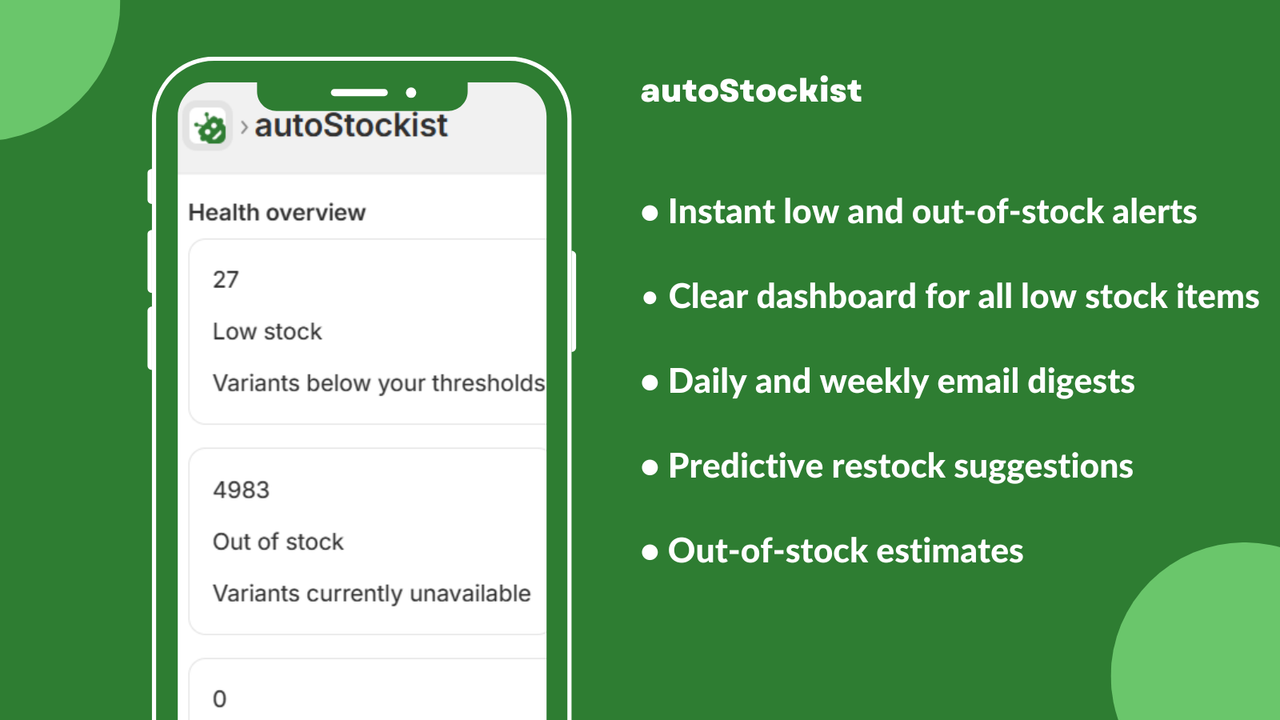
For Shopify merchants seeking an effective solution, autoStockist offers a robust inventory management tool designed specifically for the Shopify ecosystem. Built by a solo developer, autoStockist focuses on reducing repetitive inventory monitoring while providing actionable insights that help merchants manage their stock levels more effectively.
The app features low stock and out-of-stock alerts, an inventory monitoring dashboard, and even predictive restock suggestions based on recent sales activity. This means you can receive timely notifications about what to reorder and when, helping you maintain optimal stock levels without the constant manual checking.
Practical Steps to Set Up Low Stock Alerts on Shopify
Setting up low stock alerts in Shopify with autoStockist is straightforward. Here’s a step-by-step guide:
- Install the app: Begin by adding autoStockist to your Shopify store through the Shopify App Store.
- Configure your settings: Once installed, navigate to the settings section of the app. Here, you can set your low stock thresholds for various products. Consider factors like sales velocity and supplier lead times when determining these thresholds.
- Enable notifications: Choose how you want to receive alerts — via email or through the app. Make sure your contact details are up to date to avoid missing any important notifications.
- Regularly review your settings: As your product lines or sales patterns change, revisit your low stock thresholds to ensure they still reflect your business needs.
Real-Life Scenarios and Case Studies
Let’s consider a fictional Shopify merchant, Lucy, who runs a small online boutique selling handmade crafts. Before implementing low stock alerts, Lucy often faced stockouts of her popular candle line. She would receive customer complaints about unavailable products, leading to lost sales and a tarnished reputation.
After integrating autoStockist, Lucy set low stock alerts based on her sales data. Now, whenever her candle stock dips below ten units, she receives a clear notification that prompts her to reorder. This proactive approach not only improved her inventory management but also boosted her customer satisfaction, as her products were consistently in stock.
Trade-offs and Limitations
While automated systems like autoStockist significantly improve inventory management, they are not without their trade-offs. Relying solely on automated alerts can lead to complacency. Merchants should still conduct periodic manual inventory reviews to catch any discrepancies or errors that automated systems might not highlight.
Additionally, while predictive analytics can aid in planning, they are not infallible. Market trends can shift unexpectedly, and customer preferences can change. Thus, it’s essential to complement automated tools with regular market research and customer feedback to ensure your inventory strategy remains effective.
Common Mistakes and Misconceptions
Many merchants mistakenly believe that all stock alerts are created equal. However, without customization, alerts can become noise rather than a useful tool. Setting generic thresholds may not reflect your unique sales patterns, leading to either excessive stock or stockouts.
Another common misconception is that low stock alerts will automatically lead to improved sales. While they are a critical component of effective inventory management, they must be part of a broader strategy that includes robust restocking processes and supplier relationships. Understanding the nuances of your inventory and customer behavior is essential for maximizing the benefits of low stock alerts.
Conclusion
Effective management of low stock alerts is essential for Shopify merchants aiming to maintain inventory levels, avoid stockouts, and enhance customer satisfaction. By implementing a reliable system like autoStockist, you can reduce the hassle of constant stock monitoring and focus on growing your business. Don’t let poor stock management hinder your success; consider exploring automated solutions that can streamline your operations and keep your customers happy.
FAQ
What are low stock alerts, and why are they important?
Low stock alerts notify you when your inventory levels for specific products fall below a set threshold, helping you avoid stockouts and ensuring you meet customer demand.
How does autoStockist differ from other inventory management tools?
autoStockist is tailored specifically for Shopify, offering actionable alerts, predictive analytics, and easy integration, all designed to simplify inventory management for merchants.
Can I customize the thresholds for low stock alerts in autoStockist?
Yes, autoStockist allows you to set custom low stock thresholds based on the sales velocity of individual products, ensuring that alerts are relevant to your business needs.
How often should I review my inventory and alert settings?
It’s advisable to review your inventory and alert settings regularly, especially when introducing new products or during seasonal sales, to ensure they reflect current trends and sales patterns.
What should I do when I receive a low stock alert?
When you receive a low stock alert, assess the product’s sales velocity and supplier lead times, then reorder the product as necessary to avoid stockouts and maintain customer satisfaction.
```
About the app: I build and support autoStockist independently. If the problem discussed in this article sounds familiar, you can see the app and its current features on the Shopify App Store.
Labels: ohermans1
posted by Jao @ November 01, 2026
0 Comments


0 Comments:
Post a Comment
Subscribe to Post Comments [Atom]
<< Home