How to improve inventory dashboard on Shopify without dev work: autoStockist
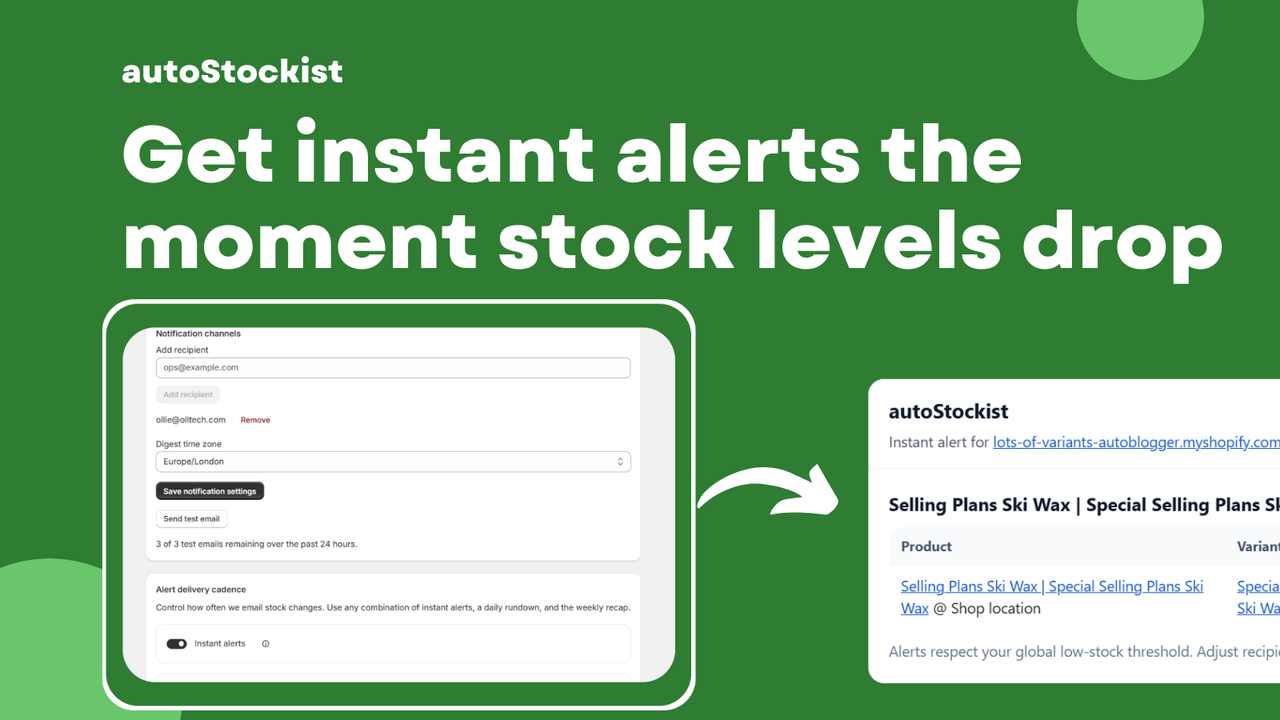
If you are running a Shopify store, managing your inventory efficiently is essential. An effective inventory dashboard can save you from the chaos of stockouts and the headaches of overstocking. In this article, we will explore how to improve your inventory dashboard on Shopify without the need for developer work, using autoStockist. This tool helps you track low and out-of-stock products, providing instant alerts before you run out, thus keeping you in control of your inventory without constant manual checks.
- Understand why an inventory dashboard matters.
- Learn what to look for in an inventory management tool.
- Discover common pitfalls and how to avoid them.
- Get a practical setup checklist to streamline your operations.
Why inventory dashboard matters (and the hidden cost of stockouts)
Imagine waking up one day to find that your best-selling product is out of stock. Your customers are eager, but you are left with empty shelves. This scenario is more common than you think and can lead to missed sales opportunities and unhappy customers. An inventory dashboard is crucial for tracking stock levels and preventing stockouts.
The hidden costs of stockouts can be significant. Not only do you lose immediate sales, but you also risk damaging your brand’s reputation. Customers may turn to competitors if they can’t find what they need from you. An effective inventory dashboard provides real-time insights into stock levels, ensuring you know when to reorder before it’s too late.
What to look for in an app for inventory dashboard
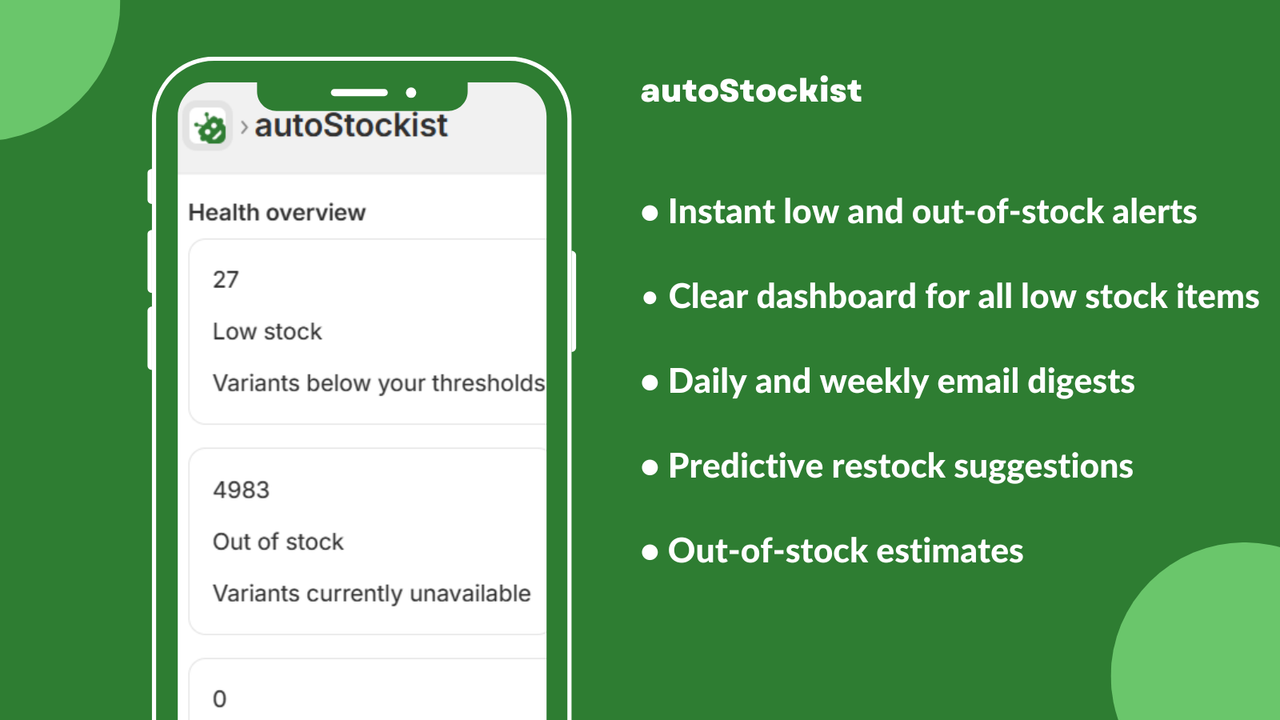
- Instant alerts for low and out-of-stock items.
- A user-friendly dashboard that provides a clear overview of inventory status.
- Email digests summarising stock that requires attention.
- Predictive analytics for restocking based on historical data.
A simple alert strategy (instant vs daily digest)
When it comes to managing inventory, having a solid alert strategy is essential. You can choose between instant alerts and daily digests, depending on your preference and the size of your operations.
Instant alerts notify you immediately when stock levels dip below a certain threshold, allowing you to react quickly. This is particularly useful for fast-moving products. On the other hand, daily digests provide a summary of items that need attention, which can be less overwhelming and help you plan your reordering strategy better. Consider your business’s needs and choose the alert strategy that fits best.
Common pitfalls (noise, missing thresholds, team workflows)
While setting up your inventory dashboard, be aware of common pitfalls that can hinder your success. Noise from excessive alerts can lead to alert fatigue, where important notifications get lost in the shuffle. Ensure you set realistic thresholds for alerts to avoid this issue.
Another pitfall is not aligning your inventory management with team workflows. If your team is not on the same page regarding stock levels and replenishment strategies, confusion can arise. Use tools like autoStockist to provide clear, digestible updates to your team, helping everyone stay on the same page.
How to keep inventory ops clean as you scale
As your business grows, maintaining clean inventory operations becomes increasingly important. A cluttered inventory can lead to errors, stockouts, and overstocking. Here are a few tips to keep your operations streamlined:
- Regularly audit your inventory to ensure accuracy.
- Implement a systematic approach to restocking based on sales trends.
- Use predictive analytics to forecast demand more accurately.
By keeping your inventory operations clean, you can avoid the chaos that often accompanies scaling a business.
Setup checklist
- Sign up for autoStockist and integrate it with your Shopify store.
- Set alert thresholds for low and out-of-stock products.
- Customize your email digest preferences (instant alerts or daily summaries).
- Train your team on how to use the dashboard effectively.
- Schedule regular inventory audits to ensure data accuracy.
FAQ
What is an inventory dashboard?
An inventory dashboard is a visual representation of your inventory levels, allowing you to track stock status, low items, and out-of-stock products in real-time.
How does autoStockist help with inventory management?
autoStockist provides instant alerts for low and out-of-stock items, a user-friendly dashboard, and predictive restock suggestions, helping you manage inventory efficiently.
Can I customize alerts in autoStockist?
Yes, you can set custom thresholds for alerts to suit your business needs, whether you prefer instant notifications or daily summaries.
Is autoStockist suitable for any size of business?
Yes, autoStockist is designed to cater to businesses of all sizes, making it easier to manage inventory as you grow.
How often should I audit my inventory?
Regular audits are recommended, ideally on a monthly basis, to ensure your inventory data is accurate and to identify any discrepancies early.
What happens if I miss an alert?
If you miss an alert, you may risk running out of stock. It is essential to set realistic alert thresholds and stay aligned with your team to minimize this risk.
Can I use autoStockist on multiple Shopify stores?
Yes, you can use autoStockist across multiple Shopify stores, allowing you to manage inventory for all your businesses from one dashboard.
Want to try it? Take a look at autoStockist on the Shopify App Store.
Labels: ohermans1
posted by Jao @ March 25, 2026
0 Comments


0 Comments:
Post a Comment
Subscribe to Post Comments [Atom]
<< Home