Friday, May 30, 2025

Keyword Alchemy: Turning Placement into Engagement and Dwell Time Gold

laptop computer on glass-top table
Photo by Carlos Muza on Unsplash

The Impact of Keyword Placement on User Engagement and Dwell Time

In the vast universe of SEO, where every pixel of digital real estate is contested, one element reigns supreme: keywords. But here’s the kicker — it’s not just about stuffing your content with keywords as if you’re tackling a Thanksgiving turkey. No, my friend, it’s about strategic placement. Think of keywords as the seasoning in your content stew; too little and it’s bland, too much and it’s inedible. So, how does keyword placement influence user engagement and dwell time? Buckle up, because we’re about to dive into the deliciously intricate world of SEO.

Understanding User Engagement

User engagement can be likened to a first date. You want to impress your audience, keep them interested, and maybe even win a second visit. If your content resonates, users are more likely to stay longer, click around, and engage with your brand. So, what role do keywords play in this love story?

Keywords act as the breadcrumbs leading users through your content forest. When strategically placed, they guide readers to the information they seek. If your keywords are relevant and naturally integrated, they will lead users to the content they’re hunting for. Think of it as a treasure map — if the X marks the spot, users will definitely stick around to see what’s buried beneath!

The Science of Dwell Time

Dwell time is the digital equivalent of the time spent on that first date. It’s the amount of time a user spends on your page before returning to the search results. A longer dwell time signals to search engines that your content is valuable and relevant. But how do keywords affect this magical metric? Let’s break it down.

1. Keyword Placement: The Where and the Why

Placement is key! Here are some prime real estate spots for your keywords:

  • Title Tag: Like the headline of a newspaper, it’s the first thing users see. Make it catchy and relevant!
  • Meta Descriptions: These little snippets are like your content’s elevator pitch. Use keywords here to grab attention.
  • Headings: Break your content into digestible sections. Use keywords in H2 and H3 tags to maintain clarity.
  • First 100 Words: Capture attention early! Use keywords in the introduction to establish context.
  • Image Alt Text: Don’t neglect your images! This is another opportunity to sprinkle in keywords.
  • Conclusion: Reinforce the topic by summarizing key points with relevant keywords.

When keywords are placed in these strategic spots, they help search engines understand your content’s theme and relevance, leading to better rankings and, you guessed it, increased dwell time!

2. Keyword Density: The Balancing Act

Ah, keyword density — the age-old debate! Too much, and you risk coming off as a desperate high schooler trying to impress someone at a school dance. Too little, and your audience might not even realize what you’re trying to convey. The sweet spot? Aim for a density of about 1–2%. This way, your content remains readable and engaging while still signaling to search engines what your content is all about.

Engagement Metrics: The Proof is in the Pudding

So, how do we measure the impact of keyword placement on user engagement and dwell time? Let’s take a look at some key metrics:

  • Click-Through Rate (CTR): If your title tags and meta descriptions are optimized with keywords, users are more likely to click on your link in the search results. A high CTR is a good sign that your keyword strategy is working!
  • Bounce Rate: If users are leaving your site faster than they arrived, it’s a sign that your content might not be meeting their expectations. Use relevant keywords to ensure users find what they’re looking for.
  • Pages Per Session: The more pages a user visits, the better! Good keyword placement can encourage users to navigate through your content, increasing the pages per session metric.
  • Time on Page: This is where dwell time comes into play. When users are engaged, they’ll spend more time reading and absorbing your content. Good keyword placement can help maintain this engagement.

The Art of Balancing SEO and Readability

Now that we’ve explored the impact of keyword placement on user engagement and dwell time, let’s talk about the delicate dance between SEO and readability. It’s essential to remember that while keywords are important, they shouldn’t be your only focus.

Imagine reading a book where every other sentence felt like a sales pitch for a product you didn’t care about. You’d probably toss that book out the window and go find something more enjoyable. The same principle applies to web content. While you want to optimize for search engines, your primary goal should be to provide value to your readers.

To maintain that balance, consider the following tips:

  • Write for Your Audience: Always prioritize your readers. Create content that resonates with their needs and interests.
  • Use Natural Language: Integrate keywords in a way that feels organic. Avoid keyword stuffing, as it can alienate your readers.
  • Focus on Quality Content: High-quality, valuable content will naturally attract readers, leading to better engagement and dwell time.
  • Update Regularly: SEO is not a set-it-and-forget-it game. Regularly update your content to keep it fresh and relevant.

Conclusion

In the end, keyword placement is like the secret sauce in your content recipe. When used thoughtfully, it enhances user engagement and boosts dwell time, making your audience more likely to return for seconds (or thirds). By strategically placing keywords, maintaining a balance between SEO and readability, and continually updating your content, you’re setting the stage for a successful online presence.

And if you’re looking for an effortless way to craft engaging content that keeps users glued to their screens, consider giving the autoBlogger app a whirl. It’s like having a personal assistant who knows just how to sprinkle in those keywords without overdoing it!

Note, this article was written with AI assistance to improve readability and give you, the reader, a better experience! :)


Labels:

Tuesday, May 27, 2025

Navigating the Social Seas: How Small Businesses Can Harness Multi-Channel Selling for Success

Amazon cardboard box character figurine
Photo by Nik on Unsplash

The Impact of Social Media Platforms on Multi-Channel Selling Strategies for Small Businesses

In the world of small business, where every sale counts, multi-channel selling has become more than just a buzzword; it’s practically a life preserver thrown into the ocean of competition. Gone are the days when setting up shop meant hanging a “We’re Open” sign on a physical storefront. Now, small businesses are diving headfirst into the digital realm, navigating a sea of social media platforms that can either make or break their sales strategy. So, how do these social media platforms impact multi-channel selling? Grab your flotation devices; it’s going to be a bumpy ride!

Understanding Multi-Channel Selling

Before we dive into the social media splash zone, let’s quickly review what multi-channel selling actually means. Multi-channel selling involves using multiple sales channels — think online marketplaces, social media, your own website, and even brick-and-mortar stores — to reach customers. The goal? To be where your customers are, which is increasingly online.

Why should small businesses embrace this strategy? Well, imagine running a bakery but only selling your delicious pastries at a local farmers’ market. You’d be missing out on all those sweet-toothed customers who prefer to shop online from the comfort of their couch (in their pajamas, of course).

Social Media: The New Marketplace

Social media platforms like Facebook, Instagram, TikTok, and Pinterest have transformed into bustling marketplaces where small businesses can showcase their products and services. With over 4.2 billion active social media users worldwide, that’s a lot of potential customers just waiting to discover your artisanal candles or hand-knit sweaters!

1. Building Brand Awareness

First and foremost, social media platforms serve as powerful tools for building brand awareness. A well-executed social media strategy can turn your small business into a household name — or at least a name that people recognize at their local coffee shop. The more your brand pops up on social feeds, the more likely it is to stick in people’s minds.

Consider this: If someone sees your product on Instagram, shares it with friends, and raves about it in a group chat, you’ve just gained several potential customers without spending a dime on traditional advertising. Talk about a win-win!

2. Driving Traffic to Your Store

Social media is also a fantastic traffic driver to your online store. By utilizing eye-catching visuals and engaging content, you can coax potential customers to click through to your website. Think of social media as a shiny treasure map leading customers straight to your sales page — X marks the spot, and that spot is your checkout page!

But beware! The internet is a fickle place. If your content is dull or doesn’t resonate with your audience, don’t be surprised if they take a detour to the nearest cat video instead. So, keep it fresh, entertaining, and relevant. Remember, you’re not just selling a product; you’re selling an experience!

3. Direct Engagement with Customers

One of the most exciting aspects of social media is the ability to engage directly with customers. Unlike traditional retail, where you might only get feedback from a handful of customers, social media channels allow you to interact with thousands of people at once. You can answer questions, respond to comments, and even learn what your customers want in real-time.

Imagine being able to take a poll on Instagram Stories to determine which new flavor of your artisanal ice cream should hit the shelves next. It’s like having a focus group in your pocket — just without the awkward silence and the free donuts.

The Power of User-Generated Content

User-generated content (UGC) is another game-changer for small businesses on social media. When customers share photos or reviews of your products, they’re essentially doing your marketing for you. It’s like free advertising, but even better because it comes with a stamp of approval from real people. Customers trust other customers, so showcasing UGC can significantly boost your brand’s credibility.

Encouraging UGC can be as simple as running a contest where customers share their experiences with your products. Maybe you have a coffee shop and ask customers to post a picture of their favorite drink with a specific hashtag. Suddenly, your feed is filled with happy caffeine enthusiasts, and your brand gets more exposure than a celebrity at a red carpet event!

Choosing the Right Platforms

Not all social media platforms are created equal, and each has its own unique audience and strengths. So how do you choose which platforms to focus on?

  • Facebook: Great for building communities and sharing longer content.
  • Instagram: Perfect for visually-driven products. Use Stories and IGTV to showcase your offerings.
  • Twitter: Ideal for quick updates, engaging in trending conversations, and customer service interactions.
  • TikTok: If you’re targeting younger audiences, this platform is all about fun and creativity. Think outside the box!
  • Pinterest: Excellent for driving traffic, especially for lifestyle brands. Users are often seeking inspiration and are likely to click through to purchase.

Choose the platforms that align best with your brand and target audience. You don’t need to be on every single platform — focus on a couple and master them before branching out. It’s better to be the star of the show on one stage than a backup dancer on five!

Analytics: The Secret Sauce

Finally, let’s discuss the nerdy but oh-so-important aspect of analytics. Social media platforms provide a treasure trove of data about your audience, engagement rates, and overall performance. By analyzing this data, you can fine-tune your multi-channel selling strategy to better meet your customers’ needs.

For instance, if you notice a spike in engagement after posting a particular type of content, you might want to consider creating more of that content. Data is your best friend in this game, so don’t be afraid to geek out over those spreadsheets!

Integrating Social Media with Your Shopify Store

As you embark on your multi-channel selling journey, consider integrating your social media efforts with your Shopify store. This is where the magic of apps like autoBlogger comes into play. This handy tool allows you to automate and enhance your blogging efforts, seamlessly integrating product promotions with engaging content. It’s like having a personal assistant who specializes in making your brand shine online!

By incorporating automated blogging into your strategy, you can keep your audience engaged with fresh content while driving traffic directly to your products. It’s a win-win situation where you can maintain a consistent presence without sacrificing your precious time — because let’s face it, running a small business is no walk in the park!

The Bottom Line

Social media platforms have revolutionized multi-channel selling for small businesses, creating a landscape where engagement, brand awareness, and direct sales are more accessible than ever. By taking advantage of these platforms, businesses can reach new heights and cultivate a loyal customer base.

So, grab your social media toolkit, make some noise, and let your small business shine brighter than a disco ball at a wedding! Remember, in this digital age, you have the opportunity to connect with customers like never before. And if things ever feel overwhelming, remember that tools like autoBlogger are here to help you navigate the waters. Happy selling!

Note, this article was written with AI assistance to improve readability and give you, the reader, a better experience! :)


Labels:

Sunday, May 25, 2025

Revealing the Magic Behind My Shopify App: autoBlogger

autoBlogger

Welcome, fellow eCommerce enthusiasts! Are you tired of spending endless hours trying to come up with blog post ideas for your Shopify store? Do your creative juices run dry faster than a dry sponge on a hot day? Well, fret no more! Say hello to autoBlogger, your new best friend in the world of blogging. Grab your coffee, sit back, and let’s dive into the magic that makes this app a must-have for every Shopify store owner!

What is autoBlogger?

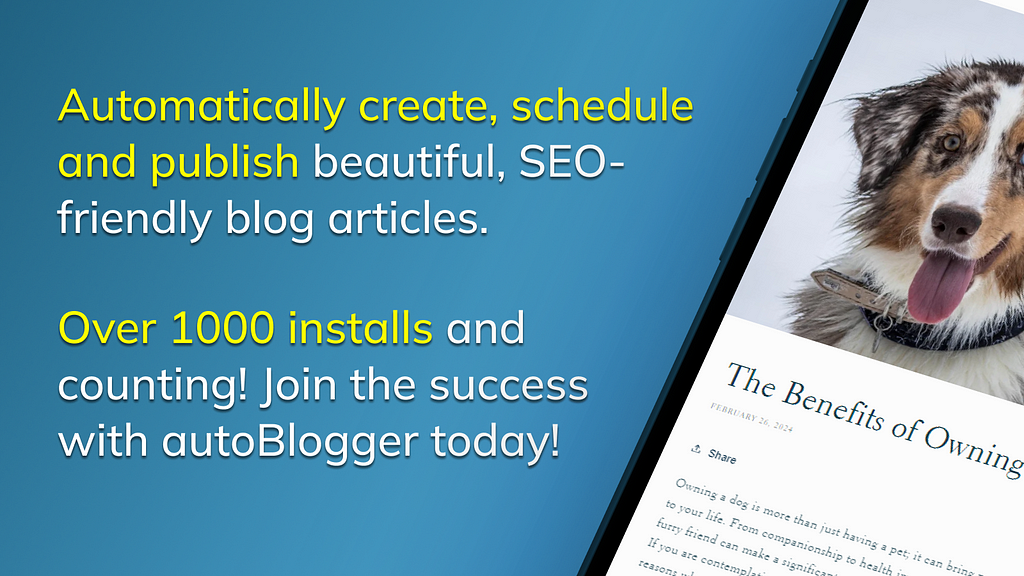
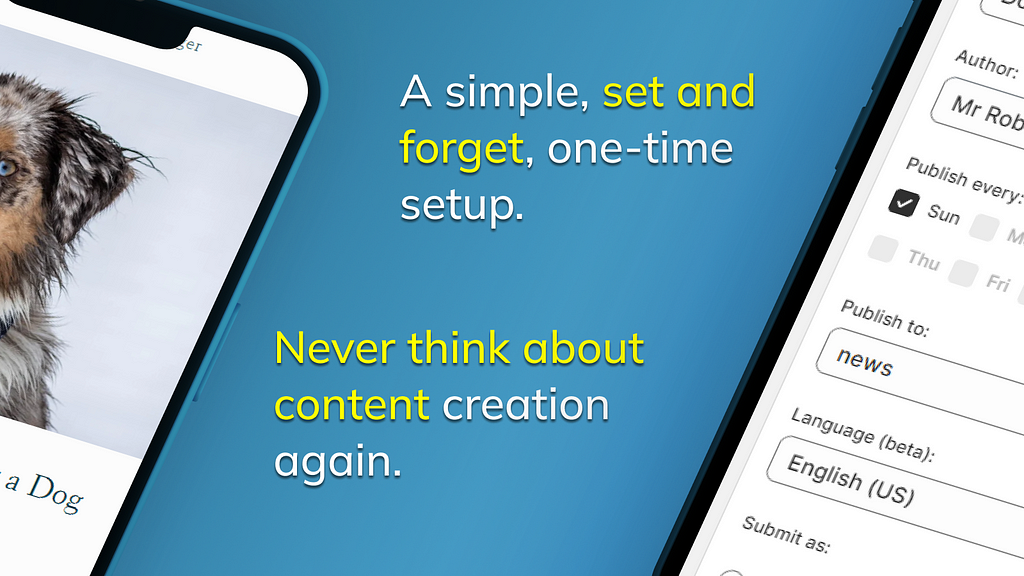
In simple terms, autoBlogger is a “set and forget” Shopify app that harnesses the power of the latest AI technology. It’s like having a personal assistant who just happens to be a blogging wizard! Imagine selecting a topic, and voilà! You are greeted with a plethora of related blog titles generated automatically. It’s like magic, but without the need for a wand — or a rabbit!

How Does It Work?

Let’s break it down step by step:

  1. Select a Topic: Simply choose a topic that resonates with your audience. Want to write about the latest trends in sustainable fashion? Go for it!
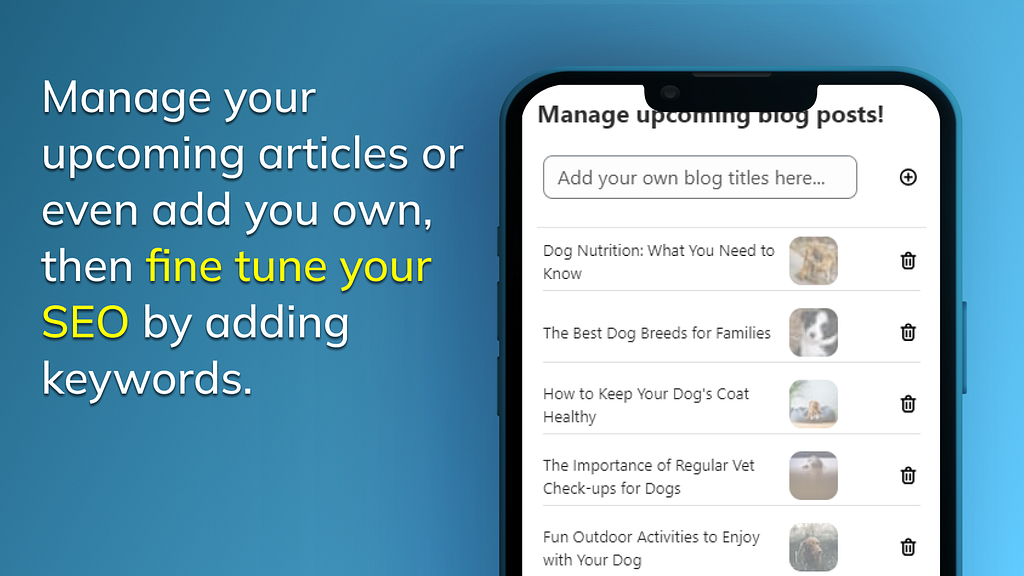
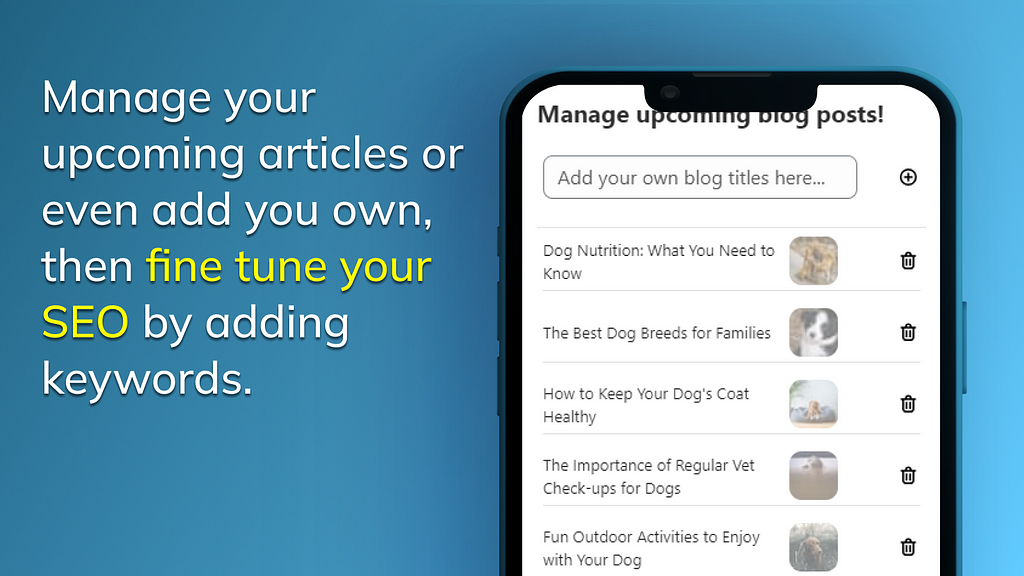
  2. Blog Title Generation: autoBlogger will conjure up a variety of related blog titles. Feel free to sort, delete, or add your own titles. It’s your blog after all!
  3. Content Creation: Once you’re happy with the titles, autoBlogger will automatically generate and publish a new blog article for you. Yes, you heard that right — up to 7 times a week! Who needs caffeine when you have automation on your side?
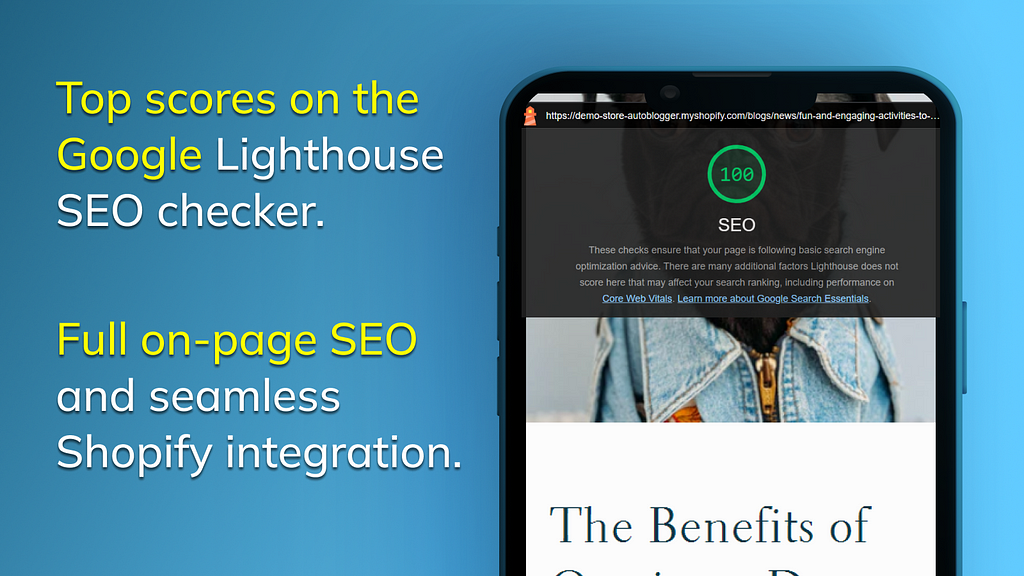
  4. SEO Optimization: Add a list of keywords, and watch as autoBlogger seamlessly integrates them into your articles. It’s like having a SEO expert at your fingertips!

The Benefits of Using autoBlogger

Now, you might be wondering, “Why should I use autoBlogger? What’s in it for me?” Well, let me tell you:

  • Boost Your SEO: Regularly updated blogs improve your store’s SEO, boosting your visibility in search engines. It’s like giving your store a megaphone!
  • Engage Customers: Fresh content keeps your audience engaged and encourages them to return to your site. Who doesn’t love a good read?
  • Save Time: Spend less time writing and more time running your business. You’ll have more time to work on that “World’s Best Boss” mug collection!
  • Multilingual Magic: Available in 20 languages, autoBlogger is perfect for those with a global reach. Bonjour, amigos!

Backlink Program: Share the Love

Now, let’s talk about our backlink program. By opting into this unique feature, users can share their backlinks with other blogs. This means more visibility and traffic for your store! It’s like a talent show where everyone wins — just without the cringe-worthy performances.

Free Trial, No Strings Attached

Not sure if autoBlogger is for you? No problem! With a 14-day free trial, you can test drive this magical app without breaking the bank. Try it out and see how it transforms your blogging routine. You’ll be amazed at how quickly your store’s content can grow!

Real Results from Real Users

But don’t just take my word for it! Here are some testimonials from happy autoBlogger users:

“I was skeptical at first, but autoBlogger has changed the way I do business. My blog is now updated regularly, and my traffic has increased by 300%!” — Sarah, fashion store owner.
“The AI-generated content is surprisingly good! I can focus on running my store while autoBlogger handles the writing. Total game changer!” — Tom, tech gadget store owner.

Fine-Tuning Your SEO Like a Pro

Did I mention that you can fine-tune your SEO? By adding specific keywords and linking products throughout the articles, autoBlogger helps you optimize your blog posts for search engines. It’s like having your cake and eating it too — who knew optimization could be this sweet?

How to Get Started with autoBlogger

Ready to harness the power of AI for your Shopify store? Getting started is as easy as 1–2–3:

  1. Visit the autoBlogger App Store Page and install the app.
  2. Create an account and set up your profile. Don’t worry, no complex passwords — just the usual!
  3. Select your topic, generate titles, and let autoBlogger work its magic!

Conclusion: The Future of Blogging is Here!

In a world where time is money, and creativity can sometimes feel like a luxury, autoBlogger is the perfect solution for Shopify store owners. With its set-and-forget features, automatic content generation, and SEO optimization, you’ll wonder how you ever managed without it!

So what are you waiting for? Give it a whirl, and experience the magic of autoBlogger today. Your customers will thank you, and so will your future self!

Happy blogging!

What are you waiting for, try autoBlogger now!

autoBlogger


Labels:

Tuesday, May 20, 2025

Pop-Up Success: How Shopify POS Transforms Your Retail Events!

silver iphone 6 on white table
Photo by Roberto Cortese on Unsplash

The Benefits of Using Shopify POS for Pop-Up Retail Events

Pop-up retail events are all the rage these days. Whether you’re a small business owner looking to make a splash or a seasoned retailer trying to reach new customers, there’s something undeniably exciting about setting up shop in a temporary location. But with excitement comes challenges, and one of the biggest hurdles is often managing sales and inventory efficiently. Enter Shopify POS, a sleek solution that can turn your pop-up shop into a well-oiled machine. Let’s dive into the benefits of using Shopify POS for your pop-up retail events!

1. Seamless Transactions

First things first, let’s talk about the cash register. Remember the days of fumbling around with a clunky cash register that seemed to have a personality of its own? Well, those days are long gone! With Shopify POS, you can process transactions quickly and efficiently. Whether your customers prefer to pay with credit cards, mobile wallets, or even good old-fashioned cash, Shopify POS has got you covered.

Imagine this: a long line of eager shoppers, all excited to snag your latest products. You don’t want to keep them waiting while you manually add up their purchases, do you? Shopify POS allows you to scan barcodes, apply discounts, and accept payments with a few taps on your tablet or smartphone. Customer satisfaction? ✔️

2. Real-Time Inventory Management

Keeping track of inventory can be a headache, especially in a bustling pop-up setting. The last thing you want is to oversell a product or, even worse, run out of stock on your best-sellers. Shopify POS comes to the rescue with real-time inventory management capabilities. You can see what products are flying off the shelves and which ones might need a little pep talk.

This feature is especially helpful if you’re participating in multiple pop-up events. You can easily keep track of what you have left and adjust your inventory accordingly. Plus, if you’re using Shopify’s online store in addition to your pop-up, the system automatically syncs your inventory across both platforms. It’s like magic, but without the need for a wand!

3. Customer Insights and Analytics

Understanding your customer base is crucial for any business. Shopify POS provides valuable insights and analytics that can help you make informed decisions about your products and marketing strategies. Want to know which items were the hottest sellers at your last event? Or maybe you’re curious about the demographics of your customers? With Shopify POS, you can access a treasure trove of data that can guide your future events.

Armed with this information, you can tailor your offerings to better suit your audience. Who knew that knowing your customers could be so powerful? It’s like having a crystal ball, minus the creepy fortune-teller!

4. Easy Integration with Other Shopify Features

If you’re already using Shopify for your online store, you’ll appreciate how seamlessly Shopify POS integrates with other features. From managing customer profiles to applying discounts and promotions, everything works together like a perfectly choreographed dance. If you’ve ever tried to juggle multiple systems that don’t communicate with each other, you know how frustrating that can be. Shopify POS eliminates that headache!

Plus, if you’re utilizing the marketing capabilities of Shopify, like email campaigns or social media ads, you can sync your pop-up sales data with your online store’s performance. This means you can see how your events impact your overall sales strategy. Talk about a win-win!

5. Mobility and Flexibility

One of the best things about pop-up retail is the freedom to choose your location. Whether you’re setting up shop at a bustling street fair, an art gallery, or a farmers’ market, you can take your Shopify POS system with you anywhere. All you need is an internet connection and a device (tablet or smartphone) to run the app.

Gone are the days of being tethered to a physical register. You can roam around your booth, engage with customers, and still process transactions with ease. Plus, the mobility factor allows you to set up in unique locations and target different audiences, making your pop-up experience even more exciting!

6. Enhanced Customer Experience

Let’s face it, shopping should be an enjoyable experience. Nobody wants to feel rushed or confused while trying to make a purchase. With Shopify POS, you can enhance the customer experience by providing a smooth and efficient checkout process. No more long lines or awkward fumbling with payment methods!

Additionally, Shopify POS allows you to offer personalized experiences. You can quickly look up customer profiles, suggest complementary products, and even apply loyalty discounts on the spot. Happy customers are more likely to return, and who doesn’t want a loyal fanbase?

7. Cost-Effective Solution

Let’s not forget about the financial aspect. Setting up a pop-up shop can be expensive, what with rent, permits, and all the other associated costs. Shopify POS offers a cost-effective solution by eliminating the need for expensive hardware and software. You can get started with just a tablet or smartphone, a card reader, and the app itself.

There are various pricing plans available, so you can choose one that fits your budget. Plus, with the money you save on hardware, you can invest more into your products or marketing efforts. It’s like a financial breath of fresh air!

8. Marketing Opportunities

Speaking of marketing, pop-up shops are a fantastic opportunity to promote your brand and engage with customers. With Shopify POS, you can leverage this opportunity to its fullest. Collect customer email addresses during checkout, encourage them to follow you on social media, or even offer exclusive discounts for future online purchases.

Additionally, you can create buzz around your pop-up event by integrating it with your online marketing campaigns. Use social media to promote your location and special offers, and watch the foot traffic roll in. It’s like throwing a party and inviting everyone you know — except you also get to sell stuff!

9. Customization Options

Every pop-up shop is unique, and Shopify POS allows you to customize your setup to reflect your brand’s personality. From hardware choices to the look of your checkout interface, you can create an experience that’s as unique as your products. Want to add your logo to the receipt? Go for it! Prefer a certain color scheme? You got it!

This level of customization not only enhances your brand identity but also makes your pop-up shop feel more professional. Customers will appreciate the attention to detail, and it can help you stand out in a crowded market.

10. Conclusion: Pop-Up Success Awaits!

In conclusion, using Shopify POS for your pop-up retail events can significantly enhance your operations, customer experience, and overall success. From seamless transactions and real-time inventory management to valuable customer insights and marketing opportunities, the benefits are plentiful.

So, whether you’re a small business just starting out or a larger retailer looking to branch out, Shopify POS is a game-changer for pop-up retail. Embrace the excitement of your next event and let Shopify POS handle the nitty-gritty details!

Oh, and before I forget — if you want to take your content marketing to the next level, check out the autoBlogger app. It’s a fantastic tool for automating your blog posts and keeping your audience engaged. Happy selling!

Note, this article was written with AI assistance to improve readability and give you, the reader, a better experience! :)


Labels:

Sunday, May 18, 2025

Examining the Integration Capabilities of autoBlogger: Your Shopify Game-Changer

autoBlogger

Are you a Shopify store owner feeling like you’re stuck in an endless loop of creating content that only your cat seems to read? Well, fear not! Enter autoBlogger, the app that’s here to rescue you from the clutches of writer’s block and SEO despair. Grab your coffee (or tea, we don’t judge) as we dive into the magical world of autoBlogger’s integration capabilities.

What is autoBlogger?

First things first, let’s get acquainted with our new friend, autoBlogger. This nifty app is like having a personal assistant who never sleeps and is obsessed with SEO. With its “set and forget” style, it harnesses the power of AI to whip up blogs for your Shopify store effortlessly. Just select a topic, and let the app do the brainstorming for you. No more staring at a blank screen; autoBlogger is here to save the day.

How Does it Work?

  1. Select a Topic: Choose a topic related to your products or niche.
  2. Generate Titles: Watch as a plethora of related blog titles appear like magic!
  3. Customize: Sort, delete, or add your own titles. Personalization is key!
  4. Auto-Publish: AutoBlogger will then create and publish up to 7 blog articles a week, complete with images. Yes, you read that right!

It’s like having a personal content creator that drinks a lot of coffee and never asks for a raise. And did we mention it’s available in 20 languages? You can appeal to audiences around the globe without breaking a sweat!

SEO: The Secret Sauce

We all know that good SEO is the bread and butter of online visibility. Without it, your store might as well be a well-kept secret beneath your bed. Fortunately, autoBlogger has your SEO needs covered. Here’s how:

  • Keyword Prioritization: You can add a list of keywords that will be prioritized throughout the article. This is like having a secret weapon in your SEO arsenal.
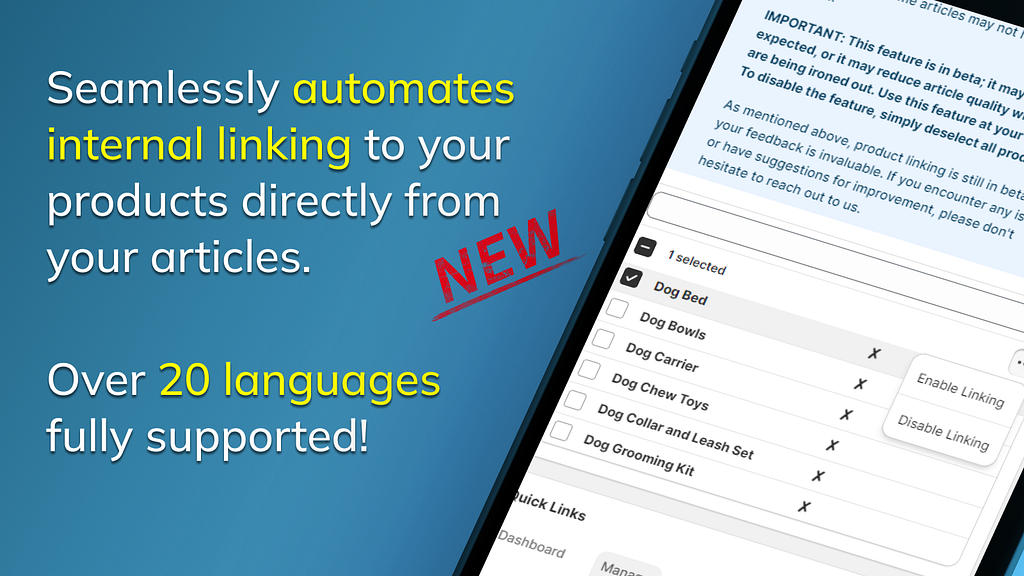
  • Automatic Linking: The app can automatically link to your products throughout the article. It’s like a gentle nudge to your customers saying, “Hey, check this out!”

But wait, there’s more! The keywords you add are seamlessly integrated into articles where appropriate. This means no more awkwardly stuffed keywords that make your content read like a robot wrote it! Instead, your articles will flow naturally, engaging readers and helping them find what they need.

Backlink Program: Share the Love!

Now, let’s talk about the backlink program. It’s not just about you; it’s about community too! By opting into the backlink program, your blog will share backlinks with other users occasionally. What does that mean? It means you can gain exposure while helping fellow Shopify warriors. Together, you can conquer the eCommerce world! 🌍

Benefits of the Backlink Program:

  • Increase your website’s authority.
  • Gain referrals from other blogs.
  • Build a network of like-minded entrepreneurs.

In a sea of competition, this feature can make your store stand out like a neon sign at a black-and-white party.

The 14-Day Free Trial: No Strings Attached!

Still on the fence? Well, you can dip your toes in the water with a 14-day free trial. That’s right! You can explore all the features without reaching for your wallet. And if you love it (which we’re sure you will), just continue using autoBlogger and watch your store flourish.

Conclusion: Why You Should Choose autoBlogger

In a world where content is king, having a reliable tool like autoBlogger by your side can make all the difference. From generating topics to ensuring your SEO game is on point, it’s a no-brainer for Shopify store owners looking to save time and boost engagement.

So what are you waiting for? Try autoBlogger today and transform your Shopify store into a content powerhouse! Your audience (and that unsuspecting cat) will thank you.

For more information, check out autoblogger.bot for all the details you need to get started. Now, go forth and conquer the blogging world!

What are you waiting for, try autoBlogger now!

autoBlogger


Labels:

Tuesday, May 13, 2025

Navigating the E-Commerce Revolution: How Social Media is Transforming Multi-Channel Selling in…

Navigating the E-Commerce Revolution: How Social Media is Transforming Multi-Channel Selling in 2024

black and gray shirt
Photo by charlesdeluvio on Unsplash

The Impact of Social Media Platforms on Multi-Channel Selling Strategies in 2024

As we dive into 2024, the landscape of e-commerce has shifted dramatically, thanks in large part to the omnipresence of social media platforms. Gone are the days when selling online was merely about having a website and hoping for the best. Today, businesses are harnessing the power of social media to create multi-channel selling strategies that not only boost sales but also enhance brand visibility and customer engagement. Buckle up, because we’re about to explore how social media is reshaping the way we sell!

What is Multi-Channel Selling?

Before we get too far into the social media rabbit hole, let’s clarify what multi-channel selling actually means. In a nutshell, it refers to businesses selling their products across multiple platforms — think your own website, social media channels, online marketplaces, and even brick-and-mortar stores. The goal? To meet customers where they are and make it as easy as possible for them to buy your products.

The Social Media Boom

Social media platforms have transformed into bustling marketplaces. As of 2024, over 4.9 billion people are using social media worldwide. That’s nearly 62% of the global population! With more users scrolling through their feeds than ever before, it’s no surprise that businesses are eager to tap into this goldmine.

Platforms like Instagram, Facebook, TikTok, and Pinterest are no longer just about sharing cute cat videos or food pics (though, let’s be honest, we still love those). They’ve evolved into powerful tools for brands to engage with customers, showcase products, and drive sales. So how exactly are these platforms impacting multi-channel selling strategies?

1. Direct Shopping Features

One of the most significant advances in 2024 is the rise of direct shopping features integrated into social media platforms. With options like Instagram Shopping and Facebook Shops, users can browse and purchase products without ever leaving the platform. This seamless experience significantly reduces friction in the purchasing process and can lead to higher conversion rates.

  • Instagram Shopping: Users can tap on product tags in posts and stories to view product details and make purchases directly.
  • Facebook Shops: Brands can create a customizable storefront on Facebook that integrates with their existing e-commerce site.
  • TikTok Shopping: A relatively new player, TikTok allows brands to showcase their products in engaging video formats, making shopping feel like entertainment.

By using these features, businesses can create a cohesive shopping experience across their social and online stores, allowing for a fluid transition from discovery to purchase. It’s like taking your customers on a magical carpet ride from their social feed to your online shop, minus the potential for motion sickness!

2. Targeted Advertising

In 2024, the sophistication of targeted advertising on social media is at an all-time high. With advanced algorithms and user data, brands can reach their ideal customers with laser precision. This ability to target specific demographics, interests, and behaviors means that businesses can tailor their marketing efforts effectively.

Imagine you sell artisanal coffee beans. Instead of casting a wide net and hoping for a few bites, you can target coffee enthusiasts who have recently shown interest in gourmet foods or sustainable products. The result? Your ads are popping up right where they need to be, turning casual scrollers into loyal customers.

3. Influencer Collaborations

Influencer marketing is not just a trend; it’s become an essential part of many brands’ multi-channel strategies. In 2024, brands are partnering with influencers across various platforms to tap into their engaged audiences. These collaborations can take many forms, including sponsored posts, giveaways, or even co-created products.

But here’s the kicker: not all influencers are created equal. Brands are now focusing on micro and nano influencers — those with smaller, but highly engaged followings. These influencers often have a more authentic connection with their audience, leading to higher trust and, ultimately, higher sales conversions.

4. User-Generated Content (UGC)

Let’s face it: we love seeing real people using and enjoying products. In 2024, user-generated content is a key component of successful multi-channel selling strategies. By encouraging customers to share their experiences on social media, brands can create a sense of community and authenticity around their products.

Imagine running a campaign where customers share photos of themselves using your product with a specific hashtag. Not only does this create buzz, but it also serves as valuable social proof for potential buyers. Brands can then repurpose this content across their channels, making it a win-win situation — more exposure for customers and more credibility for your brand!

5. The Rise of Live Shopping

Live shopping is where e-commerce meets entertainment. In 2024, we’re seeing a surge in brands hosting live streams to showcase products in real-time. This interactive format allows customers to ask questions, see products in action, and even take advantage of exclusive offers during the live event.

Platforms like Facebook and Instagram have embraced live shopping, creating an engaging experience that combines the social aspect of media with the excitement of shopping. It’s like a home shopping network, but without the questionable hairstyles and overly enthusiastic hosts!

6. Data-Driven Insights

Data is the new oil, and in the world of multi-channel selling, it’s essential for decision-making. Social media platforms provide valuable insights into customer behavior, preferences, and engagement levels. In 2024, brands are leveraging this data to refine their marketing strategies, optimize product offerings, and enhance customer experiences.

With tools to analyze engagement metrics, conversion rates, and audience demographics, businesses can adapt their strategies based on real feedback. This level of insight allows brands to be agile, responding to trends and customer needs with the speed of a cheetah — well, a cheetah that’s good at data analysis!

Conclusion: Embracing the Social Media Revolution

As we navigate through 2024, it’s clear that social media platforms have an undeniable impact on multi-channel selling strategies. The integration of direct shopping, targeted advertising, influencer collaborations, user-generated content, live shopping, and data-driven insights are transforming the e-commerce landscape. Businesses that embrace these changes will not only enhance their customer experience but also drive growth and success in a competitive market.

So, if you’re still treating social media as just a pretty picture gallery, it’s time to wake up and smell the coffee (preferably from those artisanal beans we mentioned earlier). By leveraging social media effectively, you can create a multi-channel strategy that captivates customers and maximizes sales.

And speaking of maximizing your efforts, don’t forget to check out autoBlogger — a Shopify app that helps automate content creation to keep your channels fresh and engaging. Happy selling!

Note, this article was written with AI assistance to improve readability and give you, the reader, a better experience! :)


Labels:

Sunday, May 11, 2025

Unpacking the Unique Selling Points of My Shopify App: autoBlogger

autoBlogger

Welcome to the future of blogging! If you’re a Shopify store owner, you know that the way to your customers’ hearts (and wallets) is through engaging content. But let’s face it, creating blog posts consistently can feel like trying to herd cats — chaotic and nearly impossible. Enter autoBlogger, your new best friend in the digital marketing world. In this article, we’ll unpack what makes autoBlogger a must-have tool for any Shopify store. Buckle up, because we’re about to dive into the unique selling points of this fantastic app!

1. Set It and Forget It

Life is too short to spend hours staring at a blank screen, waiting for inspiration to strike. With autoBlogger, you can finally stop banging your head against the keyboard. It’s a true “set it and forget it” app. You just select a topic, and voilà! The app churns out a buffet of related blog titles for you to choose from. Think of it as a personal assistant who never asks for a raise!

  • Step 1: Pick a topic.
  • Step 2: Generate a treasure trove of titles.
  • Step 3: Sit back and sip that coffee while autoBlogger does the magic for you!

2. Customization at Your Fingertips

Feeling a bit particular about what you want? No problem! With autoBlogger, you can sort, delete, or even add your own blog titles. Want to mix in a little personal flair? Go for it! Your blog, your rules. Plus, you can select products to automatically link throughout the articles. It’s like having a tailor-made suit, but for your blog.

3. AI-Powered Content Creation

Let’s talk tech for a moment. autoBlogger is not just a run-of-the-mill app; it harnesses the power of the latest AI technology to create content that not only reads well but also makes your products shine. The AI curates articles that resonate with your audience and boosts your SEO, making sure your store is visible to those who matter most — your customers!

Here’s How it Works:

  1. Choose your keywords: You can add a list of keywords that will be prioritized throughout your articles.
  2. Watch the SEO magic happen: autoBlogger integrates these keywords where it makes sense, enhancing your content’s searchability.
  3. Receive an article complete with images: Yes, you heard that right — images included!

4. Consistency is Key

Did you know that Google loves fresh content? By utilizing autoBlogger, you can publish up to 7 blog articles a week without lifting a finger (well, maybe just one finger to click). This consistent output not only engages your customers but also tells Google that you’re the hip new store in town, deserving of a top spot in search results.

5. Multilingual Marvel

In our ever-globalizing world, why limit your audience? autoBlogger is available in 20 languages! This means that whether your customer speaks English, Spanish, Mandarin, or Klingon (okay, maybe not Klingon), they can enjoy your content in their native tongue. Talk about breaking down barriers!

6. The Backlink Program

Want to enhance your SEO even further? With autoBlogger’s backlink program, you can opt-in to share backlinks with other users. This means your store gets exposure on other blogs, while you help fellow Shopify merchants at the same time. It’s like a mutual back-scratching club, but for online businesses — everyone wins!

Here’s How You Benefit:

  • Get more traffic to your store.
  • Build relationships with other Shopify users.
  • Boost your SEO like never before.

7. 14-Day Free Trial

Still on the fence? Well, let’s sweeten the pot. autoBlogger offers a 14-day free trial. Yes, you read that right! It’s like a ‘Try before you buy’ deal, except this one doesn’t come with a salesperson trying to upsell you on a shiny new car. Use the app, see how it transforms your blogging game, and then decide if it’s worth the investment.

8. The Final Word: Why You Should Use autoBlogger

When it comes to running a successful Shopify store, content is king (or queen). With autoBlogger, you can unleash the power of AI-driven content creation that saves time, enhances SEO, and keeps your customers engaged. It’s like having a content marketing team in your back pocket, minus the coffee runs and office politics.

So, what are you waiting for? Grab your 14-day free trial today at autoBlogger and watch your blogging troubles disappear faster than your favorite snack at a party.

And remember, in the world of ecommerce, content is not just king; it’s the entire royal family! 👑

Final Thoughts

Can you imagine a life where you don’t have to worry about content creation? With autoBlogger, that dream can be your reality. Don’t let blogging be your stressor; use autoBlogger to boost your store’s performance and customer engagement. Try it today, and who knows? You might just find blogging to be the enjoyable task you never thought it could be!

What are you waiting for, try autoBlogger now!

autoBlogger


Labels:

Wednesday, May 7, 2025

Are Social Media Rules Making Us Less Engaged?

I've been thinking about all the social media rules during my morning walks lately.


Labels:

Tuesday, May 6, 2025

SEO Showdown: How Shopify and WooCommerce Stack Up for Boosting Your Sales

person holding space gray iphone 6
Photo by Roberto Cortese on Unsplash

The Impact of SEO Capabilities on Sales Performance in Shopify vs WooCommerce

Welcome to the ultimate showdown of eCommerce platforms: Shopify vs WooCommerce. Picture it like a boxing match, but instead of punches, we’re throwing around keywords, backlinks, and meta tags. The referee? Search Engine Optimization (SEO). In the blue corner, we have the user-friendly, all-in-one solution, Shopify. And in the red corner, we’ve got the customizable, open-source heavyweight, WooCommerce. Today, we’ll dive into how their SEO capabilities impact sales performance, and why this matters more than your morning coffee (well, almost).

Understanding SEO: Why It’s Your Best Friend

Before we dive into the nitty-gritty, let’s address the elephant in the room — or should I say the search engine? SEO is the process of optimizing your online store to rank higher in search engine results. Think of it as sprucing up your store’s window display to attract more foot traffic. The better your SEO, the more likely it is that customers will find you, leading to increased sales.

Now, let’s see how Shopify and WooCommerce stack up in the SEO ring.

Shopify: The SEO Champion

Shopify is like that overachieving student in class who always gets straight A’s. It has built-in SEO features that make optimizing your store a breeze. Here are some of the perks:

  • Fast Loading Times: Shopify is optimized for speed, which is a crucial ranking factor for Google. If your site is slower than a snail on a leisurely stroll, you can kiss your SEO rankings goodbye.
  • Mobile Optimization: With more shoppers using their phones than ever, Shopify’s responsive themes ensure your site looks fabulous on any device. Google loves mobile-friendly sites, and so do customers!
  • Easy Meta Tag Management: Shopify allows you to edit title tags and meta descriptions without needing to summon a tech wizard. This means you can create compelling snippets that entice users to click through to your site.
  • SSL Certificate: Security is paramount for online shoppers. Shopify automatically provides an SSL certificate, which is a security feature that Google favors in rankings. Plus, customers want to know their information is safe.

In short, Shopify is like having a personal trainer for your SEO. It gives you the tools you need to succeed, while you focus on perfecting your product offerings and customer service.

WooCommerce: The Customizable Contender

Now, let’s talk about WooCommerce. If Shopify is a well-rounded athlete, WooCommerce is the DIY enthusiast who’s cobbling together a masterpiece in their garage. While it offers incredible flexibility and customization, it requires a little more elbow grease to get SEO right. Here’s what you need to consider:

  • Customization Options: WooCommerce allows for extensive customization, meaning you can tailor your SEO strategy to fit your specific needs. But with great power comes great responsibility — make sure you know what you’re doing!
  • Plugin Power: WooCommerce relies heavily on plugins for SEO features. This means you can install tools like Yoast SEO or All in One SEO Pack. However, more plugins can slow down your site if you’re not careful.
  • Hosting Matters: Since WooCommerce is a self-hosted platform, your hosting provider can impact your site’s speed and security. Choosing a reliable host is like picking a trustworthy sidekick in a superhero movie — you want someone who can back you up when the going gets tough.
  • Technical Knowledge Required: WooCommerce may require a bit more technical know-how. If you’re not comfortable tweaking code or setting up redirects, you might find yourself in a bit of a pickle.

While WooCommerce can be a powerful tool with the right setup, it requires more effort compared to Shopify’s user-friendly approach. If you love tinkering and have the time to invest, WooCommerce can be your canvas. But if you’re looking for a hassle-free experience, Shopify might be your best bet.

The Sales Performance Showdown

Now, let’s get to the million-dollar question: How do these platforms’ SEO capabilities affect sales performance?

Shopify’s Sales Performance

Thanks to its built-in SEO features, Shopify stores often experience quicker sales growth. Users can easily optimize their stores, which leads to higher visibility in search results. More visibility means more traffic, and more traffic often translates to more sales. It’s a beautiful cycle, much like the one fueled by caffeine and optimism.

WooCommerce’s Sales Performance

WooCommerce can also perform well, but the sales growth may take longer to materialize due to the initial setup and optimization effort. If you’re willing to invest time in SEO and learn the ropes, you can achieve impressive results. However, those who don’t have the technical skills or the patience may find their sales stagnating like a forgotten loaf of bread at the back of the pantry.

Real-World Examples

Let’s bring some real-world examples into the ring. A Shopify store selling eco-friendly products implemented SEO best practices, including keyword research and optimizing their product descriptions. Within three months, they saw a 50% increase in organic traffic and a 30% boost in sales.

On the flip side, a WooCommerce store selling handmade jewelry struggled initially due to poor SEO setup. After investing in plugins and a bit of learning, they managed to improve their rankings and saw a 25% increase in sales over six months. It’s all about how much effort you’re willing to put in.

Making the Right Choice for Your Business

So, how do you decide between Shopify and WooCommerce? Here are a few questions to ponder:

  • Do you want a hands-on approach, or do you prefer an out-of-the-box solution?
  • How much time and resources can you invest in SEO optimization?
  • Are you comfortable with technical setups, or do you want simplicity?

Ultimately, both platforms have their strengths and weaknesses, but when it comes to SEO capabilities, Shopify shines for those seeking ease and efficiency. Meanwhile, WooCommerce is a great option for those who enjoy customization and have the time to invest.

Final Thoughts

In conclusion, the impact of SEO capabilities on sales performance cannot be overstated. Whether you choose Shopify or WooCommerce, understanding the importance of SEO is critical to the success of your online store. With the right approach, both platforms can lead to impressive sales growth, but Shopify might just have the edge for those looking for a straightforward path to success.

And speaking of making your life easier, if you’re on Shopify, don’t forget to check out autoBlogger. It’s like having a personal content creation assistant that helps boost your SEO efforts without breaking a sweat!

Note, this article was written with AI assistance to improve readability and give you, the reader, a better experience! :)


Labels:

Sunday, May 4, 2025

Unlock the Power of Blogging with autoBlogger: The Set-and-Forget Shopify App You Didnt Know You…

Unlock the Power of Blogging with autoBlogger: The Set-and-Forget Shopify App You Didnt Know You Needed!

autoBlogger

Hey there, Shopify store owners! Are you tired of spending countless hours trying to come up with engaging blog topics, writing SEO-friendly content, and then trying to remember where you put that one killer image? You’re not alone! Many of us have faced the daunting task of maintaining a blog while juggling a million other responsibilities. But fear not, because autoBlogger is here to save the day! 🎉

What is autoBlogger?

Imagine a app that does all the heavy lifting for your Shopify blog, just like a personal assistant who doesn’t require coffee breaks! autoBlogger is an AI-powered tool designed specifically for Shopify users. Simply select a topic, and watch as it generates a plethora of related blog titles that will leave you wondering why you ever wrote a blog post manually. Want to customize? Go ahead and sort, delete, or even add your own titles. It’s just that easy!

Set It and Forget It

One of the best perks of using autoBlogger is its “set and forget” feature. Yes, you heard that right. Once you set your topics and keywords, you can sit back, relax, and let the app generate and publish articles automatically — up to 7 times a week! Think of all the Netflix you can watch or DIY projects you can start while autoBlogger works its magic.

Here’s how it works:

  • Select a Topic: Choose a topic relevant to your business. No pressure! You’re not picking a favorite child.
  • Generate Titles: Let the app generate a bunch of related blog titles. Feel free to pick and choose your favorites!
  • Customize: Add your keywords and products to the mix, and let autoBlogger handle the rest.

SEO Made Easy

Let’s be honest: SEO can feel like a dark art that requires years of training. But with autoBlogger, you don’t need to summon a wizard! Simply add a list of keywords that you want prioritized throughout your articles, and our app will incorporate them where appropriate. Watch as your website climbs the search engine ranks without you breaking a sweat (or using a magic wand). 🪄

Boost Engagement

It’s time to engage your customers in a way that makes them feel like they’re part of your brand’s journey. With fresh content published several times a week, your online store will remain a go-to resource for your audience. Regular blog posts can:

  • Provide valuable information to your customers
  • Showcase your products and services in a new light
  • Keep your brand top-of-mind when customers are ready to buy

Backlink Program: Share the Love

Who doesn’t love a good networking opportunity? With autoBlogger’s backlink program, you can opt-in to occasionally share your backlinks on other blogs while having the pleasure of seeing others share theirs on your site. It’s like a friendly neighborhood exchange program but for backlinks!

Available in 20 Languages

Are you planning to take your Shopify store to a global audience? Well, autoBlogger has you covered! The app is available in 20 languages, making it easy to reach customers in their native tongue. No need for Google Translate mishaps — your content will be authentic and relatable. 🌎

Try Before You Buy: 14-Day Free Trial

Still on the fence? We get it! That’s why autoBlogger offers a 14-day free trial. Dive in, test the waters, and see how easy blogging can be. If you’re not satisfied, you can cancel without any hard feelings. But trust us, once you start seeing the benefits, you’ll be hooked!

Final Thoughts

In a world where content is king, autoBlogger is your royal advisor. With its AI-driven capabilities, you can alleviate the stress of maintaining a blog while boosting your SEO and customer engagement. So why wait? Give it a spin and watch your blog transform from a neglected space into a thriving content hub!

Ready to step into the future of blogging? Get started with autoBlogger today! Your customers — and your stress levels — will thank you.

What are you waiting for, try autoBlogger now!

autoBlogger


Labels:

Friday, May 2, 2025

Unlocking Sales: How Social Media Influencers Supercharge Your Shopify Dropshipping Game

silver iphone 6 on white table
Photo by Roberto Cortese on Unsplash

The Impact of Social Media Influencers on Shopify Dropshipping Sales

Ah, social media — the digital playground where cat videos reign supreme, food pics are the new Michelin stars, and influencers have become the modern-day marketing wizards. If you’re a Shopify dropshipper, you’ve probably wondered: “How can I harness the power of these social media influencers to boost my sales?” Spoiler alert: It’s easier than you think! Let’s dive into how influencers are reshaping the landscape of dropshipping and why you should be paying attention.

What are Social Media Influencers?

For the uninitiated, social media influencers are individuals who have amassed a following on platforms like Instagram, TikTok, and YouTube. They share their lives, hobbies, and of course, product recommendations. Think of them as the cool kids in the digital world who can sway opinions and drive trends with just a single post or video. It’s like having a personal cheerleader for your brand, minus the pom-poms (unless you’re into that sort of thing).

The Power of Social Proof

One of the most significant impacts of influencers on dropshipping sales is the concept of social proof. When someone sees a product used by their favorite influencer, it’s like receiving a golden ticket to a secret sale. People are naturally inclined to trust recommendations from individuals they admire. In fact, studies show that 70% of teenagers trust influencers more than traditional celebrities. That’s right, a 17-year-old with a ring light and a TikTok account can sometimes have more clout than a Hollywood star!

Building Trust and Authenticity

Trust is the currency of social media, and influencers are the bankers. When influencers promote products, they often share their genuine experiences, which helps to build trust with their audience. Unlike traditional advertising — where a model is paid to look perfect in a magazine — social media allows for a more authentic connection. Influencers often provide honest reviews, tutorials, or even bloopers, making their recommendations feel more relatable.

This authenticity is especially beneficial for dropshippers. When influencers showcase your products in their real lives, it creates a sense of desire among their followers. “If they love it, I’ll love it too!” they think, as they reach for their credit cards. And just like that, you’ve turned a casual scroll into a sale.

Targeted Marketing

One of the greatest advantages of social media influencers is their ability to reach a specific audience. You can find influencers in virtually every niche — whether you’re selling eco-friendly products, quirky gadgets, or the latest fashion trends, there’s an influencer out there who fits the bill.

  • Fashion Influencers: Perfect for clothing and accessories.
  • Fitness Influencers: Ideal for selling workout gear or health products.
  • Tech Influencers: Great for gadgets and electronics.
  • Food Influencers: The go-to for kitchenware and gourmet products.

By collaborating with the right influencer, you can target your marketing efforts more effectively, ensuring that your products are seen by people who are genuinely interested. No more throwing spaghetti at the wall to see what sticks — this is marketing with precision!

Engagement and Reach

The numbers don’t lie! Influencers often have high engagement rates with their followers, meaning their posts are not only seen but also interacted with. This engagement can lead to increased visibility for your products. A well-placed shoutout or a creative unboxing video can turn a product into the next big trend.

For example, when a popular beauty influencer showcases a skincare product, the comments section often erupts with questions like, “Where can I buy this?” or “Does it really work?” Your Shopify store could be the answer to all those eager inquiries. And if you’re savvy enough to utilize an app like autoBlogger, you can effortlessly create engaging content to keep your customers intrigued and informed!

Affiliate Marketing and Commission

Many influencers operate on an affiliate marketing basis, meaning they earn a commission for every sale generated through their unique links. This setup is a win-win for both parties. Influencers get a source of income, and you get increased sales. Plus, it encourages influencers to genuinely promote your products since their earnings depend on the sales they generate.

But before you dive headfirst into affiliate partnerships, remember to do your research. Look for influencers who align with your brand values and have a genuine interest in your products. A mismatch could lead to a lackluster campaign that doesn’t resonate with their audience.

Creative Content Creation

Influencers are essentially content creators, and they have a knack for producing eye-catching and engaging material. Whether it’s a beautifully curated Instagram feed or a hilarious TikTok video, they know how to grab attention. By collaborating with influencers, you can leverage their creativity to showcase your products in unique ways.

Imagine your product being featured in a catchy dance challenge or an eye-popping Instagram reel. Not only does this make your product more appealing, but it also provides shareable content that can go viral. Who doesn’t want their product to be the star of the next big TikTok trend?

Potential Downsides of Influencer Marketing

While influencer marketing can be a goldmine for dropshippers, it’s essential to approach it with caution. Not all influencers are created equal. Some may have inflated follower counts due to bots or fake engagement, which can lead to disappointing results. And let’s not forget the infamous “influencer scandal” that could tarnish your brand if you’re not careful.

To mitigate these risks, consider the following tips:

  • Vet Your Influencers: Check their engagement rates, audience demographics, and past collaborations.
  • Set Clear Expectations: Outline goals and deliverables to ensure everyone is on the same page.
  • Monitor Results: Use tracking links to measure the success of your campaigns and make adjustments as needed.

Maximizing Your Influencer Partnerships

Now that you’re sold on the idea of working with influencers, how can you maximize these partnerships? Here are a few strategies:

  1. Provide Sample Products: Let influencers try your products before a partnership. Their genuine feedback can lead to authentic content.
  2. Create Unique Promo Codes: Offer influencers exclusive discount codes for their followers. It gives followers an incentive and helps you track sales.
  3. Engage with Their Content: Show appreciation for the influencer’s posts about your products. Commenting and sharing can help strengthen your relationship.
  4. Leverage User-Generated Content: Encourage influencers to create content that you can use on your website or social media. It’s free advertising!

Conclusion: Influence is Everything

In today’s digital age, social media influencers hold tremendous power. Their ability to connect with audiences, build trust, and drive sales can be a game-changer for Shopify dropshippers. By strategically collaborating with the right influencers, you can significantly enhance your marketing efforts and watch your sales soar.

So, if you’re looking to take your dropshipping business to the next level, don’t underestimate the power of social media influencers. They’re not just posting selfies and smoothie recipes; they’re shaping consumer behavior and paving the way for your next big sale!

And remember, as you embark on this influencer marketing journey, consider using tools like autoBlogger to create captivating content that showcases your products and keeps your audience engaged!

Note, this article was written with AI assistance to improve readability and give you, the reader, a better experience! :)


Labels: