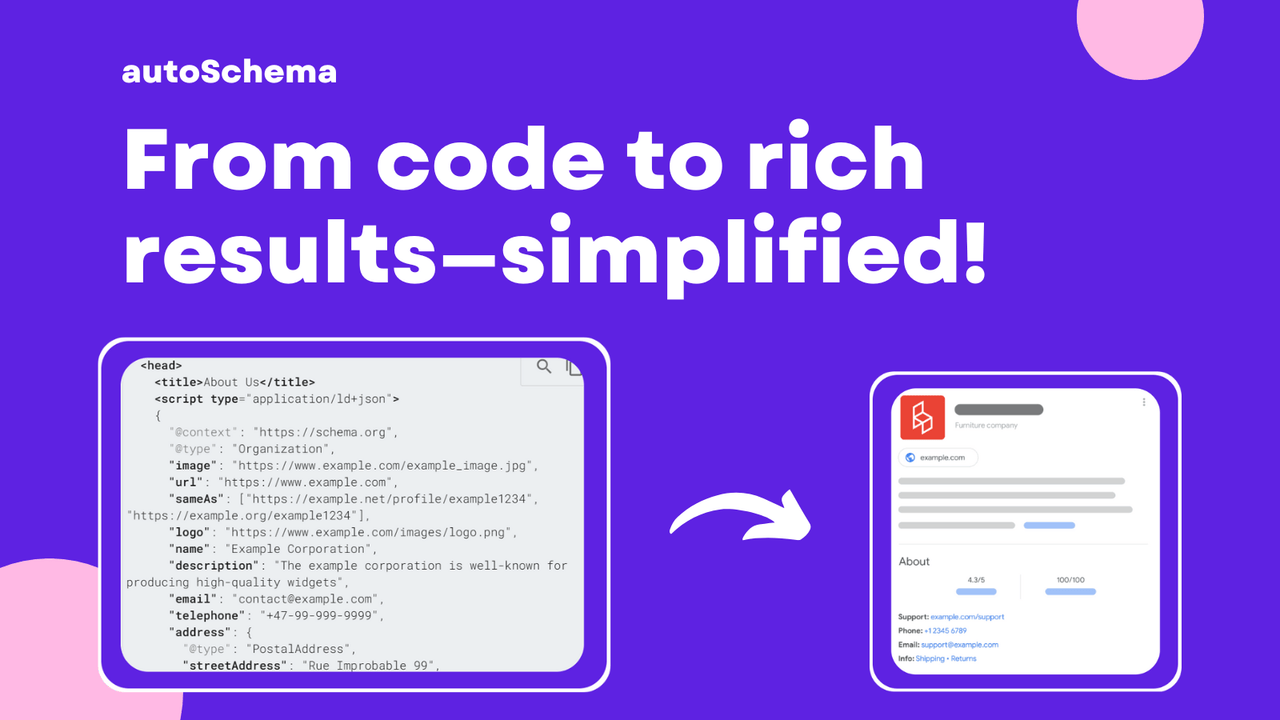
Structured data is a crucial element for any Shopify store aiming to enhance its visibility in search results. However, implementing structured data isn’t as straightforward as it may seem. One of the most common pitfalls merchants encounter is duplicate schema, which can muddle your SEO efforts rather than bolster them. Understanding the intricacies of structured data and the implications of duplicate schema is essential for any Shopify merchant serious about their online presence.
Understanding Structured Data
Structured data refers to a standardized format for providing information about a page and classifying its content. It helps search engines understand the context of your content more efficiently, which can lead to enhanced search results. In the world of ecommerce, structured data is particularly significant because it can help generate rich snippets — those eye-catching results that often include product images, prices, and ratings.
Most structured data on Shopify is implemented using JSON-LD (JavaScript Object Notation for Linked Data). This method is preferred because it keeps your code clean and separates schema from the HTML content, making it easier to manage. However, with multiple apps adding their own structured data, it’s easy to see how duplicate schema can arise.
What is Duplicate Schema?
Duplicate schema occurs when the same structured data is applied more than once on a single page or when conflicting types of schema are present. This can happen for several reasons:
Multiple apps adding their own schema without coordination.
Manual additions of schema that overlap with existing automated entries.
Conflicting information from different data sources.
When search engines encounter duplicate schema, they may struggle to determine which version is the authoritative one. This confusion can lead to improper indexing, which can adversely affect your visibility in search results.
The Risks of Duplicate Schema
Having duplicate schema can create a myriad of issues for your Shopify store:
SEO Impact: Search engines may ignore duplicate entries, leading to missed opportunities for rich snippets. This oversight can affect your click-through rates and overall organic traffic.
Indexing Issues: Conflicting schema can confuse search engines, resulting in incorrect indexing of your products. This can lead to your products not appearing in search results as intended.
User Experience: If users see inconsistent information in search results, it can lead to mistrust and reduced click-through rates.
For example, imagine a Shopify store selling shoes. If one app lists a product with a schema that describes it as “running shoes,” while another app calls it “sneakers,” search engines may struggle to determine which is correct. This inconsistency can hinder visibility and confuse potential customers.
Strategies for Managing Schema in Shopify
To avoid the pitfalls of duplicate schema, implementing best practices is crucial:
Audit Existing Schema: Regularly check your structured data using tools like Google’s Structured Data Testing Tool. This will help you identify duplicate entries or conflicts.
Centralize Schema Management: If you’re using multiple apps, consider consolidating structured data management into a single tool to avoid conflicts.
Keep Schema Relevant: Only use structured data that applies to your products. Overloading a page with excessive schema can lead to confusion.
Using autoSchema for Effective Structured Data Management
One solution to streamline structured data management and avoid duplicate schema is to use an app like autoSchema. This app is designed specifically for Shopify stores and focuses on automating the addition and maintenance of structured data.
Here are some features of autoSchema that can help:
One-click Setup: You can set up structured data with a single click, avoiding the hassle of manual coding.
Automatic Maintenance: As your store changes, autoSchema automatically updates the structured data, ensuring it remains relevant.
Conflict Prevention: The app helps avoid duplicate or conflicting schema, providing a technically clean solution for your structured data management.
Consider a hypothetical case where a Shopify merchant sells handmade candles. Initially, they use one app to add product schema but then install a second app for reviews. Without proper management, both apps might add conflicting schema for the same product. By using autoSchema, the merchant can prevent these conflicts and maintain a clean structured data setup.
Common Mistakes and Misconceptions
Understanding structured data is not just about adding more; it’s about adding the right information correctly. Here are some common misconceptions:
Believing that more schema is always better. In reality, it’s about quality over quantity. Too much schema can lead to confusion.
Assuming structured data is a one-time task. In fact, it requires ongoing maintenance as your product offerings and information change.
Ignoring schema maintenance as part of overall store management. Keeping your structured data up-to-date is crucial for effective SEO.
Practical Steps for Shopify Merchants
To effectively manage your structured data and prevent duplicate schema, consider following these practical steps:
Step 1: Audit Your Schema: Use Google’s Structured Data Testing Tool to identify existing schema on your pages. Look for duplicates and conflicting entries.
Step 2: Implement a Schema Checklist: Create a checklist to ensure that only relevant structured data is added. This will help maintain clarity and relevance.
Step 3: Schedule Regular Reviews: Set up a routine audit to check for any changes in your product information and ensure your structured data remains accurate.
Conclusion
In summary, managing structured data effectively is vital for enhancing your Shopify store’s SEO. While structured data can significantly improve your visibility in search results, duplicate schema can do more harm than good. Adopting best practices and considering automation tools like autoSchema can help you maintain a clean and effective structured data strategy. With the right approach, you can improve your store’s online presence while avoiding the pitfalls of duplicate schema.
Frequently Asked Questions
What is structured data, and why is it important for my Shopify store? Structured data provides search engines with clear information about your content, helping improve your visibility and click-through rates.
How do I identify duplicate schema in my store? Use tools like Google’s Structured Data Testing Tool to audit your site for existing schema and identify duplicates.
Can duplicate schema negatively impact my SEO? Yes, duplicate schema can confuse search engines, leading to improper indexing and reduced visibility in search results.
How does autoSchema help prevent duplicate schema? autoSchema automates the management of structured data, ensuring that only relevant schema is applied and preventing conflicts.
What are the best practices for implementing structured data on Shopify? Regularly audit your schema, centralize schema management, and ensure relevance to maintain clarity and effectiveness.
```
About the app: I build and support autoSchema independently. If the problem discussed in this article sounds familiar, you can see the app and its current features on the Shopify App Store.
The Need for Speed: Why Mobile Page Load Speed is Crucial for E-Commerce Success
In today’s fast-paced digital world, waiting for a webpage to load is about as enjoyable as waiting for your microwave popcorn to finish popping — excruciatingly slow and equally frustrating. As e-commerce continues to flourish, the importance of mobile page load speed has become paramount. In this article, we’ll dive into how mobile page load speed impacts conversion rates for e-commerce websites. Buckle up, folks; it’s time to get speedy!
What is Page Load Speed?
Page load speed refers to the amount of time it takes for a webpage to fully display its content to a user. It’s not just about the flashy images or the fancy animations, either. It’s about how quickly all of that stuff gets delivered to your device, and let’s face it, in the age of instant gratification, people are not willing to wait. If you’ve ever been caught in a buffering loop, you know what we mean.
Mobile Users: The New Kings of E-Commerce
According to Statista, mobile devices accounted for nearly 60% of all e-commerce traffic in 2023. That’s a massive chunk of the pie! With consumers increasingly shopping on their smartphones while waiting in line for coffee or lounging on their couches, e-commerce businesses need to ensure their mobile sites are optimized for speed. Otherwise, they risk losing customers faster than you can say, “Where’s my shopping cart?”
The Correlation Between Load Speed and Conversion Rates
Research has shown that even a one-second delay in page load time can lead to a significant drop in conversion rates. According to Kissmetrics, 47% of consumers expect a web page to load in two seconds or less, while 40% will abandon a site that takes more than three seconds to load. Talk about a ticking clock! In the world of e-commerce, every second counts. If your page lags, so do your sales.
The Numbers Don’t Lie
1-second delay: 7% decrease in conversions.
2-second delay: 87% of online shoppers abandon their cart.
3-second delay: 40% of users will leave your site.
These statistics scream the importance of speed! It’s not just about having a pretty website; it’s about having a fast one. In a world where attention spans are shorter than a goldfish’s, making your potential customers wait is a surefire way to send them packing.
Why Speed Matters More Than Ever
Aside from the obvious fact that no one wants to wait for a page to load, there are several reasons why speed is critical for e-commerce sites:
User Experience: A fast-loading website creates a better user experience. If users can navigate your site smoothly without waiting, they’re more likely to stick around and make a purchase.
SEO Benefits: Google has made it clear that page load speed is a ranking factor. If your site is slow, you may find yourself buried under your competitors in search results.
Mobile-First Indexing: Google uses mobile-first indexing, meaning it primarily uses the mobile version of a site for ranking and indexing. If your mobile site is slow, you’re shooting yourself in the foot.
Reduced Bounce Rate: Slow speeds lead to higher bounce rates. If users leave your site before it loads, you’re missing out on potential conversions.
How to Improve Your Mobile Page Load Speed
Now that we’ve established the importance of speed, let’s talk about how to achieve it. Here are some tips to help you rev up your mobile page load speed:
Optimize Images: Large images can slow down your page. Use compressed images to maintain quality without sacrificing speed.
Minimize HTTP Requests: Each element on your page requires an HTTP request. Reduce the number of elements to speed up load time.
Use Browser Caching: Enable caching to store frequently accessed files on users’ devices, so they don’t have to wait as long for pages to load.
Reduce Redirects: Each redirect creates additional HTTP requests and increases loading time. Keep them to a minimum.
Leverage Content Delivery Networks (CDNs): CDNs can help deliver your content faster by using servers located closer to your users.
Implement AMP: Accelerated Mobile Pages (AMP) is a Google-backed project designed to optimize mobile pages for speed.
The Role of Tools and Apps
For e-commerce businesses, utilizing the right tools can make a world of difference in optimizing mobile page load speed. One fantastic tool that can help you create engaging content and streamline your blogging efforts is autoBlogger. This Shopify app automates your blog, allowing you to focus on other important aspects of your business while keeping your content fresh and relevant. And let’s be honest, who doesn’t love a little automation in their life?
The Bottom Line
In the competitive world of e-commerce, the speed of your mobile page can be the difference between a sale and a missed opportunity. Remember, your customers are busy people who value their time. If your website is slow, they’re likely to abandon their cart and go elsewhere. So, take the time to optimize your site — your conversion rates will thank you for it!
And by the way, if you’re looking for a way to enhance your content strategy and improve your website’s performance, don’t forget to check out autoBlogger. It’s time to hit the gas and watch your e-commerce business thrive!
Note, this article was written with AI assistance to improve readability and give you, the reader, a better experience! :)
How to Low Stock Alerts on Shopify: A Practical Guide
Effective inventory management is a cornerstone of successful ecommerce. No merchant wants to face the dreaded stockout or end up with shelves full of unsold products. Low stock alerts can be a vital tool for Shopify merchants, enabling them to maintain optimal inventory levels without the constant manual checks that can consume valuable time. This guide provides a comprehensive overview of how to set up low stock alerts using autoStockist and offers practical advice on managing your inventory effectively.
Understanding Low Stock Alerts
Low stock alerts are notifications that inform merchants when their inventory reaches a predefined threshold. These alerts serve several purposes:
Prevent stockouts: Alerts notify you before you run out of popular products, ensuring you can restock in time.
Optimize inventory: By monitoring stock levels, you can make informed decisions about which products to order and when.
Enhance customer satisfaction: Avoid disappointing customers with out-of-stock items, which can lead to lost sales and tarnished reputation.
For Shopify merchants, setting up low stock alerts is not just about avoiding stockouts; it’s about gaining control over your inventory and boosting your overall efficiency.
Setting Up Low Stock Alerts in Shopify
Now that we understand the importance of low stock alerts, let’s dive into how to set them up in Shopify using autoStockist. This app simplifies the process, allowing merchants to streamline their inventory management without unnecessary complexity.
Step-by-Step Instructions
Here’s how to set up low stock alerts using autoStockist:
Install autoStockist: Go to the Shopify App Store and search for autoStockist. Click on ‘Add app’ to install it in your store.
Configure your settings: Once installed, navigate to the app settings. Here, you can set your low stock threshold for each product. Consider factors like sales velocity and product type when determining these values.
Enable notifications: Make sure to enable email or SMS notifications so you receive alerts directly when stock levels are low.
Review your dashboard: autoStockist provides an inventory monitoring dashboard where you can see which products are approaching low stock levels. Regularly check this dashboard for the most accurate updates.
Utilize predictive features: Take advantage of predictive restock suggestions to forecast when you might run out of stock based on recent sales activity.
By following these steps, you can ensure that you’re always aware of your stock levels without having to manually check each product constantly. This not only saves time but also allows you to focus on other critical aspects of your business.
Determining Effective Stock Thresholds
Setting the right low stock threshold is crucial for effective inventory management. Here are some factors to consider:
Sales velocity: Understand how quickly each product sells. Fast-moving items may require higher thresholds to prevent stockouts.
Product type: Some products may have longer lead times, meaning you should set a lower threshold for those items to ensure you can replenish them in time.
Seasonality: If you have products that sell better during certain times of the year, adjust your thresholds accordingly to accommodate seasonal fluctuations.
A common method for calculating stock thresholds is to analyze historical sales data. If a product sells, on average, 20 units per week, consider setting a threshold that accounts for a couple of weeks’ worth of sales, plus a buffer for unexpected demand.
Interpreting and Acting on Alerts
Receiving a low stock alert is only the first step. What you do next can make all the difference. Here are some best practices for using alerts to inform your restocking decisions:
Prioritize your response: Not all low stock alerts are created equal. Focus on high-demand products first, as these are the ones that could lead to lost sales if not restocked quickly.
Evaluate your inventory: When you receive an alert, check your inventory levels against your sales trends. This will help you decide whether to place a new order or adjust your marketing efforts.
Plan ahead: Use the predictive restock suggestions from autoStockist to prepare for potential stockouts. This feature helps you make informed decisions based on recent sales activity.
Taking proactive measures based on alerts can help you maintain a steady flow of inventory, ensuring that your customers find what they need when they visit your store.
Common Mistakes and Misconceptions
While low stock alerts can be incredibly useful, there are some common pitfalls to avoid:
Overreacting to alerts: It can be tempting to rush and order new stock every time you receive an alert. Instead, assess the situation and consider whether the alert reflects a genuine need.
Setting unrealistic stock thresholds: If your thresholds are too high or too low, you may find yourself either overstocking or running out of popular items. Regularly review and adjust your thresholds based on sales data.
Ignoring predictive restock suggestions: AutoStockist provides insights based on your sales trends. Ignoring these suggestions can lead to missed opportunities for efficient inventory management.
By being aware of these mistakes, you can navigate the inventory management landscape more effectively.
Trade-offs and Limitations
While automated alerts are helpful, there are some trade-offs to consider:
Dependence on automation: Relying solely on automated alerts can lead to complacency. Always engage in proactive inventory planning and market analysis.
External factors: Automated alerts may not account for sudden spikes in demand due to promotions or unexpected market changes. Stay adaptable and ready to respond to such changes.
It’s essential to balance automation with a hands-on approach to inventory management.
Conclusion
Low stock alerts are an invaluable tool for Shopify merchants looking to optimize their inventory management processes. By setting up alerts through autoStockist, you can avoid stockouts, enhance customer satisfaction, and make informed restocking decisions. Remember to regularly review your stock thresholds and be proactive in your inventory planning.
As you implement these strategies, consider sharing your experiences and tips for managing inventory effectively. After all, a well-stocked store is a happy store.
FAQ
How do I set the ideal low stock threshold for my products? Consider factors like sales velocity, product type, and seasonality. Historical sales data can help you determine a suitable threshold.
What should I do when I receive a low stock alert? Evaluate the product’s sales trends and prioritize restocking high-demand items first.
Can I customize the frequency of alerts from autoStockist? Yes, you can choose how often you want to receive alerts based on your preferences.
How does autoStockist predict stock-out dates? The app uses recent sales activity to forecast when products are likely to run out of stock.
What are the costs associated with using autoStockist, and is it worth it? Pricing varies, but many merchants find that the time saved and improved inventory management make it a worthwhile investment.
About the app: I build and support autoStockist independently. If the problem discussed in this article sounds familiar, you can see the app and its current features on the Shopify App Store.
I Compared the SEO Structure of 6 Shopify AI Blogging Apps Using Real Published Articles
Instead of comparing feature lists, I looked at the actual SEO structure of blog posts being published by Shopify stores using autoBlogger, Bloggle, Essential AI SEO, Auto Blogs Agent, Jolt and AI Blog Agent.
There are plenty of Shopify apps that promise to generate SEO blog content.
But an app saying it creates “SEO-optimised articles” does not necessarily tell you much about the final page.
What I wanted to know was:
What does the actual SEO output look like once the article is published on a Shopify store?
So I looked at real published articles associated with six Shopify blogging apps and compared things such as:
Semantic H2/H3 structure
Article depth and word count
Search-intent coverage
Table of contents
Key takeaways and summaries
Internal and product linking
FAQ sections
Tables and lists
Author and trust signals
Source attribution
Images
Structured, extractable answers
How easily an LLM or AI search engine could understand the page
I build autoBlogger, so I obviously have an interest in the result.
That is also why I wanted to make the comparison transparent and link directly to every article used.
How I selected the articles
Shopify blog posts generally do not include public metadata identifying which app created them.
So for the competing apps I used a simple assumption:
If a merchant publicly reviewed a Shopify blogging app and was publishing blog posts around the same period, it is reasonable to assume they were using the blogging functionality they were reviewing.
In several cases, the merchant review explicitly says the app was writing or publishing their blog posts.
That still isn’t absolute proof of authorship.
The autoBlogger article is different because I can directly confirm that it was created with autoBlogger.
For the other apps, I treat the selected pages as likely examples based on merchant review and publication timing.
If any provider included here believes the selected article was not created or assisted by their app, they are welcome to contact me with a confirmed public example and I will update the comparison.
The SEO results at a glance
I used two scores.
SEO score looks at traditional on-page SEO, including semantic headings, search intent, depth, internal links, structured content, trust signals and general article architecture.
LLM-readiness score looks at how easily an AI search or answer system can understand and extract useful information from the page.
These are my own comparison scores, not Google scores or scores from a third-party SEO platform.
1. autoBlogger — Diament Expert
Approx. word count: ~2,300 SEO score:92/100 LLM-readiness:95/100
2. Bloggle — Street to Stable
Approx. word count: ~1,520 SEO score:72/100 LLM-readiness:66/100
3. Essential AI SEO — Propeller Depot
Approx. word count: ~2,010 SEO score:69/100 LLM-readiness:65/100
4. Auto Blogs Agent — Lifestyle Hobbies
Approx. word count: ~800 SEO score:64/100 LLM-readiness:61/100
5. Jolt — Powerful Health USA
Approx. word count: ~600 SEO score:50/100 LLM-readiness:50/100
6. AI Blog Agent — Jackson’s Cool Stuff
Approx. word count: ~360 SEO score:41/100 LLM-readiness:44/100
The biggest difference was not simply article length.
It was how much SEO structure existed around the words.
1. autoBlogger
Diament Expert — The Art of Craftsmanship in Fine Diamond Jewelry
Approx. word count: ~2,300 SEO score:92/100 LLM-readiness:95/100
This is the article I can directly confirm was generated through autoBlogger.
From an SEO perspective, the main difference is the amount of structure surrounding the article.
The page includes:
One clear H1
Proper semantic H2 and H3 sections
A table of contents
An article overview
Key takeaways
Lists
A comparison table
Step-by-step sections
FAQs
A glossary
Multiple images
Internal context
A named expert author
That gives search engines a very clear hierarchy.
Instead of seeing one long article body, a crawler can understand that the page contains separate sections about diamond quality, craftsmanship techniques, technology, certification, selecting a jeweller and other related subtopics.
The H2/H3 structure is particularly important.
A visually large line of text is not necessarily a heading. Proper HTML heading elements explicitly describe the relationship between sections.
That helps accessibility, traditional crawling and increasingly AI systems trying to break a long page into meaningful chunks.
The table of contents
The table of contents creates another useful layer.
It helps readers navigate a long article, but it also makes the topical architecture of the page very explicit.
An AI system can quickly identify the main areas covered without having to infer the structure from several thousand words.
Key takeaways
The key-takeaway section is another strong SEO and LLM feature.
It gives the article an answer-first element before the detailed content begins.
For AI search especially, concise standalone statements are useful because they are easier to extract and associate with specific questions.
FAQs
The FAQ section expands the number of queries the page can naturally answer.
It also makes likely follow-up questions explicit rather than hoping search engines infer them from paragraphs elsewhere in the article.
Glossary
The glossary is particularly useful for entity understanding.
Important diamond-related terminology is explicitly defined.
That helps establish the relationship between terms and makes the article easier for an LLM to interpret without relying entirely on contextual inference.
Author information
The article also contains a named expert author with relevant experience.
That does not magically improve rankings, but it adds useful provenance and trust context to the page.
The main weakness I found was external sourcing. Some factual sections could still benefit from more direct references.
That is why I scored it 92 rather than 100 for SEO.
2. Bloggle
Street to Stable — The Voice of Agriculture Within Quiet Luxury
Approx. word count: ~1,520 SEO score:72/100 LLM-readiness:66/100
The Jolt example uses proper headings, which gives it a reasonable basic structure.
But the article is only around 600 words.
From an SEO perspective, that leaves relatively little room to build topical depth.
There is also very little:
Internal linking
Supporting source material
Structured data within the article
FAQ coverage
Long-tail question coverage
Entity definition
Additional topical context
Because the page covers a health-related subject, the lack of visible research citations is also more important than it would be for a less sensitive ecommerce topic.
The article refers to research and studies, but there is little visible evidence connecting those statements to primary sources.
So while the page has reasonable basic HTML structure, the overall SEO resource is quite thin.
6. AI Blog Agent
Jackson’s Cool Stuff — Master the Future of Wearable Technology in a Few Simple Steps
Approx. word count: ~360 SEO score:41/100 LLM-readiness:44/100
This is easily the lightest SEO page in the comparison.
The article does use headings, so the basic hierarchy is there.
But at approximately 360 words, there simply isn’t enough content to create substantial topical coverage.
There is very little:
Semantic depth
Long-tail coverage
Supporting evidence
Internal context
FAQ content
Structured answers
Topical subheadings
Related entity coverage
This becomes particularly noticeable because the target topic, wearable technology, is extremely broad.
A broad query generally gives you plenty of opportunities to create supporting sections and related keyword coverage.
Instead, the page remains extremely short.
From an SEO perspective, this gives search engines comparatively little information to associate with the URL.
That is why I scored it 41/100.
What mattered most for SEO
After looking through all six pages, four things stood out.
1. Semantic headings matter
One of the clearest differences was between headings that merely looked like headings and actual H2/H3 HTML elements.
This is easy to overlook when visually reviewing an article.
A page can look beautifully structured while exposing a much flatter document structure underneath.
I think automated blogging tools should be generating proper semantic HTML by default.
2. Article length only helps when the structure supports it
The Essential AI SEO article proves this nicely.
At around 2,010 words, it has plenty of content.
But without the same level of semantic organisation, some of that value is harder for crawlers and AI systems to interpret.
The autoBlogger article is only modestly longer, but divides the information across substantially more meaningful structures.
3. SEO articles should create multiple entry points
A good long-form article should not rely on a single broad keyword.
It should naturally answer related questions and subtopics.
That is where things such as:
H2 sections
H3 sections
FAQs
Tables
Definitions
Lists
Key takeaways
become useful.
Each creates another clearly defined piece of information on the same page.
4. LLM optimisation overlaps heavily with good SEO
I don’t think “LLM SEO” requires completely reinventing content.
A lot of the things that make pages useful to AI systems are simply good web publishing:
Clear headings
Direct answers
Named entities
Definitions
Sources
Tables
FAQs
Author information
Logical hierarchy
Useful internal links
The difference is that these things become even more important when software is trying to extract an answer rather than simply rank ten blue links.
Why autoBlogger scored highest
The autoBlogger article was not simply the longest article.
It scored highest because it combined more SEO elements on the same page:
Proper H2/H3 structure
Table of contents
Overview
Key takeaways
Lists
Multiple images
Internal context
Comparison table
FAQ
Glossary
Named author
Long-form topical coverage
This is also why I don’t really think of autoBlogger as just an “AI writer” anymore.
Writing the paragraphs is only one stage.
The bigger goal is to automate the entire Shopify blogging and SEO workflow around those paragraphs.
That means researching the topic, structuring the article, editing it in multiple passes, adding internal and product links, creating imagery, checking SEO elements and then publishing the final page.
So which had the strongest SEO output?
In this particular real-world sample, autoBlogger produced the strongest overall SEO structure.
It scored:
SEO: 92/100
LLM-readiness: 95/100
Bloggle’s example had particularly strong sourcing and editorial authority, although Bloggle is not directly comparable as an AI writer.
Essential AI SEO produced plenty of content but was held back by surprisingly weak semantic heading structure.
Auto Blogs Agent had better basic headings but significantly less depth.
Jolt and AI Blog Agent produced much thinner pages in the examples I found.
This obviously does not prove that every article generated by autoBlogger will outperform every article generated by another platform.
It is a comparison of six real published examples.
But I think inspecting the actual SEO output is a lot more informative than comparing feature lists that all say roughly the same thing.
A note for the app developers
If you build one of the products included here and believe the article I selected isn’t representative of your app, feel free to contact me.
If you can provide a publicly accessible Shopify article that you can confirm was generated using your product, I am happy to replace the example and score it using exactly the same criteria.
I’d rather compare the strongest genuine examples than accidentally make another app look worse because I selected the wrong page.
A better approach to product linking from blog content on Shopify
For Shopify merchants, navigating the world of content marketing can feel overwhelming. With increasing competition and the need to stand out, effective strategies for product linking from blog content have become essential. The challenge lies not just in inserting product links but in doing so in a way that enhances user experience and drives conversions without compromising the quality of the content.
The Role of Product Linking in Blogging
Product linking refers to the practice of embedding links to your products within your blog content. This strategy is crucial for several reasons. First, it drives traffic directly to your product pages, increasing the chances of conversions. Second, it enhances SEO by creating relevant content that search engines can index. When executed correctly, product linking can transform a casual reader into a paying customer.
However, it is important to understand that product linking should not feel forced. A well-placed link can enhance the reader’s experience by providing them with useful information. Think of it as a gentle nudge towards a solution they might be seeking, rather than a hard sell that disrupts their reading flow.
Understanding the Balance: User Experience vs. Promotion
Finding the right balance between promoting products and providing valuable content is a delicate act. If you stuff your blog with links, it can come off as desperate or spammy. Conversely, underutilizing links might mean missing out on potential sales. The key is context. Links should feel natural and relevant to the content. When writing about a topic, consider how your products relate and incorporate links accordingly.
For instance, if you’re writing a blog post about fashion trends, linking to specific clothing items that fit those trends is a sensible approach. Readers are already interested in the topic, and a well-placed link can provide them with an easy path to purchase.
Best Practices for Product Linking
To effectively integrate product links into your blog posts, consider the following best practices:
Contextual Linking: Ensure your links are relevant to the surrounding content. This not only improves user experience but also signals to search engines that your content is valuable.
Use Anchor Text Wisely: Instead of generic phrases like “click here,” use descriptive anchor text that gives readers an idea of what they’ll find when they click the link.
Placement Matters: Position your links naturally within the flow of your text. Avoid clustering them all at the end of the post; instead, sprinkle them throughout where they make sense.
Limit the Number of Links: Too many links can overwhelm readers and dilute the effectiveness of each one. A few well-placed links are often more effective than an abundance of them.
By following these best practices, you can enhance your blog’s usefulness while effectively promoting your products.
Leveraging Automation with autoBlogger
For many merchants, the process of creating content and linking products can be time-consuming. This is where automation tools like autoBlogger come into play. Designed specifically for Shopify, this tool can help streamline the entire blogging workflow.
With features like automatic product linking, autoBlogger saves valuable time by identifying opportunities for linking based on your store’s own search visibility data. This ensures that your links are both relevant and strategic. Moreover, its multi-pass AI writing and editing capabilities help maintain content quality while automating the more tedious aspects of blogging.
Imagine being able to set your blog on autopilot while still producing high-quality content that engages your audience and effectively promotes your products. That’s the power of automation.
Measuring the Impact of Product Links
Once you’ve implemented product linking strategies, it’s crucial to measure their effectiveness. Understanding how your links perform can help you refine your approach. Here are some tools and metrics to consider:
Google Analytics: Track the number of clicks on your product links. This data provides insight into which posts are driving the most traffic to your product pages.
Conversion Rates: Monitor how many visitors who clicked on your links ended up making a purchase. This will help you understand the effectiveness of your linking strategy.
Engagement Metrics: Look at how long readers stay on your page after clicking a link. If they leave quickly, it might indicate that the link didn’t meet their expectations.
Using these metrics, you can assess the impact of your product links and make necessary adjustments to improve performance.
Common Mistakes and Misconceptions
Even experienced merchants can fall into traps when it comes to product linking. Here are some common mistakes to avoid:
Over-Linking: A common misconception is that more links equate to better SEO performance. In reality, too many links can overwhelm readers and detract from the quality of your content.
Ignoring Content Quality: Relying solely on automation without maintaining quality can lead to generic and unengaging content. Automated tools should assist, not replace, quality content creation.
Neglecting Mobile Users: Ensure that your links are easily clickable on mobile devices. A poor mobile experience can drive potential customers away.
By avoiding these pitfalls, you can create a more effective and engaging linking strategy.
Practical Steps for Implementation
If you’re ready to enhance your product linking strategy, here’s a step-by-step guide to integrating links effectively using autoBlogger:
Set Up autoBlogger: Install the app and configure it to align with your store and content needs.
Research Topics: Use the research and topic development features to identify trending topics relevant to your products.
Draft Content: Allow autoBlogger to generate structured articles with automatic product linking capabilities.
Review and Edit: Even with automation, it’s essential to review the content to ensure it meets your quality standards.
Schedule and Publish: Use the scheduling feature to maintain a consistent posting schedule.
Monitor Performance: After publishing, track the performance of your links using Google Analytics and adjust your strategy accordingly.
By following these steps, you can create a streamlined process for producing high-quality content that effectively promotes your products.
Conclusion
Effective product linking from blog content is not just about adding links; it’s about creating a strategic approach that enhances user experience and drives sales. By understanding the balance between promotional content and valuable information, you can create a blog that serves your audience while effectively promoting your products.
Consider utilizing tools like autoBlogger to simplify your blogging workflow and ensure your content remains relevant and engaging. With the right strategies in place, you can turn your blog into a powerful tool for driving traffic and conversions.
FAQ
How can I effectively integrate product links in my blog posts? Focus on contextual linking, use descriptive anchor text, and ensure that links are naturally placed within the content.
What are the best practices for linking products without disrupting the reader’s experience? Limit the number of links, make them relevant to the content, and avoid clustering them all at the end of the post.
How does autoBlogger help with product linking? autoBlogger automates the product linking process by identifying opportunities based on search visibility, allowing for a more efficient content creation workflow.
What metrics should I use to measure the effectiveness of my product links? Monitor click-through rates, conversion rates, and engagement metrics to assess the impact of your links.
Can automated content hurt my SEO if not done correctly? Yes, poor-quality automated content can negatively impact your SEO. It’s important to maintain a balance between automation and content quality.
About the app: I build and support autoBlogger independently. If the problem discussed in this article sounds familiar, you can see the app and its current features on the Shopify App Store.
Shopping for health and wellness items can sometimes feel overwhelming, but it doesn’t have to be. Welcome to VitaBuy, your one-stop shop for quality vitamins, supplements, and personal care products that will make you feel your best. With a wide selection tailored to various health concerns, you’re sure to find exactly what you need to thrive.
Standout Products to Explore
VitaBuy offers a treasure trove of unique products that cater to your everyday wellness needs. Whether you’re seeking relief from pesky bug bites or looking to boost your energy levels, they’ve got you covered.
Sarna Calm and Cool Anti-Itch Lotion: This lotion combines menthol and camphor to give you an incredible cooling sensation that’s perfect for any itch.
Bite Back Against Bugs!
Summer adventures can come with their fair share of unwelcome guests — think mosquitoes and other bugs. So, it’s great that VitaBuy has a dedicated collection of insect bite treatments. Here are a few favorites:
In addition to topical relief, VitaBuy features a diverse range of vitamins and supplements that support your overall wellness. From enhancing energy levels to immune support, you can find what’s right for you:
THORNE Women’s Multi 50+: A comprehensive daily multi-vitamin that caters specifically to women over 50, helping maintain vitality.
THORNE Creatine: Ideal for anyone looking to enhance their muscle strength and performance.
Commitment to Quality
At VitaBuy, every product is selected with care, ensuring that you only get what’s best for your health. Their commitment to sourcing quality ingredients allows you to shop confidently, knowing that you’re supporting your body with premium products.
Summer Essentials
As the warm weather approaches, it’s a perfect time to stock up on your summer must-haves. Think soothing creams and refreshing sprays that will keep you feeling comfortable and protected as you enjoy the great outdoors.
The beauty of shopping at VitaBuy goes beyond just the products; it’s about becoming part of a community that values health and well-being. They frequently share health tips and stories on their blog, offering insights that enhance your wellness journey.
So why wait? Dive into the world of wellness and discover products that can change your everyday routine for the better. Whether you’re shopping for topical treatments or nutritional support, you’ll find something that resonates with your self-care needs.
Head on over to VitaBuy and explore their collections today. Here’s to embracing health and happiness, one product at a time!
Disclaimer: The information presented in this blog post is based on publicly available data from https://vitabuy.net. Accuracy is not guaranteed — please verify before making decisions.
How to Google Rich Results on Shopify: A Practical Guide
In the competitive world of eCommerce, standing out in search results is crucial for attracting potential customers. Google rich results can be a merchant’s best friend in this regard. These enhanced listings not only catch the eye but also convey valuable information directly in the search engine results page (SERP). They can significantly improve your visibility and click-through rate, making them a highly desirable goal for Shopify store owners. However, implementing rich results can be daunting, especially for those without a technical background. This guide aims to demystify the process and provide you with practical steps to achieve Google rich results on your Shopify store.
Understanding Google Rich Results
So, what exactly are Google rich results? In simple terms, they are search results that go beyond the standard blue link. Rich results often include images, star ratings, prices, and other information that can enhance the visibility of your listings. Examples include product snippets, recipe cards, and review stars.
Rich results are particularly beneficial for eCommerce sites. They can lead to higher click-through rates (CTR) because they provide users with more context and information upfront. This means that potential customers are more likely to click on your listing over others that lack these enhancements. In a competitive environment, every little advantage counts.
The Importance of Structured Data
At the heart of rich results lies structured data. This is a standardized format for providing information about a page and classifying its content. Google uses structured data to better understand what your page is about, which in turn helps it generate rich results.
Structured data can be implemented in various formats, but JSON-LD (JavaScript Object Notation for Linked Data) is the recommended format by Google due to its ease of use and compatibility with most platforms, including Shopify. With structured data, you can mark up product information, reviews, and even FAQs, making it easier for Google to display rich results based on your content.
Implementing Structured Data on Shopify
Now that you understand the importance of structured data, let’s look at how to implement it on your Shopify store. There are two main approaches: manual implementation and automated solutions.
Manual Implementation
For those who prefer a hands-on approach, you can manually add structured data to your Shopify store. Here’s a basic step-by-step guide:
Identify the type of structured data you need. Common types for eCommerce include Product, Offer, and Review.
Use Google’s Structured Data Markup Helper to generate the necessary JSON-LD code.
Embed the generated code in the head section of your theme's HTML. This can typically be done via the Shopify admin under Online Store > Themes > Edit Code.
Test your implementation using Google’s Rich Results Test tool to ensure everything is set up correctly.
While this method can work, it may not be suitable for everyone, especially if you have numerous products or if your inventory changes frequently. Manually maintaining structured data can become cumbersome and error-prone.
Using autoSchema for Automated Solutions
For merchants looking for a more streamlined approach, autoSchema offers an automated solution for adding and maintaining structured data on Shopify. This app simplifies the entire process, ensuring that your structured data is always accurate and up-to-date.
With autoSchema, you can set up structured data with just a click, and it will automatically adjust as your store changes. This means you no longer have to worry about manually updating the schema whenever you add new products or make changes to existing ones. Additionally, autoSchema helps prevent issues with duplicate or conflicting schema, making your structured data cleaner and more maintainable.
Maintaining Structured Data Over Time
Keeping your structured data up to date is crucial. As your store evolves, so does the content on your pages. Regular audits are necessary to ensure that your structured data reflects any changes. Here’s how to streamline this process:
Schedule regular reviews of your structured data, especially after significant changes to your product inventory.
Use tools like Google Search Console to monitor for any warnings or errors related to structured data.
Automate updates with tools like autoSchema to reduce the manual workload.
Maintaining clean and accurate structured data can enhance your chances of appearing in rich results, so it’s worth the effort.
Common Pitfalls and Misconceptions
While structured data is essential for rich results, some common pitfalls and misconceptions can hinder your efforts:
Over-optimizing structured data: While it might be tempting to add as much schema markup as possible, quality matters more than quantity. Over-optimizing can lead to penalties from Google.
Believing structured data guarantees rich results: Just because you have structured data doesn’t mean you will definitely get rich results. Google’s algorithms ultimately decide what gets displayed.
Ignoring duplicate or conflicting schema: Having multiple types of structured data on a single page can confuse search engines and lead to issues. Keeping your schema clean is crucial.
Practical Steps for Implementation
To ensure that your Shopify store is ready for rich results, follow this checklist:
Verify that all product pages have the correct structured data applied.
Use Google’s Rich Results Test tool to check for errors or issues.
Regularly audit your structured data for accuracy and relevance.
By following these steps, you can set your store up for success in achieving Google rich results.
Conclusion
Implementing Google rich results on your Shopify store may seem like a daunting task, but it doesn’t have to be. By understanding the importance of structured data and leveraging tools like autoSchema, you can enhance your online presence and improve your chances of appearing in rich results. Regular maintenance and attention to detail will ensure that your structured data remains relevant and effective over time. So, roll up your sleeves, get started, and watch as your store begins to shine in search results!
FAQ
What are Google rich results, and how do they differ from regular search results?
Google rich results are enhanced search listings that provide additional information, such as images, star ratings, or prices, compared to standard search results, which typically only display a title and URL.
How do I know if my structured data is set up correctly?
You can use Google’s Rich Results Test tool to check if your structured data is correctly implemented and to identify any errors that need fixing.
Can I manually add structured data to my Shopify store without an app?
Yes, you can manually add structured data by embedding JSON-LD code directly into your theme’s HTML. However, this method may require ongoing maintenance to ensure accuracy.
What if my structured data doesn’t lead to rich results?
Rich results are not guaranteed. Google decides whether to display rich results based on its algorithms and how well your structured data aligns with their guidelines.
How often should I review and update my structured data?
It’s a good practice to review your structured data regularly, especially after making changes to your product listings or content. Automating this process with tools like autoSchema can help ensure accuracy and reduce manual effort.
About the app: I build and support autoSchema independently. If the problem discussed in this article sounds familiar, you can see the app and its current features on the Shopify App Store.
Sustainable Packaging Solutions in E-commerce Logistics
In the age of online shopping, the demand for efficient e-commerce logistics is at an all-time high. We order everything from shoes to shampoo with just a few clicks, often without a second thought about how our purchases are packaged and shipped. However, as the saying goes, with great power comes great responsibility (thank you, Uncle Ben!). The rise of e-commerce has led to an avalanche of packaging waste, and now more than ever, it’s crucial for businesses to consider sustainable packaging solutions. So grab your eco-friendly coffee mug, and let’s dive into the world of sustainable packaging!
The Packaging Predicament
Think about it: how many times have you received a tiny item in a box that could double as a small house? Or perhaps a single shirt comes wrapped in enough plastic to make a marine biologist weep? Unfortunately, traditional packaging methods contribute significantly to environmental degradation, leading to clogged landfills and polluted oceans. But fear not! The world of sustainable packaging is here to save the day (and the planet).
What is Sustainable Packaging?
Sustainable packaging refers to materials and methods that are environmentally friendly and minimize waste. This can include biodegradable materials, recyclable options, and even packaging made from recycled goods. The goal is to reduce the carbon footprint of shipping while still protecting the products we love. After all, nobody wants their new ceramic mug to arrive in a million tiny pieces!
Why Should E-commerce Businesses Consider Sustainable Packaging?
Great question! Here are just a few reasons why making the switch is not only beneficial for the planet but also for your business:
Consumer Demand: Today’s consumers are more eco-conscious than ever. A 2021 survey revealed that over 70% of consumers are willing to pay more for sustainable products. If you want to attract these conscious buyers, sustainable packaging is a must!
Brand Image: Implementing eco-friendly solutions can significantly enhance your brand image. Companies like Patagonia and Seventh Generation have built their reputations on sustainability. You don’t want to be the brand known for being the “packaging villain,” do you?
Cost Savings: Many sustainable packaging solutions can lead to cost savings in the long run. Materials like biodegradable mailers may have a higher upfront cost but can save you money on landfill fees and disposal.
Regulatory Compliance: With governments worldwide implementing stricter regulations on waste and packaging, being proactive in your packaging choices can save you headaches down the line. Think of it as future-proofing your business!
Types of Sustainable Packaging Solutions
Now that you’re convinced that sustainable packaging is the way to go, let’s explore some of the most popular solutions available for e-commerce businesses:
1. Biodegradable Packaging
Biodegradable materials break down naturally over time, reducing the amount of waste that ends up in landfills. Options include:
Bioplastics: Made from renewable sources like corn starch, these materials can be composted and are often used for bags and containers.
Paper Products: Kraft paper and cardboard are widely recyclable and biodegradable, making them a classic choice for shipping boxes.
2. Recyclable Packaging
Recyclable packaging can be processed and reused to create new materials. Consider these options:
Cardboard Boxes: The good ol’ cardboard box isn’t just versatile; it’s recyclable! Just be sure to use minimal tape and avoid plastic liners.
Glass Containers: For products like cosmetics or food, glass is an excellent recyclable option that also looks classy.
3. Reusable Packaging
Why not give your customers a little something extra? Reusable packaging can provide added value while reducing waste. Options include:
Cloth Bags: Perfect for fashion items, reusable cloth bags can double as eco-friendly shopping totes.
Packaging that Transforms: Some innovative companies design packaging that can be reused, like boxes that can be turned into storage solutions or fun toys!
4. Eco-Friendly Fillers
When it comes to protecting shipments, packing peanuts and bubble wrap are often the go-to options. However, they’re not the most eco-friendly! Alternatives include:
Recycled Paper Shreds: These provide cushioning and can be recycled again after use.
Biodegradable Peanuts: Made from starch, these dissolve in water and are a great alternative to traditional packing peanuts.
How to Implement Sustainable Packaging in Your E-commerce Business
Making the switch to sustainable packaging doesn’t have to be overwhelming. Here’s a simple step-by-step guide to help you get started:
Assess Your Current Packaging: Take a good look at what you’re currently using. Identify areas where you can make eco-friendlier choices.
Research Suppliers: Look for suppliers that specialize in sustainable packaging solutions. Many companies are now offering eco-friendly options that won’t break the bank.
Test Your Packaging: Before rolling out new packaging to all your customers, do a small test run. Ensure that the new materials protect your products and meet customer expectations.
Educate Your Customers: Don’t keep your sustainable efforts a secret! Share your journey towards greener packaging with your customers. They’ll appreciate your transparency and commitment to the environment.
Gather Feedback: Once you’ve made the switch, gather feedback from customers. Are they happy with the new packaging? Do they have suggestions? Listening to them can lead to continuous improvement.
The Role of Technology in Sustainable Packaging
As technology continues to advance, so does the potential for sustainable packaging solutions. From smart packaging that monitors environmental conditions during shipping to automated systems that optimize packaging size, the future looks bright! For e-commerce businesses looking to streamline their operations, apps like autoBlogger can help automate content creation, making it easier to share your sustainable efforts and engage with your customers. Talk about a win-win!
Conclusion
In conclusion, sustainable packaging is no longer just a trend; it’s a necessity for e-commerce businesses that want to thrive in today’s eco-conscious market. By making the switch to eco-friendly packaging solutions, you’ll not only contribute to a healthier planet but also enhance your brand image and satisfy your customers. So, what are you waiting for? Grab those biodegradable mailers and start packaging like the eco-warrior you were meant to be!
For more information on how to improve your e-commerce efforts, check out autoBlogger and see how it can help streamline your content creation!
Note, this article was written with AI assistance to improve readability and give you, the reader, a better experience! :)
In the busy whirl of life, finding a space to breathe and reflect can be invaluable. At Jamie Clarke Counselling, you’re welcomed into a warm, supportive environment where you can take the time to explore your feelings and thoughts. With services tailored for adults and couples, Jamie is dedicated to helping you navigate through life’s challenges — whether that’s tackling anxiety, managing stress, or healing from grief.
Meet Jamie: Your Guide to Healing
Jamie Clarke brings a wealth of experience and a compassionate approach to therapy. His background encompasses a range of services, from cognitive behavioural therapy to couples counselling. With each session, he creates a safe and trusting atmosphere, allowing you to delve into your emotions with confidence.
What to Expect
When you step into a counselling session, either in person at his Ipswich practice or online from the comfort of your home, you’re embarking on a journey toward self-discovery and healing. Jamie offers an initial consultation that lays the groundwork for your tailored therapeutic experience, ensuring you feel valued and understood from the very start.
A Range of Services to Support You
At Jamie Clarke Counselling, there’s a diverse array of services designed to cater to your unique needs:
Choosing the right therapist can feel daunting, but Jamie’s approach is rooted in empathy, connection, and professionalism. His practice is built on the belief that each person is unique and deserves personalized support. Whether you’re facing daily stressors or deeper emotional challenges, Jamie is here to help you work through it.
Accessible and Flexible Therapy Options
Life can be hectic, and fitting in therapy shouldn’t add stress. Jamie offers both face-to-face sessions in Suffolk and convenient online counselling available across the UK. This flexibility makes it easier than ever for you to prioritize your mental health.
Join a Community of Support
In addition to one-on-one sessions, Jamie offers a wealth of resources through his blog, where you can find tips on mental health, recognising signs of stress, and building healthier relationships. Engaging with this supportive content can be a fantastic complement to your counselling journey.
Start Your Journey Today
If you’re ready to explore your thoughts and emotions in a safe, supportive space, why not take that first step? At Jamie Clarke Counselling, a compassionate and understanding environment awaits you. Whether you’re grappling with anxiety, seeking relationship advice, or just need someone to talk to, you’re not alone.
Feel free to browse the site or take a look at the variety of services available. Your journey towards better mental health could start today!
Disclaimer: The information presented in this blog post is based on publicly available data from https://jamieclarkecounselling.co.uk. Accuracy is not guaranteed — please verify before making decisions.
Why SEO content creation matters for Shopify stores
SEO content creation is more than just a buzzword in the e-commerce world; it is a crucial strategy for Shopify merchants aiming to enhance their online presence and attract organic traffic. For Shopify merchants, the importance of high-quality, SEO-optimized content cannot be overstated. It serves as a pathway to visibility that goes beyond reliance on paid advertising, which can drain resources without guaranteeing results.
Understanding SEO and Its Relevance to E-commerce
SEO, or Search Engine Optimization, is the practice of enhancing your website’s visibility on search engines like Google. When someone types a query into a search engine, SEO helps ensure your store appears in the results. This is critical because most online experiences begin with a search engine. For Shopify stores, effective SEO can mean the difference between being found by potential customers or getting lost in the vast digital ocean.
Why does SEO matter for online stores? The answer is simple: visibility translates to traffic, and traffic can lead to sales. In an increasingly competitive market, SEO provides a way to stand out and connect with customers who are actively seeking products like yours.
The Role of Content in SEO Strategy
Content plays a central role in any SEO strategy. It is not just about product descriptions or landing pages; it encompasses a variety of formats that can elevate your store’s search rankings and engage customers. Here are some types of content that can benefit your SEO:
Blog Posts: Informative and engaging articles can attract visitors and establish your brand as an authority in your niche.
Guides and How-Tos: These pieces of content help customers solve problems and can lead to higher engagement.
Product Descriptions: Well-crafted descriptions that include relevant keywords can improve your product’s search visibility.
High-quality content influences search rankings, increases dwell time, and encourages social sharing. It is essential to focus not just on quantity but on creating meaningful, valuable content that addresses your audience’s needs.
Challenges Shopify Merchants Face in Content Creation
Despite the clear benefits, many Shopify merchants encounter obstacles when it comes to content creation. Here are a few common challenges:
Time Constraints: Running an online store is demanding. Many merchants find it difficult to allocate time for regular content creation amid their other responsibilities.
Lack of Expertise: Not everyone is a natural writer or has a background in SEO. This can lead to uncertainty about how to create content that is both engaging and optimized for search engines.
Balancing Quality and Quantity: There is often pressure to produce more content, which can lead to a compromise in quality if not managed properly.
The Importance of a Structured Content Strategy
A structured content strategy is vital for overcoming these challenges. First, you need to identify target keywords relevant to your products and audience. This process involves understanding search intent and tailoring your content accordingly.
Creating a content calendar can help you stay organized. Plan out your topics, publication dates, and promotional strategies in advance. This not only ensures consistency but also allows you to keep track of what has been published and what’s coming next.
Leveraging Google Search Console for Content Opportunities
Google Search Console is an invaluable tool for Shopify merchants looking to enhance their content strategy. This free resource provides insights into how your store is performing in search results, including which keywords are driving traffic and how your pages are ranking.
To use Google Search Console effectively, regularly check the Performance report. This will help you identify which queries are bringing users to your site and which pages are performing well. By focusing on these insights, you can create content that targets high-potential keywords and meets user needs.
For example, a Shopify store selling eco-friendly products might notice a spike in searches related to “sustainable packaging.” This insight could inspire a blog post on the importance of sustainable packaging and how their products contribute to that goal, thereby drawing more visitors to their site.
How Automation Can Enhance Your Content Creation
While a structured approach is essential, it can be labor-intensive. This is where automation can play a significant role. Tools like autoBlogger can streamline the content creation process, making it easier for merchants to maintain a consistent output without compromising quality.
autoBlogger is built specifically for Shopify, designed to automate much of the blogging workflow. It helps identify content opportunities, create structured articles, and optimize them for SEO before publication. Features like internal linking, metadata optimization, and automatic social sharing ensure that your content is not only published but also effectively promoted.
For instance, a merchant using autoBlogger can set it up to regularly publish blog posts based on data from Google Search Console. This removes the guesswork from content creation and allows merchants to focus on their core business activities while still benefitting from a robust content strategy.
Best Practices for SEO Content Creation
To maximize the effectiveness of your SEO content, consider these best practices:
Focus on Quality: It is better to publish fewer high-quality pieces than to churn out a large volume of mediocre content.
Internal Linking: Create a web of content by linking relevant articles and product pages. This helps with SEO and keeps users on your site longer.
Optimize Metadata: Ensure that your titles, descriptions, and headings are optimized with relevant keywords.
Engaging Imagery: Use high-quality images and ensure they are optimized for web use to improve load times.
Consider Layout: Make your content easy to read with short paragraphs, headings, and bullet points.
Measuring Success and Adjusting Your Strategy
Once you have implemented your content strategy, it is crucial to measure its success. Key performance indicators (KPIs) to track include:
Organic traffic growth
Engagement metrics (time on page, bounce rate)
Conversion rates from content-driven traffic
Regularly review these metrics and be prepared to adjust your strategy based on what the data is telling you. SEO is an ongoing process that requires continual optimization and adaptation.
Conclusion
In conclusion, SEO content creation is vital for Shopify merchants looking to enhance their online presence and engage customers. While tools like autoBlogger can significantly streamline the content creation process, understanding the fundamentals of SEO and content strategy remains crucial for long-term success.
By embracing a structured approach to content creation, leveraging tools for automation, and focusing on quality, Shopify merchants can build a sustainable content strategy that drives traffic and supports their business goals. Remember, content creation is not a one-time effort; it is an ongoing investment in your store’s growth.
FAQ
What types of content are most effective for SEO on Shopify? Blog posts, guides, and well-optimized product descriptions are all effective types of content.
How often should I publish new content to improve SEO? Consistency is key; aim for a regular schedule that fits your capacity, whether that is weekly, bi-weekly, or monthly.
Can I rely solely on automated tools for content creation? Automation can help streamline the process, but human oversight is crucial to ensure content quality and relevancy.
How do I measure the success of my SEO content strategy? Track KPIs like organic traffic, engagement metrics, and conversion rates related to your content.
What are some common SEO mistakes that Shopify merchants make? Common mistakes include neglecting internal linking, overlooking metadata, and prioritizing quantity over quality.
About the app: I build and support autoBlogger independently. If the problem discussed in this article sounds familiar, you can see the app and its current features on the Shopify App Store.
If you’re on the lookout for a fresh take on your favorite smoke, look no further than CAMO Natural Leaf Wraps. This online treasure trove offers a delightful mix of flavors and options that feel as good as they taste. With a commitment to natural ingredients and a clean flavor profile, CAMO wraps elevate your experience, allowing the true essence of your blend to shine through.
A Flavor for Every Palate
The heart of CAMO beats in its wide array of wraps, designed to please every taste bud. Whether you’re in the mood for something fruity, sweet, or classic, CAMO has a wrap that fits the bill:
White Grape: Crisp and refreshing, this wrap is perfect for sunny afternoons.
Piña Colada: Transport yourself to the tropics with this vibrant, fruity option that thrills the senses.
Irish Cream: Rich and creamy, this wrap brings a decadent twist to your sessions.
Exciting Collections and Seasonal Picks
CAMO also keeps it exciting with themed collections that cater to various moods and occasions. Want to share a little joy? Their Sweets collection is perfect for those indulgent moments. Or, if you’re feeling adventurous, check out the Seasonal Edition wraps, which change throughout the year to reflect the freshest flavors of the season.
Build Your Own Experience
One of the standout features of CAMO is the ability to customize your order. Their Build Your Wrap Box allows you to select your favorite wraps, ensuring you only get what you’ll truly enjoy. Want to create a party pack? The Build With Wrap Boxes offer a range of selections that can cater to any gathering.
Quality Ingredients, Thoughtful Design
At the core of CAMO’s wraps is a commitment to using 100% natural chamomile. This choice ensures a smooth texture and clean taste, distinguishing these wraps from traditional options. You’re not just enjoying a smoke; you’re choosing a product that values clean, sustainable ingredients.
Why Choose CAMO?
With an easy-to-navigate website, fast shipping, and a transparent refund policy, shopping with CAMO is effortless. They believe in creating a connection with their customers, making you feel just like family. Interested in exclusive deals? Sign up for their newsletter, and you might just snag some enticing discounts.
Join the CAMO Community
The CAMO experience is more than just wraps; it’s about building a community around shared tastes and values. Whether you’re new to the world of wraps or a seasoned pro, there’s always something to learn and enjoy.
So, why not dive into the delightful world of CAMO Natural Leaf Wraps? Explore their offerings, experiment with flavors, and find your new favorites. It’s not just about what you smoke; it’s about how you feel while doing it. Visit https://camoleafwraps.com to start your journey today!
Disclaimer: The information presented in this blog post is based on publicly available data from https://camoleafwraps.com. Accuracy is not guaranteed — please verify before making decisions.
UX for SEO in 2026: Why User Experience Still Cannot Be Ignored
All too often, SEOs fail to consider how important the user experience is for SEO. UX for SEO is a major factor in both getting targeted clicks and keeping people engaged once they land.
What you will learn in this post:
Why UX for SEO Matters More in 2026 Than It Did Two Years Ago
In 2024, it was already clear that a frustrating site wasted good SEO. In 2026, the connection is tighter.
Google is not just matching keywords to pages. It is trying to predict whether a result will satisfy the person who clicked. That prediction comes from:
Internal Google documents and testimony from the U.S. antitrust case confirmed that click behavior feeds ranking systems such as Navboost. Google looks at patterns over a long window: engaged clicks versus quick returns to the search results (pogo-sticking).
That does not mean you should try to game click-through rate. Cheap CTR tricks fade. What lasts is a page that matches the query, loads fast, and makes the next step obvious.
A useful way to think about it:
SEO gets the click. UX earns the stay. The stay trains future rankings
If you want the design-level checklist (Core Web Vitals, tap targets, layout shifts, schema), read my companion post on how UX/UI design decisions impact SEO. This article is the strategy behind those tactics.
Invest in Good Web Design (Without Panic-Migrating Your Site)
Is your website easy to navigate? Will someone be able to find the answer they came for without having to hunt for it?
Those questions are not “nice to have.” They are the user experience.
If the page takes too long to load, if the menu hides the thing people came for, or if the layout jumps while they try to tap a button, it is time to fix the experience. You do not always need a full redesign. You often need fewer obstacles.
Many site owners freeze here because they are afraid of losing rankings. That fear is legitimate. Big changes to URLs, templates, or domain names can disrupt search. The answer is not to leave a bad site alone. The answer is to change it carefully:
You will get better results when web design and search work happen together, not in two separate silos.
Internal links are one of the simplest UX upgrades you can make.
They help a visitor move from the answer they found to the next useful page. That lowers bounce rate, increases pages per session, and gives Google a clearer map of how your topics connect.
Good internal links:
Appear in the body of the content, not only in a sidebar module.
Use natural anchor text that tells the reader what they will get.
Point to the most relevant next page, not the page you wish would rank.
Help someone finish a task (learn more, compare options, contact you).
Bad internal links dump people onto unrelated posts because you needed another place to park a keyword. Readers feel that. So does the ranking system over time.
Always Optimize the Page for the Person Who Landed There
Once the design is usable, optimize the page itself.
The content has to match the promise in the search snippet. If the title says you will explain why UX matters for SEO, do not bury the answer under a story about your first website. Lead with the point, then add the detail.
A page that is easy to use usually has:
A clear H1 that matches the query.
Short sections with H2 and H3 headings.
Bullet lists where a list is the fastest way to scan.
Images, tables, or examples that earn their place.
Many people skim. Make skimming work in your favor.
Calls to action should never be a treasure hunt. If someone wants your newsletter, the form should be easy to find. If they want to contact you, include an email address, a phone number, or a chatbot link where they can find it. If they searched for a home in a specific town, that town should show up on your real estate website without extra clicks.
Every action on the page should give the visitor more of what they came for.
Page Experience Is Still the Floor, Not the Whole House
Google still measures real-user page experience through Core Web Vitals. The current “good” thresholds to aim for:
Google ranks on field data from real Chrome users, not the pretty lab score in a one-off PageSpeed test. Use PageSpeed Insights and Search Console together.
A fast page will not save thin or off-intent content. A slow, jumpy page can still cost you the click you already earned. Treat Core Web Vitals as the floor you have to stand on.
Reserve space for ads, embeds, and fonts so the layout does not jump.
Make tap targets large enough on a phone.
Mobile is not a version of your site. For most queries, it is your site.
Understand Search Intent Before You Touch Keywords
Search intent (also called user intent) is the job someone is trying to finish when they type a query.
The common types still hold:
Informational: they want an explanation or a how-to.
Navigational: they want a specific brand or page.
Commercial: they are comparing options before they buy.
Transactional: they are ready to act.
The chicken recipe example still works. Someone who searches “chicken breast recipe” may land on a giant roundup. That is not a failure of keywords. It is a mismatch of specificity. “Easy baked chicken breasts” is a different job, so it needs a different page.
Google is much better at matching questions to answers than it was when SEOs treated ranking as a keyword-density contest. If your page does not satisfy the job, people go back to the results. That return trip is one of the clearest “this page did not help” signals search engines can collect.
Write the page for the job, not for the phrase.
A quick intent check before you publish or refresh a post:
Search the keyword in an incognito window.
Look at the types of results Google rewards: guides, product pages, tools, videos, local packs, and AI Overviews.
Ask whether your page is the same kind of result.
If it is not, do not force the keyword onto the wrong template. Build the page the searcher actually wants.
Use Keywords to Serve the Reader, Not to Decorate the Page
Keyword research still matters. It tells you the language people use and the questions they ask next.
What no longer works is building a page around a single exact-match phrase and repeating it until the copy sounds robotic.
Better approach:
Start with the primary query and the intent behind it.
Add the related questions people ask after they get the first answer.
Use long-tail variations naturally in headings and body copy.
Cover the topic well enough that one article can rank for a cluster of related terms.
People use different words for the same problem. That is why one helpful article can rank for many queries. The win is not “more keywords on the page.” The win is answering the next question before the reader has to search again.
Tools such as Ahrefs, Google Search Console, and keyword research tools help you see those related terms and which ones are realistic to compete for. Do the research before you outline. Then write the outline for a human.
If you want the page to have a chance in AI Overviews as well as classic blue links, make the structure do extra work:
Put a direct answer in the first few sentences of each major section.
Use question-style headings when they match how people search.
Add short lists, steps, and comparison tables where they help.
Include first-hand notes, examples, and specifics that a generic summary cannot copy.
Google’s own guidance on generative AI features is blunt: unique, helpful, well-organized content written for people is still the strategy. Commodity posts that restate what everyone else already said are easier for AI to skip.
A 2026 UX-for-SEO Checklist You Can Run This Week
Run this UX-for-SEO checklist on your most important pages first. Use this on your most important pages first, then on older posts that still get impressions.
The snippet makes a clear promise the page can keep.
The page is indexable and eligible for snippets.
In the first five seconds
Main content appears quickly on mobile.
Headline confirms the visitor is in the right place.
No layout jump as images or ads load.
No intrusive pop-up that blocks the answer.
While they read, after they leave
Check Google and the Bing Search Console for queries that get impressions but have weak click-through rates.
Look at engagement: do people scroll, or do they bounce immediately?
Compare your page to the current top results and fill the gaps.
Refresh outdated examples, stats, and screenshots.
That last item is why this post exists. A two-year-old SEO article can still be useful. It cannot remain useful if it describes a search landscape that no longer exists.
Importance of UX for SEO: The Bottom Line
Rankings are not a trophy you hang on a page. They are a bet Google makes that your page will help the next searcher.
Good UX makes that bet safer:
You can still do classic SEO work: research keywords, earn links, fix technical issues, and make your blog SEO-friendly. None of that replaces the moment a real person lands on your page and decides, in a few seconds, whether you were worth the click.
Your Turn on UX for SEO
Do you design your website or blog for the user experience as well as for SEO?
If you are not sure, pick one high-traffic page this week. Open it on your phone. Try to complete the task a stranger came to do. Whatever gets in the way is your next SEO task.
Disclosure: This Inspire To Thrive blog post contains affiliate links. I may earn a commission from qualifying purchases at no extra cost to you. Some sections were drafted with AI tools and carefully reviewed/edited by me.
Enjoy this content? Help me show up more often in Google by adding Inspire To Thrive as a Preferred Source: